

Exploring Amdavad: A culture guide
Editor’s note: Ahmedabad is alive with history, tradition, and artistic expression, yet it stands just as firmly as a powerhouse of trade and industry. It’s a city where culture and commerce meet in perfect balance. The Gujarati metropolis thrives in its contrasts: a UNESCO-recognised heritage city celebrated for its intricate, timeworn architecture, while simultaneously embracing a forward-looking identity through modern design landmarks, right from the Sabarmati Riverfront to the expansive Science City. This culture guide by Takshi Mehta takes you on a tour across this city of contradictions, because where’s the fun in being one thing, when you can be many at once?
Written by: Takshi Mehta
*****
Where history lives loudly…
The thing about Ahmedabad's old city is that it refuses, categorically, to become a museum. Other historic Indian cities have made a kind of peace with preservation; they have cordoned off their histories behind ticket counters and explanatory plaques and the faint, institutional smell of UNESCO approval. Ahmedabad's walled city has not done this. It is emphatically, stubbornly, sometimes noisily alive.
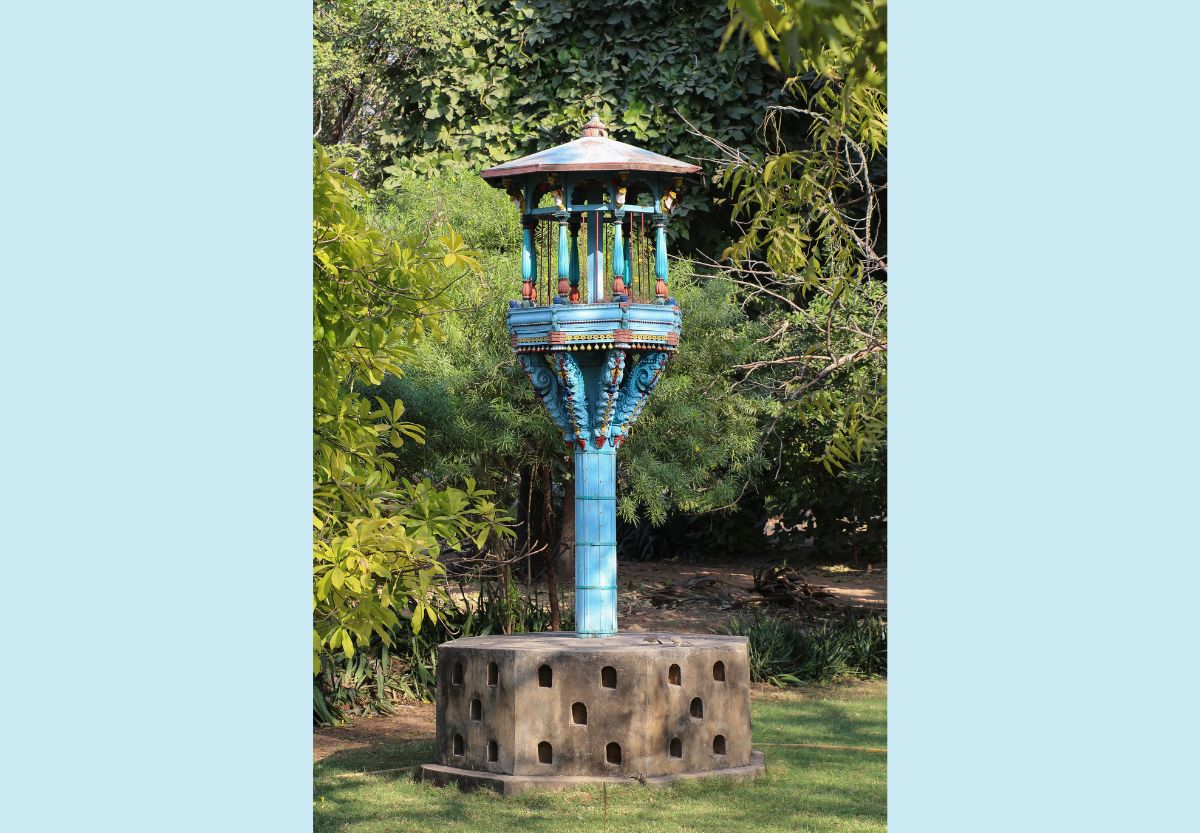
The pols: Those dense, labyrinthine residential clusters that have organised civic and social life here since the 15th century remain occupied. Carved wooden facades lean over lanes barely wide enough for a motorcycle, let alone the two motorcycles that will inevitably be trying to pass each other. Torans of marigold hang from doorways during festivals. Neighbourhood bird-feeders, called the chabutaras, are cylindrical stone columns topped with platforms for pigeons, and are still attended to each morning with a devotion that has nothing to do with tourism. People live here. They always have.
Walking through the pols of Khadia (map), Doshiwada ni Pol (map), or the area around Manek Chowk (map) without a guide is a gamble that will either reward you with a dead end and the specific quiet of having gone exactly wrong, or the genuine kindness of a resident who will put down whatever they were doing and show you the way out or deeper in, depending on what they read in your face. Both outcomes are more than acceptable.
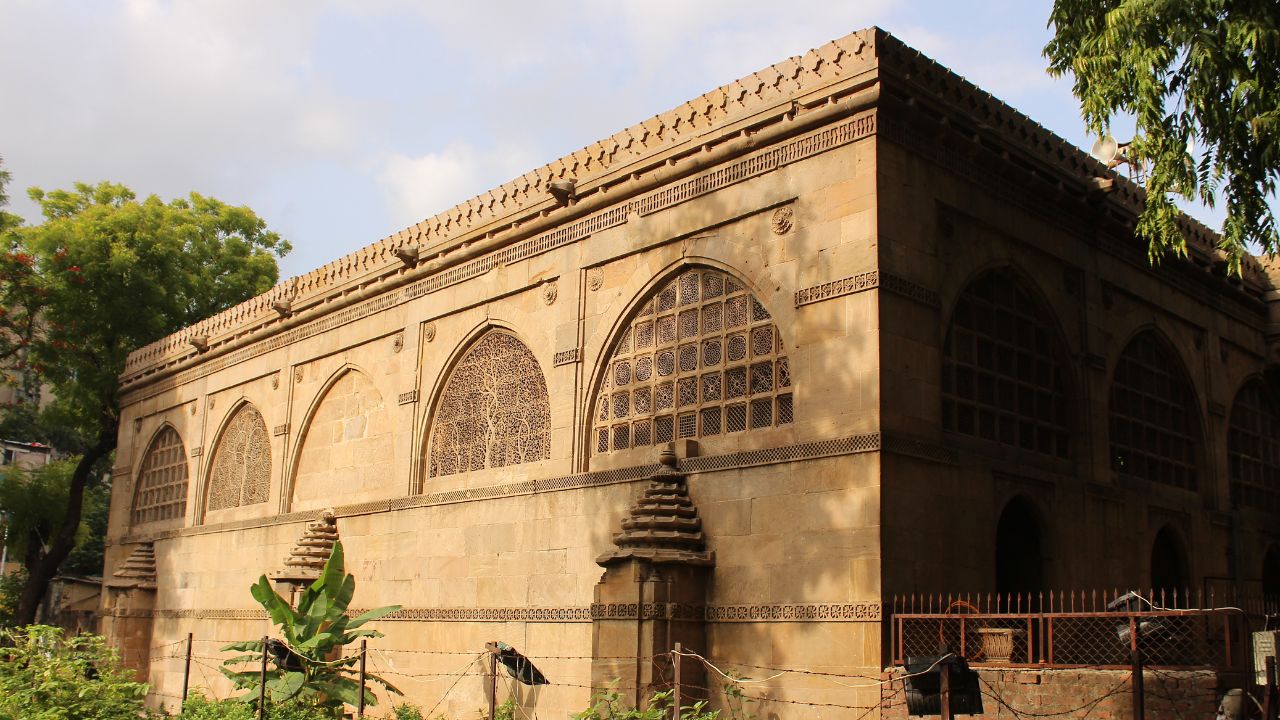
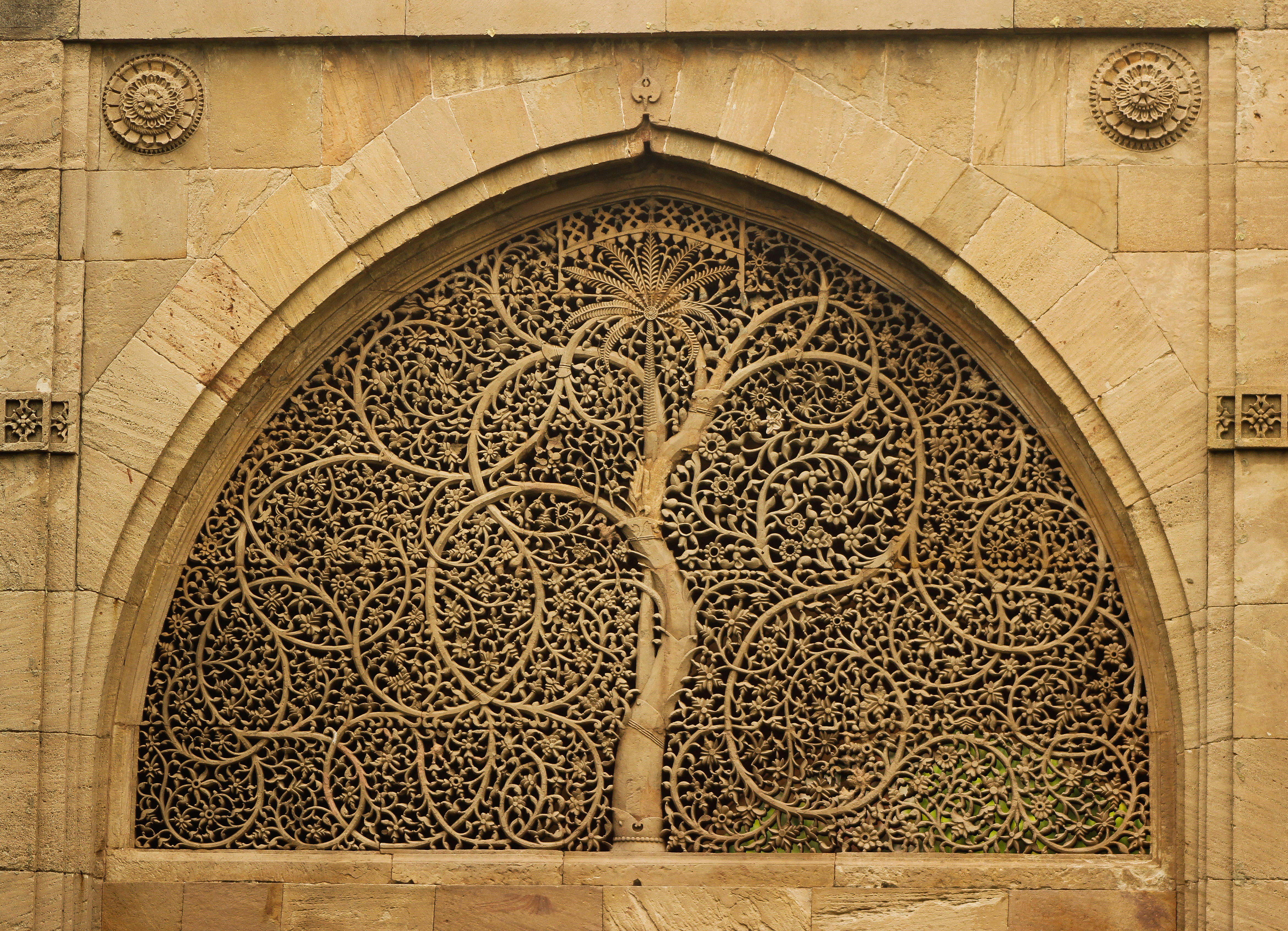
Sidi Saiyyed Mosque (map): Its stone jali windows, depicting a tree with branches intertwining into lacy geometric perfection—which became the logo of IIM Ahmedabad and the unofficial symbol of the city itself—are nearby and unmissable. This has been photographed so many times that taking a picture here can feel almost obligatory, but the jali is genuinely extraordinary in person, a filigree of such improbable delicacy that your first instinct is to doubt it is stone at all. Stand in front of it for longer than feels comfortable. It will reward your attention, trust me.
Tours: For something more structured, heritage walks offered by CEPT University and local organisations like the INTACH Ahmedabad chapter provide contextualised journeys through the architectural strata of the walled city, right from the sultanate mosques and stepwells to the havelis of the merchant families who made the city wealthy, and the more intimate, domestic genius of the pol system itself. These walks are worth taking early in your visit. The walled city is easier to love when you understand its logic.
The Modernist City
Ahmedabad has a claim that few Indian cities can match: it is where Le Corbusier, Louis Kahn, and Charles Correa all built, invited by a civic and industrial class unusually willing to let serious architects do serious work. The Sarabhai family were central to this. Gira Sarabhai commissioned Correa, whose Gandhi Smarak Sangrahalaya at the Sabarmati Ashram (map) is among his finest early buildings. The Shreyas Folk Museum (map) is less visited but worth it for anyone taking the architecture seriously.
Le Corbusier's Villa Sarabhai, commissioned by Gautam Sarabhai, remains one of his most radical domestic buildings: vaulted ceilings, a garden pool, and a restraint that makes the Chandigarh work look overwrought. It is privately owned and requires advance arrangement to visit, but architecture schools and some tour operators can help.
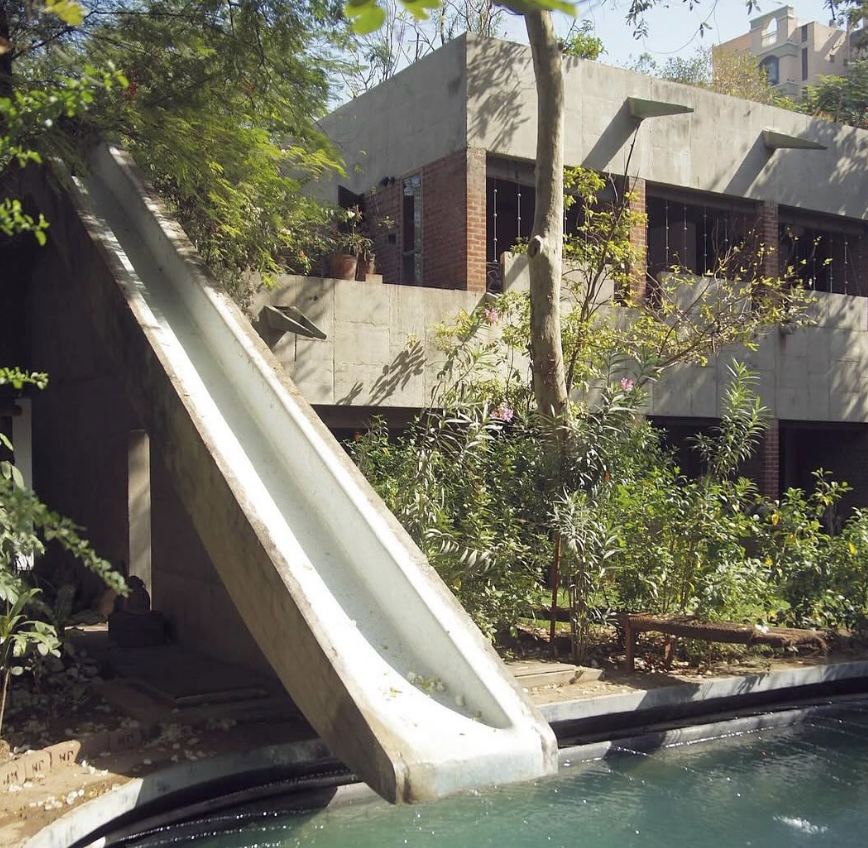
BV Doshi is the thread that runs through all of it; he trained under both Le Corbusier and Kahn before building a practice here, and the city holds more of his work than anywhere else. Sangath, his own studio, is the place to start: partially buried, grass-vaulted, built to resist the heat rather than fight it. The Institute of Indology and the CEPT University campus round out the picture.
Kahn's Indian Institute of Management is the anchor for anyone making a serious day of it. The brickwork, the arches-within-arches, shade as primary material. Go in the morning.
Art that lives underground (and in very good company)
Amdavad Ni Gufa (map): To visit Amdavad ni Gufa is to understand, quite viscerally, what happens when two of the 20th century's most singular creative minds are given a shared project and the freedom to see where it leads. The answer, as it turns out, is underground. The gufa (the word means cave) was designed by architect BV Doshi, whose work across six decades reshaped how India thought about architecture. And then there are the paintings by MF Husain, who filled the gallery's walls with large, totemic works in his characteristic visual language. It is strange, exhilarating, and entirely unlike any gallery experience in the country.
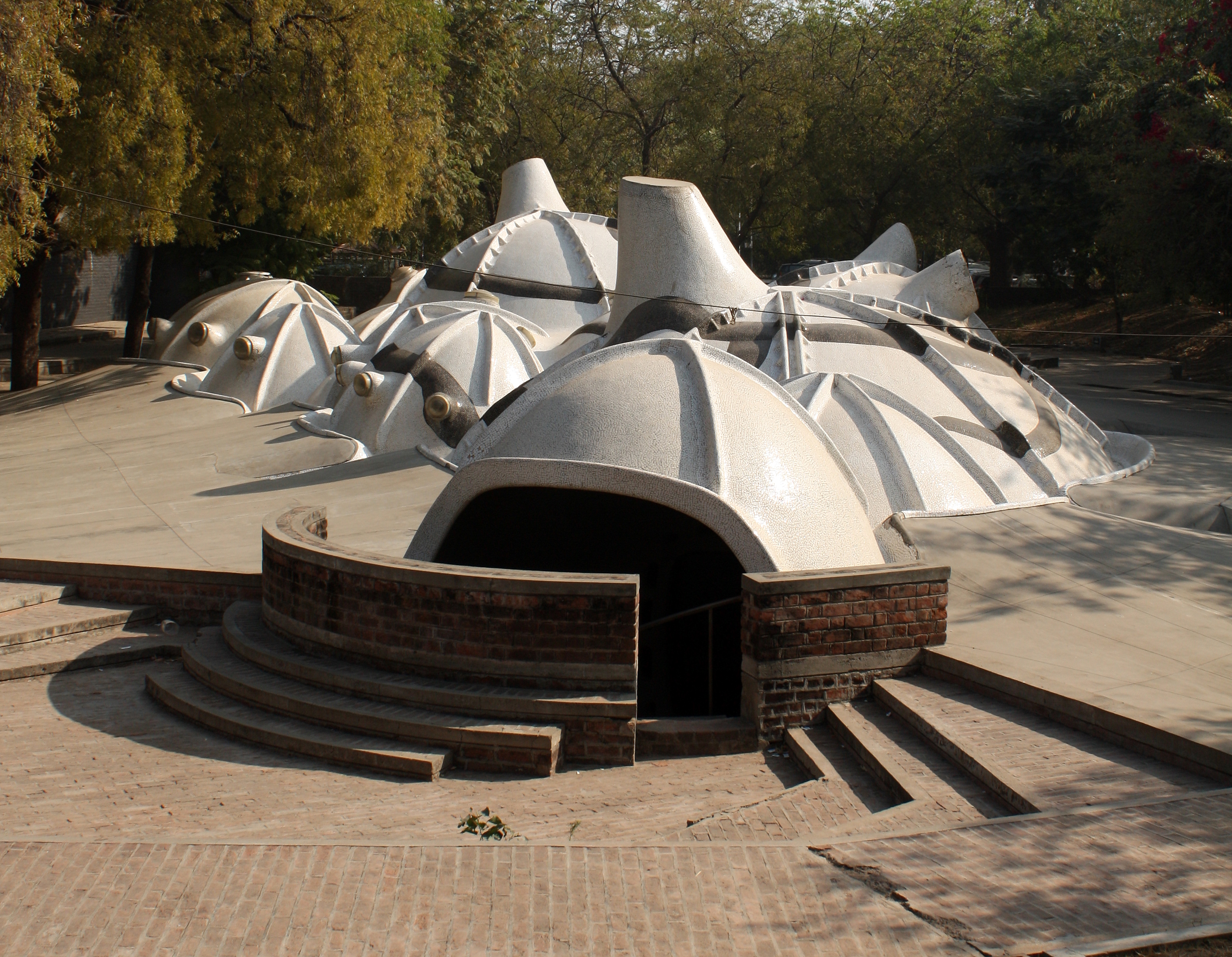
Good To Know: The gufa is on the campus of CEPT and Gujarat University. Entry is modest. Go in the morning when the light through the openings does interesting things to the floor.
Kasturbhai Lalbhai Museum (map): The story of how this collection came together is as remarkable as the collection itself. Kasturbhai Lalbhai, scion of the great Ahmedabad textile dynasty, was a man of uncommon cultural appetite. When the Tagore family found itself in financial difficulty, it was Kasturbhai who stepped in and, in doing so, acquired one of the most significant Tagore collections outside Bengal. But that is only the beginning. The museum's crown jewel, for those with an eye for narrative painting, is a series of 13 episodes from the Ramayana painted by Nandalal Bose; works of such tender authority that they seem to breathe. Factor in the miniature paintings, the ivories, and textiles, and you have a collection for magnificent beauty.
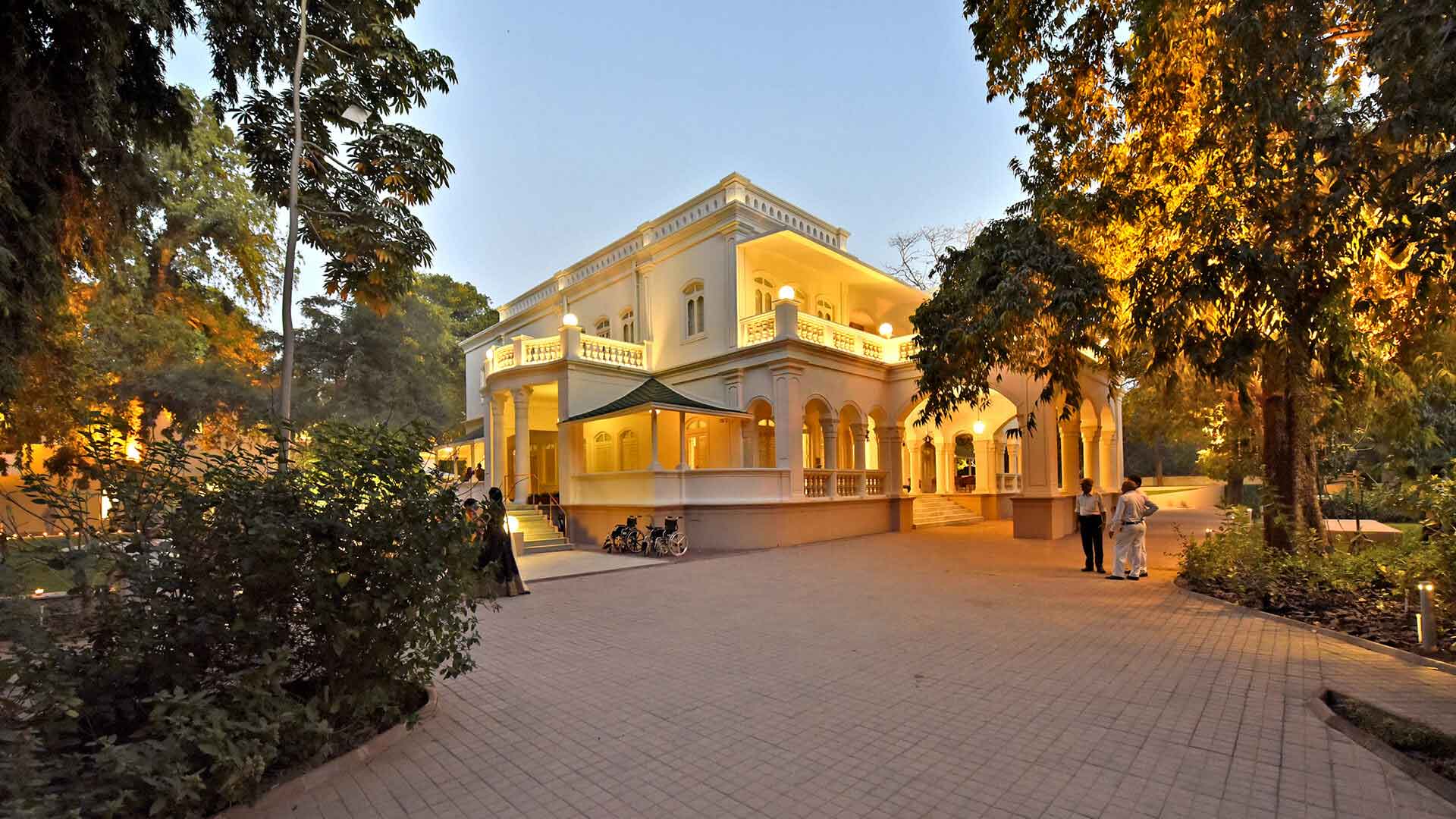
Lalbhai Dalpatbhai Museum (map): The Lalbhai Dalpatbhai Museum, also founded under the Lalbhai family's patronage and affiliated with the LD Institute of Indology, houses a staggering collection of rare manuscripts, bronzes, sculptures, and archaeological treasures. If you have even a passing interest in Indian art history, this will stop you in your tracks.
For the love of a performance…
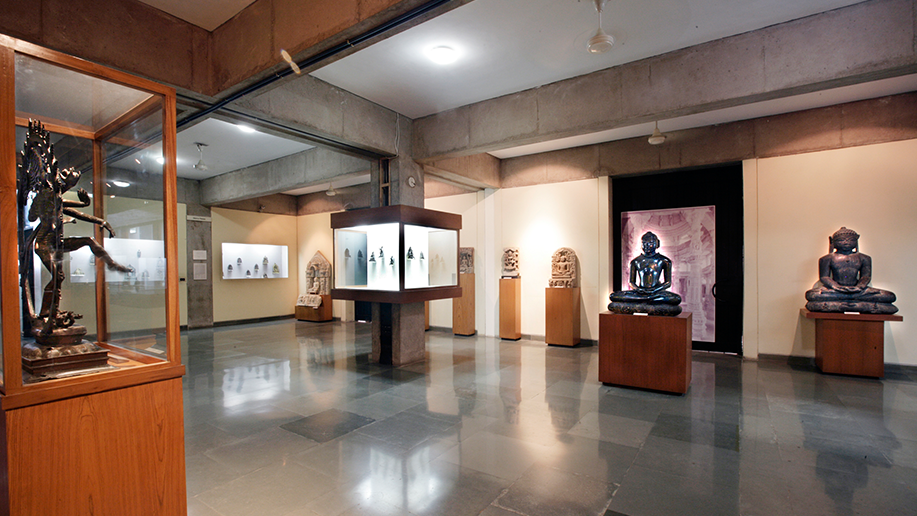
Darpana Academy of Performing Arts (map): Founded in 1949 by the legendary Mrinalini Sarabhai—dancer, activist, institution-builder, and one of the defining cultural figures of independent India—Darpana is not merely a performing arts academy. It is an idea about what culture can do for a city, and what a city owes its artists. Mallika Sarabhai, her daughter, continues that legacy, and the academy remains a living centre for classical dance, puppetry, theatre, and folk traditions. Check their calendar before your visit; the performances, when they happen, are the sort that linger.
Two festivals that make the rest of the year feel preparatory
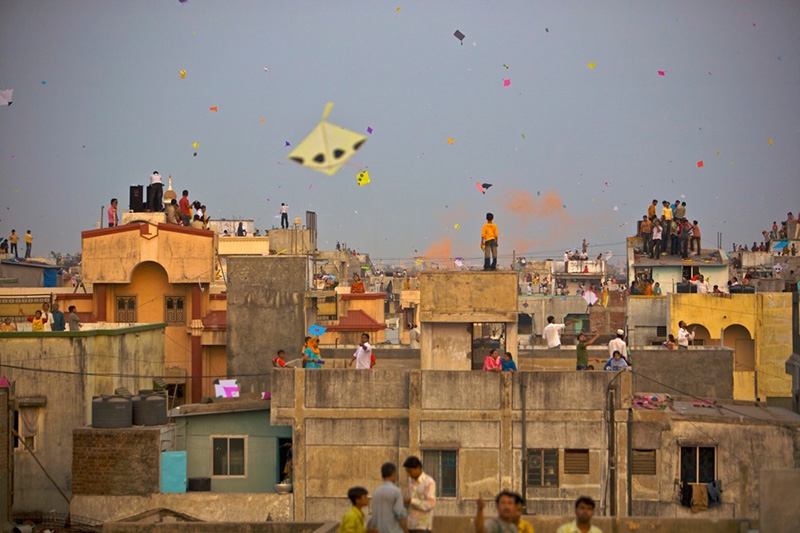
Uttarayan: On the 14th of January each year, Ahmedabad looks up. Uttarayan, the kite festival that marks the sun's northward turn, transforms the city's rooftops into stages and its sky into a canvas of thousands of paper and plastic diamonds. The Sabarmati Riverfront (map) on Uttarayan is a particular kind of spectacle where the water mirrors the sky above it. String is sharp; wear gloves if you plan to fly one. Manjha cuts without warning, and it does not discriminate.
Navratri: If Uttarayan is a spectacle, Navratri in Ahmedabad is a mania of its own kind. For nine nights, the city reinvents itself as one enormous dance floor. Garba is performed in every neighbourhood, every housing society, every open ground. There’s themes, there’s dress codes, and there’s love in the air. Make sure you know someone who can pull passes for you, because that is a competitive sport in its own right. Dress up. It is expected, and the embroidery here is worth the occasion.
Eat: the most important section, honestly
Every Amdavadi you encounter will have urgent, non-negotiable, sometimes contradictory opinions about where you must eat and in what order and whether you are doing it correctly, and they will be at least partially right, and the disagreement between them will be itself instructive.
The cardinal rule: never eat only one thing at a time. The cuisine is built for simultaneity.
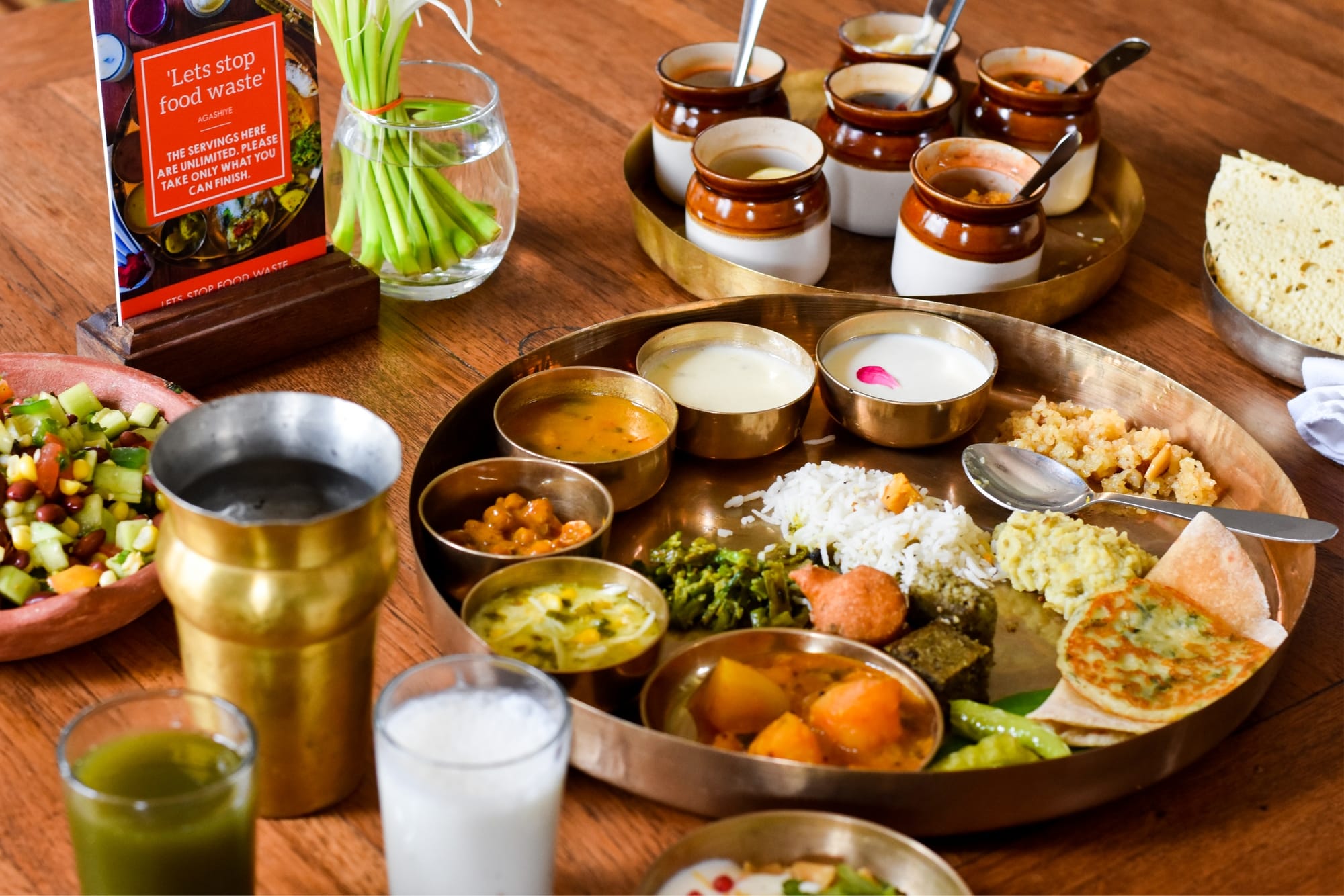
The thali: the whole argument, on one plate: If you eat only one meal in Ahmedabad, make it a proper Gujarati thali. Not a truncated tourist version, but a full, replenished-until-you-surrender thali, with its rotating cast of dal, kadhi, shaak, rotli, bhaat, papad, pickle, and the inevitable sweet that arrives not at the end but dispersed throughout, because Gujarati cuisine does not believe in delayed gratification. Agashiye (map), on the roof of the House of MG heritage hotel in the old city, is the widely cited benchmark. Gordhan Thal (map) and Swati Snacks (Off Ambli Road, Law Garden) are both beloved institutions for more everyday thali and snack experiences; the latter in particular has a way with handvo, patra, and the kind of Gujarati snacks that make you realise the word “snack” is doing inadequate work here.
Manek Chowk: the city that eats at midnight: By day, Manek Chowk is a jewellery market. By night, specifically after 9 pm, and really after 10, it transforms into one of the most chaotic, joyful, utterly non-Instagrammable street food experiences in the country. Vendors descend, stalls go up, and the city arrives to eat sev usal, pav bhaji cooked on enormous tawas, cheese dosas of dubious authenticity but undeniable appeal, and Gujarati pizzas. Go late, go hungry, go without plans. The queue will tell you what to order.
Breakfast: Fafda-jalebi is the Amdavadi Sunday morning ritual, the crisp, besan fafda eaten with fresh jalebi and a green chutney so sharp it could strip paint, ideally while reading a newspaper and arguing about cricket. While there’s plenty of options around wherever your block is, Oshwal’s (map) in Usmanpura is a popular choice. For khaman dhokla, the steamed, spongy, tempered-with-mustard-seeds variety (emphatically not the same as the firmer Khaman you get in other cities, and Amdavadis will correct you on this), head to Das Khaman or Lijjat Khaman House (map).
Shopping: the city as textile library
Ahmedabad is, at its bones, a textile city, and that history is available to you in several forms. Law Garden (map) Night Market is the most accessible entry point, a cheerful sprawl of stalls selling Kutchi embroidery, bandhani, patchwork, and mirror-work that ranges from tourist-adjacent to genuinely beautiful, depending on how long you're willing to look. Arrive after 7 pm; it doesn't really wake up before then.
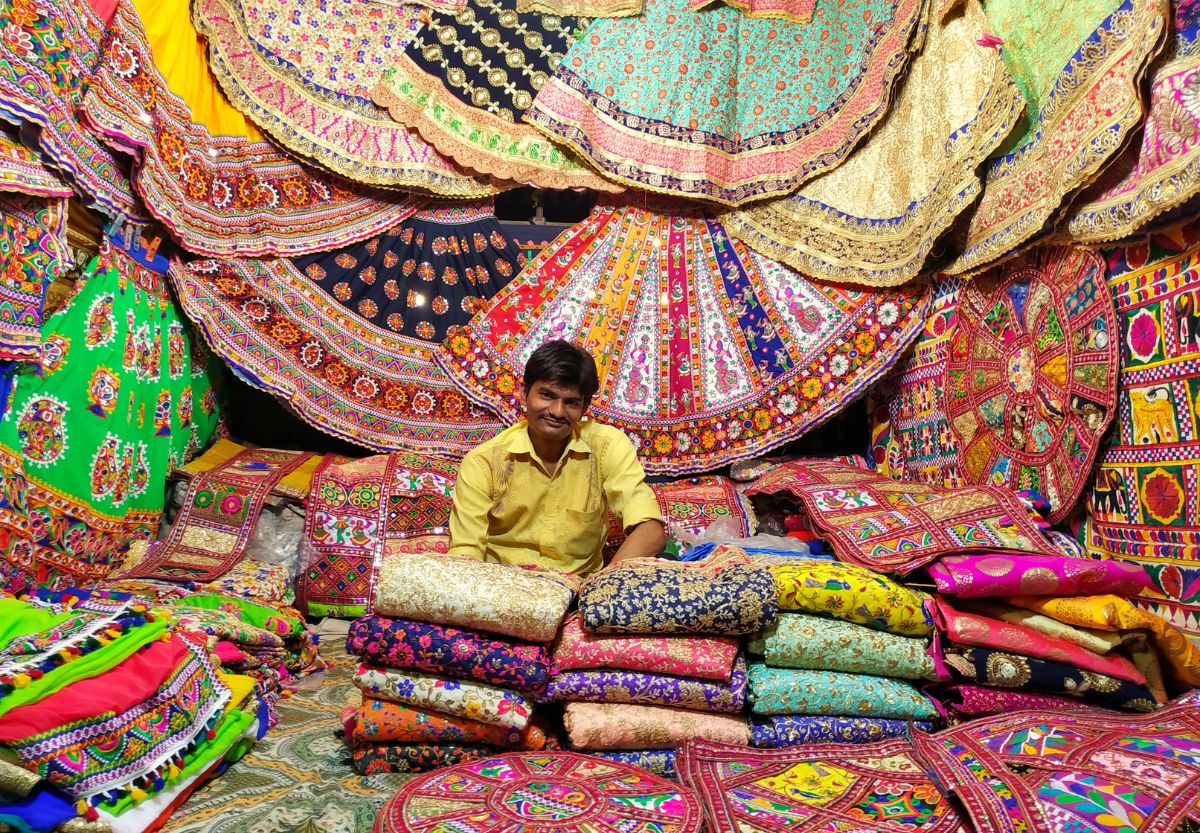
For something more serious, Gurjari (the Gujarat State Handicrafts and Handloom Development Corporation's retail outlet) (map) is the place to understand the breadth of the state's craft traditions. A cluster of places near the historic Teen Darwaza (map) sell Patola silk, the double-ikat weave that takes months to produce and commands prices that reflect that timeline honestly. Asopalav is also known for patola silk and bridal ensembles.
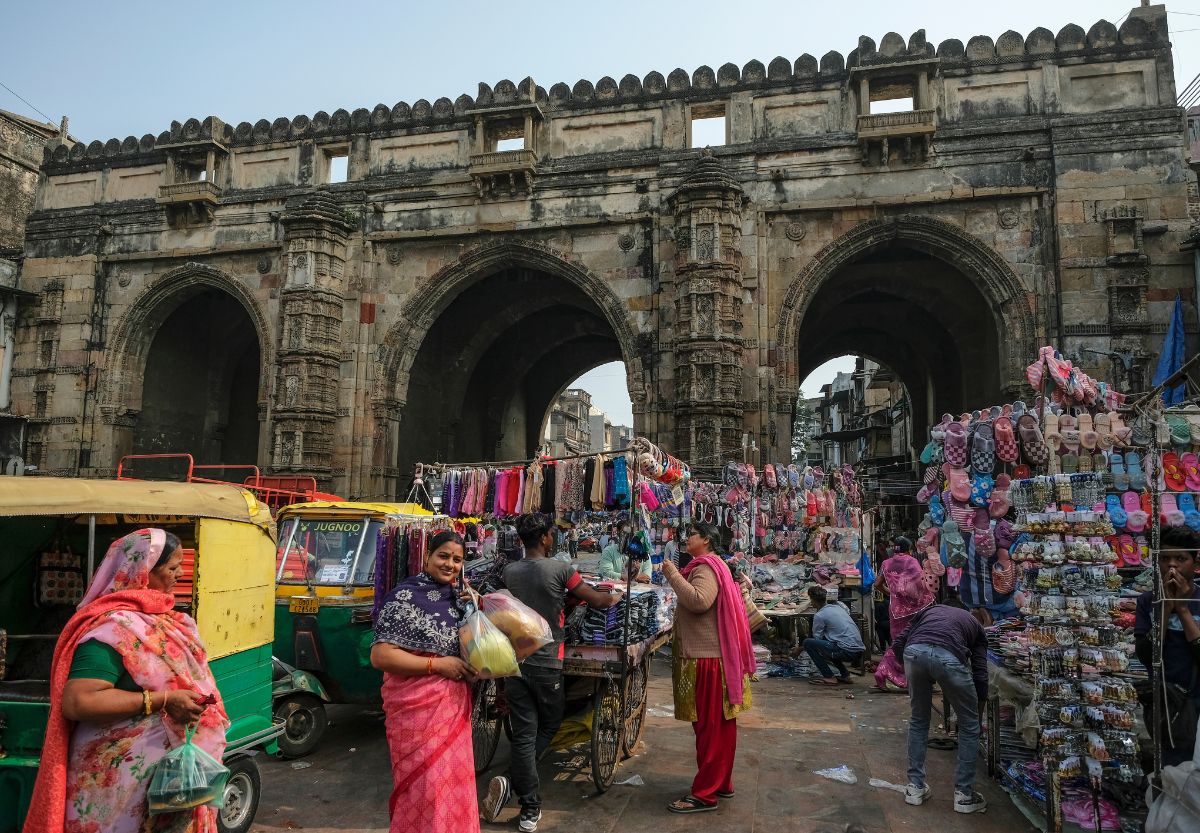
For block-printed textiles specifically, the shops clustered around Kite Bazaar carry ajrakh and dabu work at prices that are fair without being inflated for tourists, particularly if you're buying in any quantity. Haggling is expected but not aggressive; a straightforward ask for a better price on multiple pieces is usually enough.
Beyond textiles: what else to buy
Lac bangles from the old city jewellery lanes are the real thing: made on the street, sized to your wrist on the spot, and cheap enough that you should buy more than you think you need. The concentration of bangle-makers around Lal Darwaja (map) is where to go, the process is as worth watching as the product.
Kite Bazaar near Manek Chowk sells kites year-round, not as a tourist gesture but because Ahmedabad actually flies them, seriously and at scale, particularly in the weeks around Uttarayan. The shops stock the full professional range: tissue-paper patangs, specialist manja thread, the flat spools that serious fliers use. It is one of those places where the souvenir and the real thing are identical.
*****
Takshi Mehta is a lifestyle writer and journalist with an enduring love for cricket, cinema, and culture. You can follow her on Instagram: @takshimehta
 souk picks