


Immortal beloveds: Love story of Boney M
About Taste: Splainer’s new literary imprint, Taste, celebrates all that is exceptional about India—our singular design sensibility, literary voice, and perspective of the world—all of it rendered with deliberate excess. Taste is a book like no other—part art object, part literary magazine, and entirely its own world.
This first book features original essays by some of India’s finest writers, including Aatish Taseer on the ‘hotel aesthetic’ of living rooms, a rare conversation between Vivek Shanbhag and Parul Sehgal on how taste shapes the act of writing itself, and Srinath Perur’s glorious meditation on Boney M. and their enduring Indian afterlife. The book has been designed with extraordinary flair by Kriti Monga and Tania Singh Khosla. The video below gives you a fuller sense of its ambition and achievement:
Editor’s note: In this evocative essay, Srinath Perur traces the journey of Boney M—four Caribbean immigrants recruited by a German producer—from their roots in Euro-disco to the precise moment when technology, access, and emotion collided, sparking our lifelong love affair with the band.
PS: Taste is intended as a collectible object. It is a limited edition with just 300 copies in circulation—half of which will hit bookstores soon. You can also sign up to buy it from the publisher Juggernaut Books over here.
Written by: Srinath Perur
Srinath Perur writes about travel, science and books, among other things. He is the author of If It’s Monday It Must Be Madurai, a book about travelling in groups. He is the translator of texts such as Vivek Shanbhag’s Ghachar Ghochar and playwright Girish Karnad’s memoirs This Life a Play, and most recently, Sakina’s Kiss (also by Vivek Shanbhag), into English.
*****
In 1978, Pramod Shanbhag, a doctor in the small town of Haliyal, Karnataka, was visited by a medical representative who rhapsodized about (i) a new hi-fi record player from Philips, and (ii) Boney M. He was sufficiently convincing that Shanbhag went to the nearest city, Hubli, to find out what the fuss was about. At a shop, he heard the latest Boney M. release, Nightflight to Venus, on the Philips music system and was blown away. The album begins with a long drum part that rolls hypnotically from left to right and back, as if the drummer were sitting in front of you. A gargly metallic computer voice begins: ‘Ladies and gentlemen, welcome aboard the starship Boney M. ...'. Shanbhag went home with both the LP and the music system.
Welcome indeed.
In the late 1970s and early 1980s, Boney M. was one of the most popular bands in the world. Pop sensations come and go, but this one penetrated wider into India and stuck around longer than most. Exhibit A is the song ‘Rasputin’: the Indian Army and Navy bands still play a lumbering version with their brass instruments; the Hindi film Agent Vinod uses the song to establish the location of a scene in Russia; a Malayalam church song borrows its tune; and, of course, at assorted cafes, bars and lounges, eyes still light up in recognition when it comes on. But it’s not ‘Rasputin’ alone. Facebook, looking for a soundtrack for an ad in India, uses ‘Sunny’. Bluestar air-conditioners use—what else—‘Daddy Cool’. The group’s Christmas songs remain a year-end favourite. Members of the now-disbanded Boney M. can still tour India and fill venues, as one did in Shillong last year. What strange appeal to Indian tastes or circumstances made Boney M. so big in the first place? What makes them, even now, a part of our cultural bloodstream?
When I was much younger, I was callow enough to believe that a person’s musical taste was some sort of index to their character. I made it a point to go around asking people what kind of music they liked. There was plenty of variety around me: film songs, pop, rock, Indian or Western classical. But two responses always confounded me. The first: ‘Anything that is melodious.’ The other: ‘I like listening to sad songs.’
Though she never put it quite like that, it’s clear in retrospect that my mother in the 1980s was part of the sad-songs demographic. My grandparents had returned hurriedly from a stint in Iran after the revolution broke out, and with them came a single-speakered Panasonic two-in-one with a box of green-and-white Sony cassettes recorded from other Indians living in Tehran. There was Kishore Kumar, Lata Mangeshkar, Asha Bhosle, Bhimsen Joshi. But my mother, over the next few years, listened almost exclusively to a tape of Mukesh songs, selected for their lugubriousness by an anonymous connoisseur of sad songs. Maybe it was what best suited the mood of going to work all day and returning to two kids and a not particularly well-adjusted joint family.
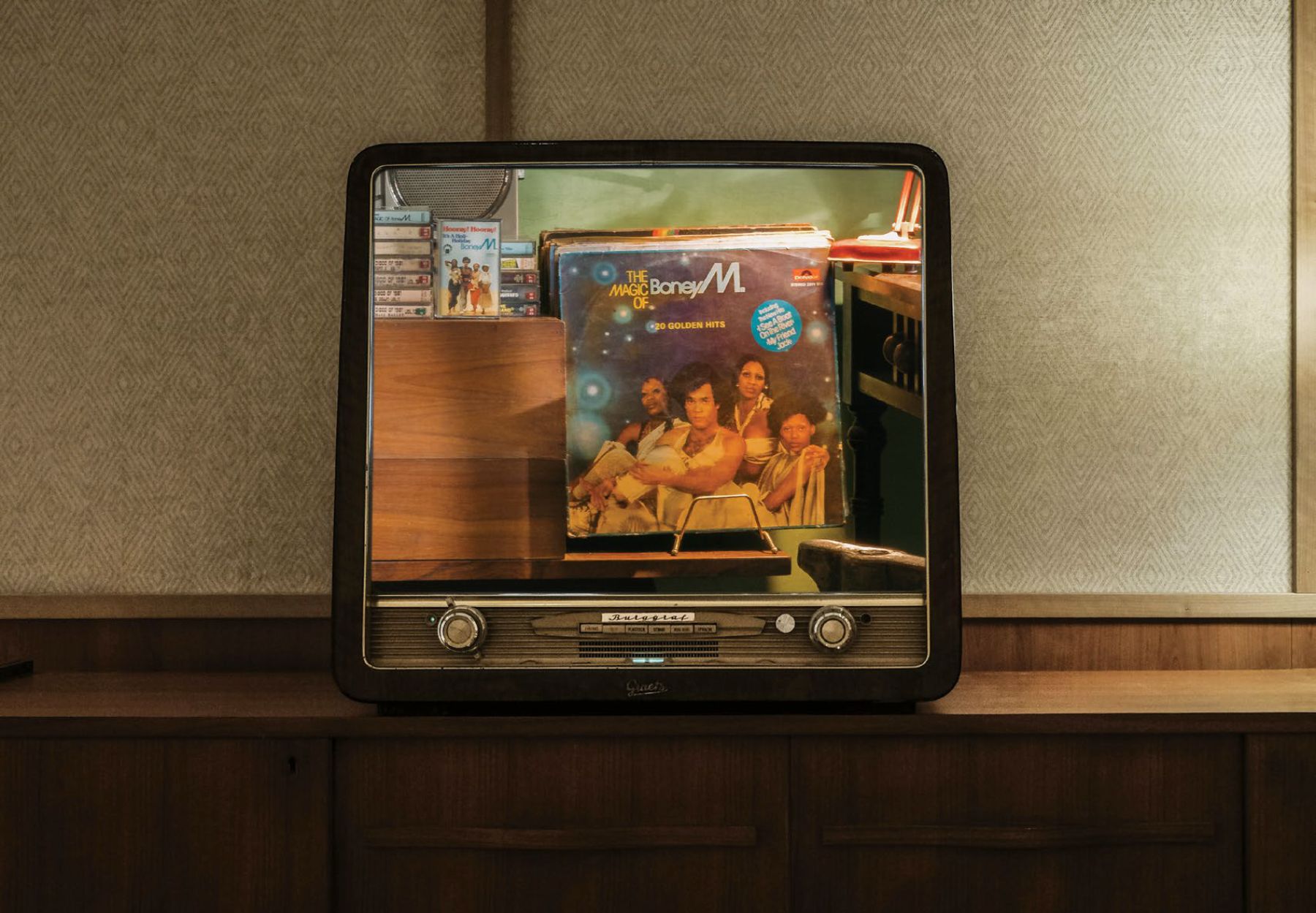
The only presence of Western music in that little collection was a single side of Boney M. hits. For a while I was obsessed with a song called ‘Hooray! Hooray! It’s a Holi-Holiday’ (unbearably cloying now). I must have heard it so often that it broke through to my mother, and she occasionally asked me to play it, perhaps to counterbalance her man, Mukesh. In the years that followed, I listened to all manner of Western music, but ‘Hooray!’ remains the only song that ever impressed her.
Once I heard her singing it to herself. She had slowed it down to half the speed, her ‘hooray’ trailed off wistfully and there was a sighing pause before the ‘holiday’. In keeping with the elastic nature of Boney M.’s music, she had managed to turn it into a sad song. That infinitely elastic character is an essential part of Boney M., and it may be why they caught on in India, and grew to be so thoroughly assimilated.
*****
Boney M. was a strange, chimerical creation: a German band with Caribbean performers who sang English songs that could be listened to just about anywhere in the world. The band was conjured up by producer Frank Farian. After plugging away for fifteen years in Germany as a singer of schlager—a genre known for straightforward singalong songs and good-natured cheesiness—he tried to do something different. He recorded a version of Jamaican musician Prince Buster’s pioneering ska song ‘Al Capone’ with session musicians, doing all the vocals himself, including some falsetto parts that pass impressively for female backing singers. The song was called ‘Baby Do You Wanna Bump’. Farian released it in 1975 under the name Boney M. to keep his schlager identity distinct, the ‘Boney’ taken from the title of an Australian detective series he happened to catch on TV.
The track, improbably, made it to the charts in Holland. A Dutch TV show asked for an appearance by Boney M., which got Farian busy trying to put together a face for the band, recruiting performers through an agency. As one of them, Marcia Barrett, wrote in her memoir Forward: ‘Never one to pass up an opportunity to sell some records, Frank needed his fictitious group to exist …’. Soon Boney M. had members: Marcia Barrett, a Jamaican who had migrated to the UK and was working in Germany as a singer, Maizie Williams from Montserrat and Bobby Farrell from Aruba, working as a dancer and a DJ, respectively, at a bar in Hanover.
While the initial gig involved lip-syncing to the recorded song, Farian soon realized that the concept had potential. He hired a fourth member, Liz Mitchell, another Jamaican who had migrated to the UK and had some singing experience, and plunged into recording Boney M.’s first album. Mitchell and Barrett sang in the studio, with Mitchell’s warm and sunny voice a foil to Barrett’s harder, rockier one. Farian contributed the raspy male part. Williams and Farrell were part of the stage presentation. Depending on the occasion, live performances ranged from all four miming to a recorded soundtrack to all four actually singing.
The early days had the band on the road, singing or miming at clubs and on TV shows across Germany and then Europe. Farian and his crew kept busy in the studio—writing, recording with some of Europe’s leading session players and mixing the results. The band’s look ranged from exotic cabaret shimmer to sleek bodysuits. On stage, the three women performed loosely choreographed moves, while Bobby Farrell took off on wild aerobic jaunts around the stage. The chemistry worked. A few years later, Farian attempted to replace Farrell. The move didn’t go down well with fans, and he had to be brought back. His voice wasn’t even on the recordings.
Boney M.’s popularity grew quickly, spreading from Germany to continental Europe, the UK and Asia. In three years, they were as big and strong as any musical act of the time. Their first album, Take the Heat off Me, came out in 1976 and yielded two massive hits: ‘Daddy Cool’ and ‘Sunny’. The next, Love for Sale (1977), had ‘Belfast’ and ‘Ma Baker’. Nightflight to Venus (1978) included ‘Rivers of Babylon’, ‘Rasputin’ and ‘Brown Girl in the Ring’. In the winter of 1978, they became the first Western band to be invited to perform in Moscow (on condition that they skip ‘Rasputin’). To this day, they are the only band to have two songs in the UK’s top twenty all-time bestselling singles.
There is no doubt that Frank Farian was an extraordinary producer. His track record post Boney M. attests to that. He produced hits for bands like No Mercy, La Bouche and Meatloaf, and was the puppet master behind the triumph-turned-debacle of Milli Vanilli. Boney M. got away with miming in concerts because it was the order of the day, and the voices on the records genuinely belonged to two members of the group and their producer. The Milli Vanilli ruse was more flagrant: the official members of the band did not sing a word. When they won a Grammy, Farian confessed. The Grammy was rescinded, the performers went on a downward spiral and Farian just moved on.
*****
There is something fundamentally broad-spectrum about the sound of Boney M.
One level of this universality was rooted in the dominant genre of pop music at the time: disco. It began as the second surge of a musical counterculture in the United States. The first had involved folk and rock music and had been mostly white and straight in both performers and audience. Disco, all shimmer and sparkle, came of age in the 1970s when Black, Latino and queer people cleared some room for themselves on the dancefloor. As it crossed over to Europe, it underwent a transformation to suit local tastes and turned into something since described as Eurodisco. The signature disco beat—the 1-2-3-4 thump of the kick drum—was accentuated, and any tendency towards rhythmic cleverness was done away with; vocal flourishes that originated in soul and R&B were out; synthesized strings replaced brass. The lyrics remained in English, which allowed the music to reach a broader market. Eurodisco felt precise and cool, but with a more generic, commercial sound.
While Boney M. in the most successful part of their career operated under many conventions of Eurodisco, they were not conventionally disco. They were instead making discofied covers of reggae or R&B songs with ‘Sunny’, ‘No Woman No Cry’ and ‘Rivers of Babylon’, or recording sui generis originals like ‘Rasputin’ and ‘Ma Baker’, with a disco beat impressed on long-existing folk tunes from other parts of the world. Farian described his ‘Rivers of Babylon’, for instance, as ‘Jamaican melodies with a European feel, for discos.’ Which is to say, there were multiple points of entry
into the music of Boney M.
But something was lost too. The original version of ‘Rivers of Babylon’ was sung by a Jamaican reggae group called the Melodians. The words are from the Bible and speak of slavery. There’s a depth and intensity that’s wholly missing from Boney M.’s cheery version. The YouTube comments section under the Melodians’ song is filled with people discovering the original after only having known the Boney M. cover. One commenter says: ‘I feel like I have been lied to my whole life.’ (None of this prevented the Boney M. version from being a hit in Jamaica, though.)
Or, take ‘Sunny’. American R&B singer Bobby Hebb wrote the original as an uplifting ode to the sun soon after his brother was killed in a knife fight. It begins with an ominous-sounding riff and then unfolds through a series of ascending key changes that give its optimism a slightly desperate undertone. The Boney M. version keeps some of the key changes but loses the edge entirely to create a perfectly pleasant sing-along song.
Frank Farian said: ‘Boney M. is black-and-white music.’ And so it was.
There he was, slowing down the recording of his voice in the studio to create a deep growl that would be mimed by a Black man on stage. Years before he became a schlager singer, Farian had heard a doo-wop song by the Coasters called ‘Yakety Yak’. It was the beginning of a lifelong obsession. ‘After one year,’ he told Vivien Goldman for Melody Maker magazine in 1978, ‘I knew that black music was the best for me.’ The only problem was that he was white. His R&B covers did only modestly, and in due course he turned to schlager and did a little better. ‘Baby Do You Wanna Bump’ marked his return to black music—and the birth of Boney M.

What are we to make of the politics of this black-and- white music? The members of Boney M. found themselves in Europe because their countries of origin had been European colonies. Were the members of Boney M. being exploited for their roots? Or were they exploring a new degree of freedom afforded to postcolonial nations? The band sings in ‘Rivers of Babylon’: ‘The wicked carried us away in captivity and required from us a song.’ As tempting as it is to read that as a coded message blinked out by a hostage, here, from her memoir, is how Marcia Barrett seems to see it: ‘We were four Black people from the Caribbean, let loose in Germany and then the rest of the world, very quickly making a big name for ourselves. I was happy for all of us because of that and I believe the others felt the same.’ Farian may have used reggae for his musical and commercial ends, but reggae itself had borrowed from jazz and other American genres, which in turn had taken inspiration from the Europeans, and so on. In the longer view, music is simply hitching rides on human histories to do its own thing.
Music travels.
Boney M. arrived in India piggybacking on the early wave of affordable record players and cassette players. They got in early as part of a technology that allowed the assertion of individual musical taste. They arrived with sufficient momentum that they stayed.
Biju Ebenezer, who for several years ran a delightfully nerdy blog on old Malayalam cinema, was in boarding school in Kerala in the late 1970s and early 1980s. He recalls the wave of prosperity that swept across the state as people moved to the Gulf countries to work. Accompanying the transition from lower middle class to upper middle class were ‘polyester lungis’ and music players. Trying to keep up with his peers, Ebenezer recalls writing an ‘aerogram’ to his father in the UAE, saying, ‘I want the latest English music.’ Duly, his father returned with three cassettes of Boney M. and one of ABBA.
In India in the late 1970s and early 1980s, record players and especially cassette players were becoming widely available and affordable. People who could do so, brought them in from abroad, creating a grey market even as Indian manufacturers like Philips India, Bush and Weston emerged. The audio cassette brought personal taste in music to India. It was more affordable than a record player, and more flexible than vinyl. You could buy a blank cassette and record whatever you wanted on it. This was the beginning of a revolution, preloaded with bands like Boney M. and ABBA.
We were by no means men of means. Everyone I knew in the 1980s—mostly feckless boys like myself—wanted a good music system but didn’t have the money for it, which required all manner of jugaadu solutions. Car stereos, for some reason—perhaps lower import duties—were held to be particularly good value for money, and they regularly swallowed and spit out cassettes in our rooms. Wires were all over the place; speakers might be turned to face a room’s corner for some primitive surround sound, or tinny individual speakers ensconced in boxes or clay pots in the hope of extracting some bass. (It is to these couple of decades of inadequate sound that I attribute the current Indian obsession for bass. Since only the higher-end systems allowed you to hear any bass at all, its presence became a status marker of sorts. And now, headphones and speakers aimed at the Indian market are tuned to produce nothing but bass.)
One of the appealing things about Boney M. recordings for Indian listeners at the time was their production quality, still impressive today. Melodic basslines that stood out in the mix and a thumping bass drum; manic synth string runs at the higher end; voices in rich and clear harmony. When I spoke to Rahul Ram of Indian Ocean, he pointed out that Hindi film music of the time had too many instruments recorded on too few channels, resulting in a sound that tended to be ‘muffled and scratchy’. In contrast, the painstakingly recorded and engineered Boney M. had a full, bright sound with clean separation. And whatever music player someone was using then, chances were that a Eurodisco band probably got more out of it than the average Indian recording. An early Boney M. fan told me that her family in Bangalore had invested in a pricey Ahuja sound system just so they could listen to Boney M. in all its glory.
*****
A big part of what could become popular in India was availability. Until the end of the 1960s, HMV had a virtual monopoly on the records available in the country—mostly Hindi film songs plus a limited selection of Western music. This changed with
the arrival of Polydor. The German record label set up in India in 1969 and began to compete with HMV. It quickly built a formidable distribution network. Perhaps due to the German connection, Polydor released Boney M. in India, first on LP records and then on cassette. When I asked Swarup Roy, a former regional manager, if they had heavily promoted Boney M., he said, ‘It sold automatically.’ All they had to do, apparently, was make sure that dealers didn’t fall short on stock. Much like Shanbhag going to Hubli, ‘people would come and ask’.
Boney M. was also accessible in another sense. The music was not challenging. Sidharth Bhatia, who wrote about the Indian rock music scene of the 1960s and 1970s in India Psychedelic, told me: ‘Boney M. didn’t require any application of mind.’ Compared to other Western bands, Boney M. sang with a friendly Caribbean lilt using English words designed to be widely understood. It probably helped that Farian himself and much of his European crew knew only a little English.
Bhatia said, ‘You could understand the words. It made a big difference. You couldn’t understand Saturday Night Fever at all.’ Biju Ebenezer echoed a similar sentiment when he said, ‘ABBA and Boney M. came together, but you could not sing along to an ABBA song.’ That is, with Boney M., a regular Indian could enjoy the music without feeling hopelessly gauche. ‘To the lungi-clad Malayali of the time,’ Ebenezer said, ‘Boney M. was a bite of Western culture that he could make his own.’ This relatability may be why Boney M. had an edge over ABBA in reaching Indians who were not regular listeners of Western music.
Boney M. was slow to gain acceptance in countries like the UK, and they never really took off in the United States. It may have had something to do with their music and persona being seen as ‘manufactured’. But it was never a problem in India. We were used to movies, after all, where stars played themselves rather than characters, where actors mimed to playback singers, and where the limits of suspension of disbelief were tested in every possible way.
*****
An Indian idea of disco—the freewheeling young life that featured music and dance and was lived in colourful shiny clothes, but was at the same time good, wholesome and worshipful towards one’s mother—found its ultimate realization in Disco Dancer (1982). Bappi Lahiri has described going to a Chicago club in the late 1970s and being captivated by the music. He jangled up to the DJ and learned he was listening to the soundtrack of Saturday Night Fever. At the time, he had been asked to find a new sound for a commercial Hindi film that would launch an actor who could ‘dance like Travolta and fight like Bruce Lee’. The actor was Mithun, and the new sound ended up being disco. Lahiri claims credit for bringing the beat to Indian films with the song ‘Mausam Hai Gaane Ka’ from Surakksha (1979). He describes the following eight years as his disco phase. ‘Jimmy Jimmy’ from Disco Dancer was clearly drawn from a Eurodisco song called ‘T’es OK’ by Ottawan. ‘Koi Yahan Nache Nache’ borrowed plenty from ‘Video Killed the Radio Star’. Generally, there was a lot of inspiration being had.
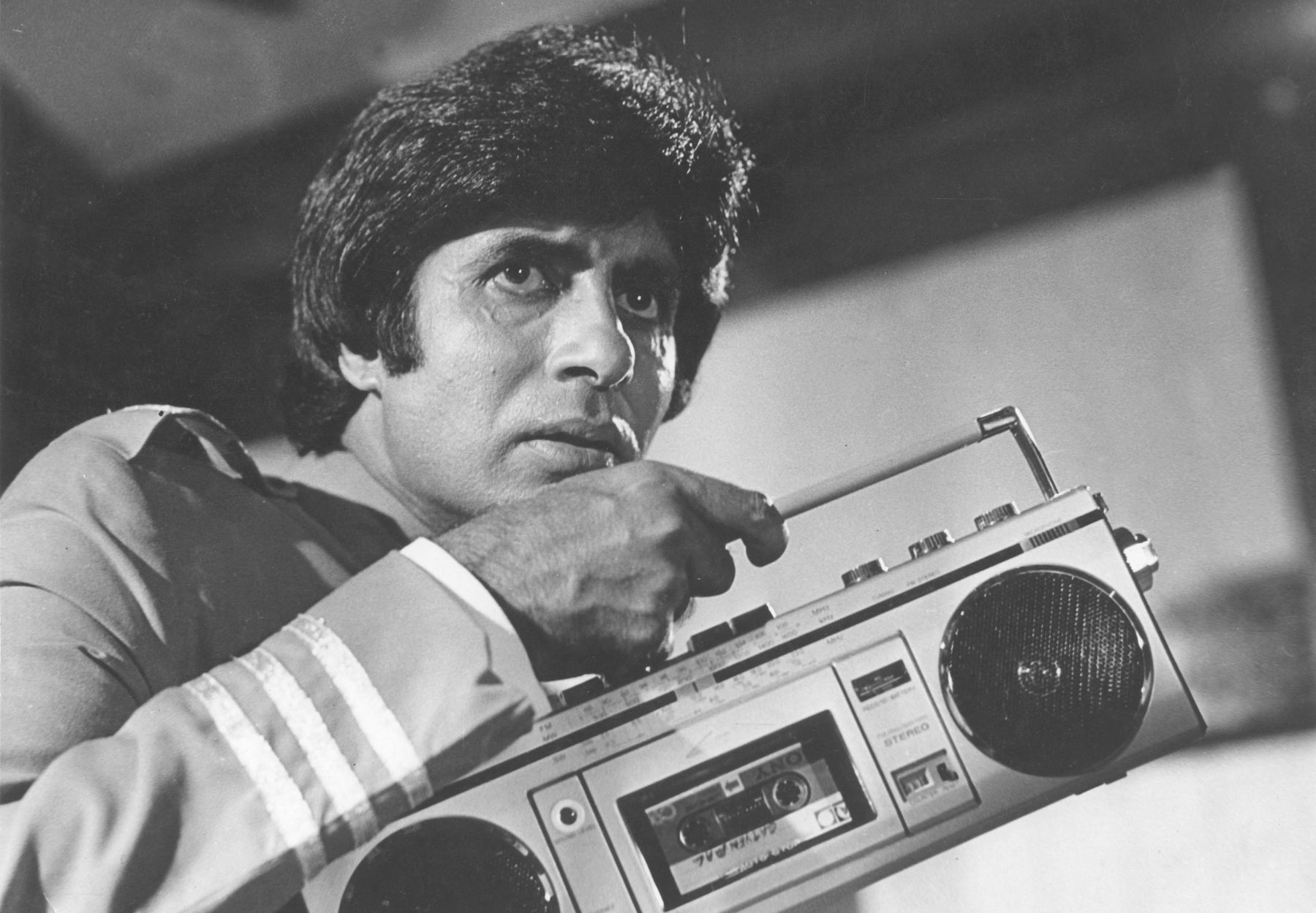
At about the same time, the British-Indian musician Biddu—who had grown prominent on the Eurodisco scene after producing ‘I Love to Love’ and ‘Kung Fu Fighting’—received a visit in London from Feroze Khan. He wanted Biddu to write a song for his film Qurbani. The initially reluctant Biddu agreed after Khan, in true Hindi film style, told him to think of how happy he would make his mother if he worked on an Indian film. He recorded ‘Aap Jaisa Koi Meri Zindagi Mein Aaye’ in London, with a teenaged British-Pakistani singer named Nazia Hasan. The song and the film were an enormous hit when they came out in 1980. HMV soon asked Biddu to put together, with Nazia Hasan, an almost unheard-of thing: a Hindi album that was not a film soundtrack. The result was Disco Deewane (1981), spectacularly successful in India, with solid sales in Russia, South Africa, West Indies and Latin America.
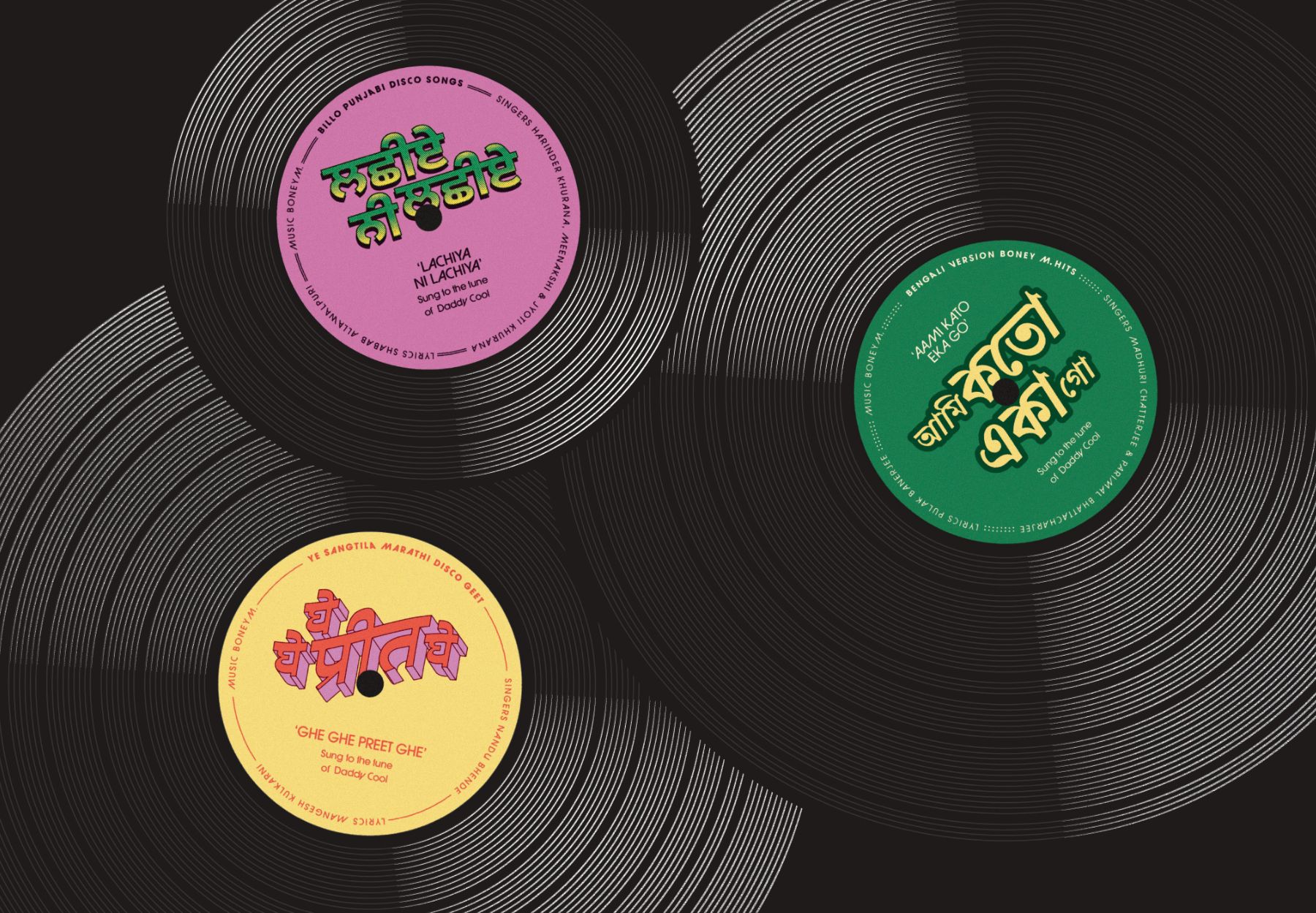
The same year saw the release of an album titled M3 Disco Fantasy in Hindi. The three Ms were Mahendra Kapoor and Musarrat singing the songs of Boney M. It was the initiative of a UK record company executive named Pran Gohil, known for popularizing British bhangra. Gohil now wanted to find the best-selling international music in India, then release it in Indian languages. A survey had revealed that the most popular Western band in India was Boney M. (followed by ABBA and Donna Summer). Soon enough, Boney M. hits were released in several Indian languages. ‘Sunny’ became ‘Rani’ in Hindi and Marathi, ‘Billo’ in Punjabi and somehow ‘Priyo Kaal Rate’ in Bengali.
Then there is the multitude of Boney M.-derived songs in Indian films. A handful of examples from just Hindi films include ‘Gumsum Si Khoyi Khoyi’, which did a glum ‘Daddy Cool’ in Badalte Rishtey (1978); Laxmikant–Pyarelal borrowed from ‘Brown Girl in the Ring’ to write ‘Tere Naam Ke Hum Deewane’ for Judaai (1980); ‘Zindagi Imtihan Leti Hai’ from Naseeb (1981) took part of its chorus from ‘Still I’m Sad’; and the chorus from ‘Bahama Mama’ found its way into Anu Malik’s ‘Jawani Diwani’ in Chamatkar (1992).
As Boney M. seeped into the circulatory system of Indian popular music, even those unfamiliar with Western music would come to recognize their tunes if not their songs.
*****
A Greek, a Turk, a Bulgarian, a Serb and a Macedonian walked into a restaurant in Istanbul. During dinner, a live musician struck up a tune that they all began to sing along to, each in their own language.
An argument ensued, as each claimed the song as their own. The Bulgarian at the table was the filmmaker Adela Peeva. The incident inspired her journey across the Balkans in search of versions of the song, captured in her 2003 documentary Whose Song Is It. The tune had variously become, in different places, a love song, a war chant, a religious song and a right-wing nationalist anthem. In every country, people insisted others had shamelessly copied their song. The shared melody of those songs is more familiar around the world as Boney M.’s ‘Rasputin’.
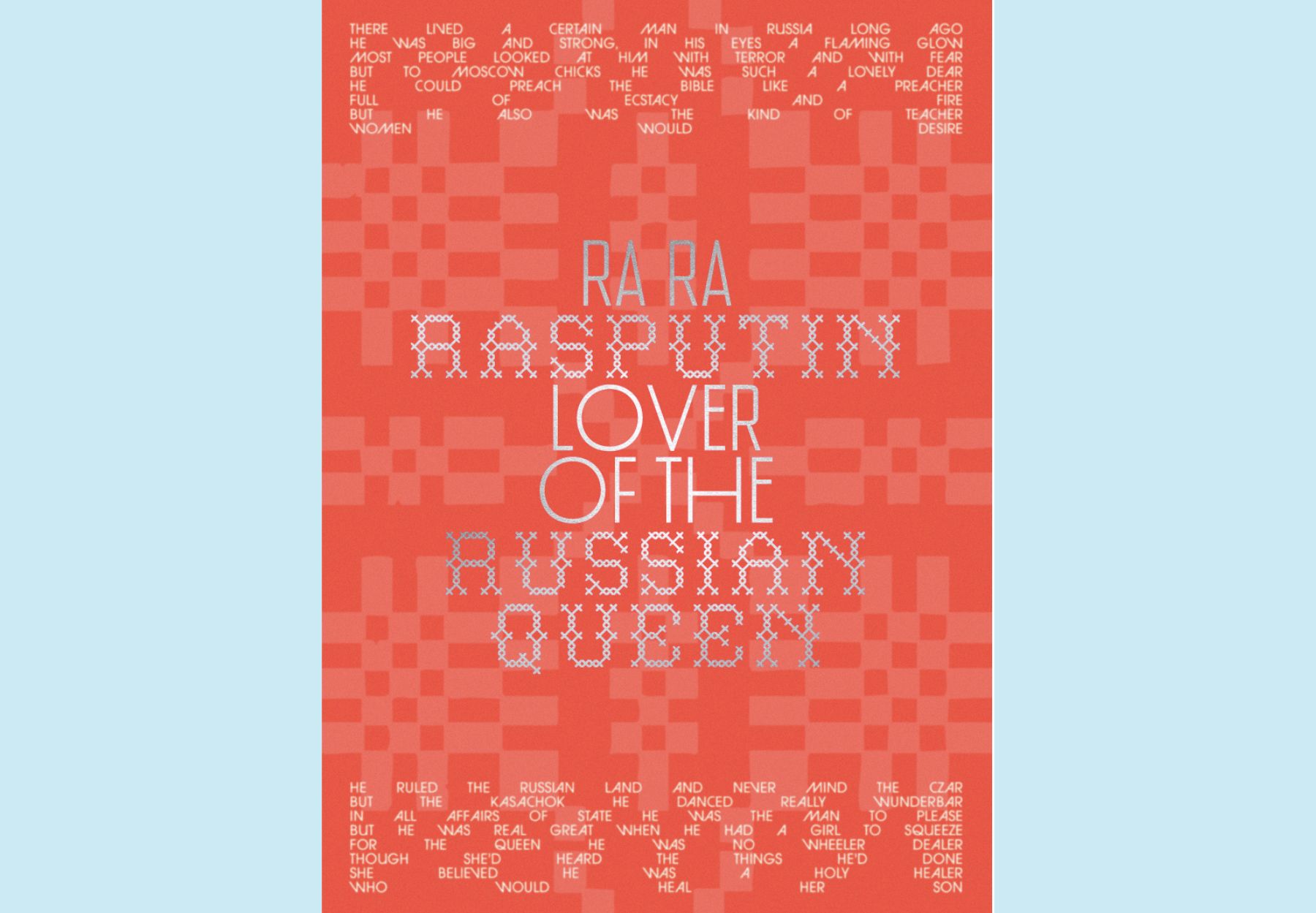
In India, the tune also inevitably travelled down the path of religion, repurposed for a Malayalam church song called ‘Ha Manoharam’. Less happily, during the Covid interregnum, two medical students in Thrissur sparked outrage for participating in an online ‘Rasputin’ shuffle dance challenge when it was determined that the guy was Muslim and the girl Hindu. The term ‘dance jihad’ was thrown around, which then inspired many more people to dance to ‘Rasputin’ with hashtags like #resisthate. Kerala Police took the opportunity to advise people to get vaccinated by showing two vials—one Covishield, one Covaxin—dancing to ‘Rasputin’.
The song is really hard to kill, more so than its protagonist or its creator. Frank Farian died in 2024. It is now fifty years since Boney M. arrived on the scene (which is a couple of years more than what old Rasputin managed). After they officially disbanded in 1986, each of the members went on to tour with their own versions of Boney M. Paradoxically, there was more Boney M. in the world once the band ceased to exist. That afterlife too may be nearing its end. The performance at Shillong last year was part of Maizie Williams’s Farewell Tour.
Indian taste is often bemusingly anachronistic. For instance, there is our love for P.G. Wodehouse or Ayn Rand that endures long after people in their home countries have stopped reading them. It is perhaps because we receive Western culture, be it books or music, without the burden of context. They never go out of date because they were never really part of our present. This absence of context, which was once born of distance, is now an effect of ubiquity. Everything ever recorded exists cheek-by-jowl in the cloud, liberated from albums and collections, borders and even time. An ideal era, then, for Boney M., which has always meant many things to many people, to be on stand-by, waiting to be sampled and remixed and pressed into service at the right time.
*****
(This essay originally appeared in Taste, edited by Lakshmi Chaudhry and published by Juggernaut Books.)
 souk picks