Editor’s note: Rhythm ’n’ blues jiving with pop. A dash of funk, all coming together in a motor-town in the Midwest in the 1960s. Thus was born Motown, the joyous sound of celebration that has given us some of the greatest earworms in popular music.
In this beginner’s guide to Motown, our music expert, Narendra Kusnur takes us through the history of this soulful sound of the ’60s—from its genesis at the Detroit-based label founded by Berry Gordy, to chartbusters like Diane Ross and Marvin Gaye, to an 11-year-old prodigy named Michael Jackson. And, as always, we have a mammoth playlist of all the classics for you.
*****
Please Mr or Mrs Reader, don’t level accusations of being repetitive, for posting three versions of the same song called ‘Please Mr Postman’. Most followers of popular retro western music will be familiar with the first two, sung by the Beatles and the Carpenters. Let’s revisit them.
Released in 1963 and 1974 respectively, both numbers were actually cover versions of a song first recorded by the American girl group the Marvelettes in 1961. Recorded in the then-popular doo-wop style, a sub-genre of rhythm ‘n’ blues, it was one of the earliest and biggest hits for the Motown label. In fact, people still sing the Postman song in the days of ChatGPT. Here’s a recording.
Motown, did we say? Many people have this misconception that it is a genre of music. In reality, it’s a style created by the label Motown Record Corporation, founded by Berry Gordy in 1959, first under the name Tamla Records. The name is derived from ‘motor-town’, which Detroit city was known as because of its large automobile industry. Gordy’s music company was headquartered there when it launched.
The Motown Sound, as it became known, is essentially a mix of rhythm n’ blues and pop, with later songs adding a dash of funk. Very often, it is confused with mainstream soul, which has boasted of legends like Ray Charles, James Brown, Sam Cooke, Wilson Pickett, Otis Redding, and Aretha Franklin. Motown, however, has its own roster that includes icons like Diana Ross, Marvin Gaye, Stevie Wonder, and Jackson 5. At Berry’s insistence, all acts were aimed at being appealing to both black and white audiences. The first Motown hit was Barrett Strong’s ‘Money (That’s What I Want)’ in 1959. The song spawned its own cover versions, by the Beatles, Rolling Stones, Led Zeppelin, and Buddy Guy, among others. Let’s hear the original, followed by British rock band Led Zeppelin’s take, which they performed at shows. Wonder if Led Zep got the money it wanted.
The label’s next big hit was ‘Shop Around’, released by the Miracles in 1960. Sung by the band’s leader Smokey Robinson, an old friend of Berry, the song became the first million-selling hit record for both the group and the label. You don’t have to shop around for a CD or vinyl record. Just hit the link below.
If ‘Shop Around’ reached No 2 on the Billboard Hot 100, ‘Please Mr Postman’ by the marvellous Marvelettes became the first number one hit for Tamla-Motown. Things only moved forward. From 1961 to 1971, the Motown group, which introduced other sub-labels, had 110 Top 10 hits.
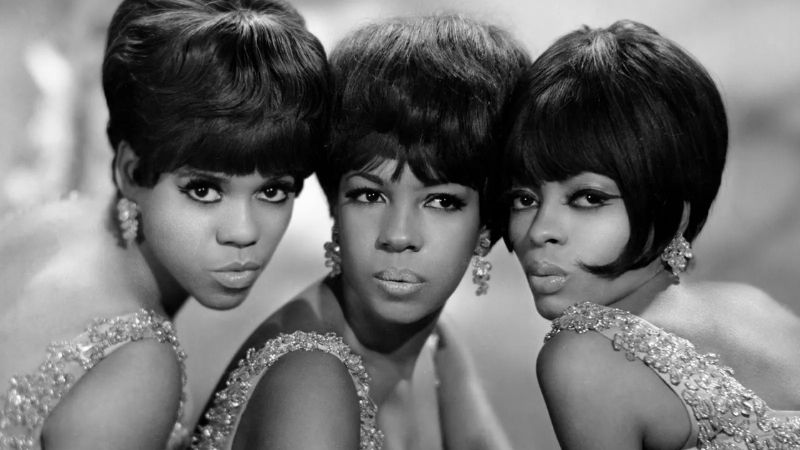
As a beginner’s guide to Motown, let’s check out six of its biggest stars. These are only brief descriptions, and though each act had a large repertoire, we’re using only a song or two for representation. One can check out the streaming platforms for more. Let’s begin with the Supremes, a girl group formed in 1959 under the name Primettes. It was the most successful all-vocal group in the 1960s, and was best recognised for featuring the legendary Diana Ross. Most songs were written by the popular trio of Holland-Dozier-Holland. The group was later renamed Diana Ross & the Supremes, till Ross left in 1970 to pursue a solo career. For a taste of the Supremes sound, let’s hear ‘You Keep Me Hanging On’.
Let’s move to the Temptations. This was an all-male group which had some line-up changes but was best known for the team of David Ruffin, Melvin Franklin, Otis Williams, Eddie Kendricks, and Paul Williams. In 1969, it became the first Motown act to win a Grammy for ‘Cloud Nine’, which we see in the video below. Interestingly, the Temptations continue to perform today, with Otis Williams as the lone surviving member.
For the trivia-minded, the Temptations released a 1966 song called ‘Get Ready’, which was a moderate success. It was written by Smokey Robinson, who also became the group’s vice-president. The song was covered as a 21-minute anthem in 1969 by rock band Rare Earth, which was also signed on Motown. The latter became a huge success among rock fans. Let’s listen to the original, and then a short extract from the Rare Earth version.
One of the leading Motown acts was singer Marvin Gaye, often called the ‘Prince Of Motown’ or the ‘Prince Of Soul’. One of his big hits was ‘I Heard It Through The Grapevine’, which was first recorded by Gladys Knight & The Pips. Though Motown fans swear by the Gaye version, the song was given a different twist when rock band Creedence Clearwater Revival did its own 11-minute take. Let’s hear the grapevine from Gaye, and then CCR, in its shorter video version.
Gaye had a tragic death, when he was shot by his father in 1984 while trying to intervene in an altercation between his parents. He was 44. Let’s pay tribute by hearing his famous ‘Ain’t No Mountain High Enough’, sung as a duet with Tammi Terrell.
Next in the list is the Jackson 5, later known as the Jacksons. It consisted of members of the Jackson family—and originally featured brothers Jackie, Tito, Jermaine, Marlon and Michael. Yes, THE Michael Jackson. Managed by their father, Joe Jackson, they began by performing in talent shows and clubs. They were initially signed on to Steeltown Records, before their eight-year stint with Motown. Here, they became the first group to debut with four consecutive number one hits on the Billboard Hot 100 charts—‘I Want You Back’, ‘ABC’, The Love You Save’, and ‘I’ll Be There’. They eventually shifted to Epic Records, but the bulk of their success came with Motown. Let’s hear ‘I Want You Back’ performed on the Ed Sullivan Show. Recognise the kid singing? At that age of 11, what a thriller of a performance.
That brings us to another superstar who began with Motown and went on to become one of the most influential musicians ever. Born Steveland Hardaway Judkins, he was given the name ‘Little Stevie Wonder’ by Berry for his prodigious talent. Blind from shortly after his birth, the little boy began by playing piano, harmonica, and drums when he was four. He was signed to Motown’s Tamla label when he was 11, and remained loyal to the group in all solo studio albums. Stevie’s career covered a long list of hits, including ‘Superstition’, ‘Signed Sealed and Delivered, I’m Yours’, ‘Isn’t She Lovely’, ‘Ma Cherie Amour’, ‘Sir Duke’, ‘I Just Called To Say I Love You’, and ‘Part Time Lover’. Let’s play ‘Superstition’, which famously used the Hohner clavinet keyboard, and ‘Isn’t She Lovely’, written for his daughter Aisha.
Talking of Stevie, one is also reminded of Lionel Richie, as they both had huge hits in the early 1980s, when MTV was new. Starting with the group Commodores, he had a successful solo career, releasing three albums under the Motown label, before switching to Mercury. The second solo album Can’t Slow Down, released in 1983, had the hits ‘Hello’, ‘All Night Long’, and ‘Stuck On You’, selling over 30 million copies worldwide. Let’s revisit ‘Three Times A Lady’, with the Commodores, and Lionel’s all-time favourite ‘Hello’.
The Motown roster included other famous names like the Four Tops, Martha & the Vandellas, and the Contours. While it produced some great music in the 1960s and 1970s, it also became the subject of tabloid stories, specially concerning the relationship between Berry and Diana Ross. They became romantically involved in 1965. The relationship lasted several years, resulting in the birth of Diana’s eldest child, Rhonda. Two months into her pregnancy, Diana married music executive Robert Ellis Silberstein, who looked after her like his own daughter despite knowing who the biological father was.
Of course, things moved on. Today, Motown is remembered for creating some of the biggest hits in popular music history, some of which resulted in marvellous cover versions. It’s also played a huge role in bringing black musicians into the mainstream, and in the formation of girl groups, with the Marvelettes, the Supremes, Martha & the Vandellas, and the Velvelettes. Haven’t heard of the last band? Here you go. This song has the Motown sound, look, and feel written all over. That’s “really saying something”.
As usual, we end with a list of songs mentioned in this column.
Narendra Kusnur has been a music journalist for over 40 years—including a decade-long stint covering the beat at the Mid-Day newspaper. He currently writes for The Hindu, Free Press Journal, Hindustan Times, and Rolling Stone India—besides the in-house magazines of prestigious institutions—such as NCPA and Shanmukhananda Hall.

 souk picks