

Let them eat bread: A pao story
Editor’s note:
A smorgasbord of diverse cuisines make up Mumbai’s culinary map today, and they each have their own story to tell. In her excellent new book, In the Beginning There Was Bombay Duck, author and former journalist Pronoti Datta paints a bright portrait of Bombay’s food history. The communities that came to the city across different ages: The Parsis, the Iranis, the Gujaratis and Sindhis, the Goans, and so forth. The stories they brought with them. And how they all added a part of themselves to Bombay’s colourful food identity.
In this excerpt, from the chapter ‘The Tao of Pao’, Datta walks us through the role of the pao—its journey from Portugal to Goa to, finally, Bombay, via Goan bakers. Those bakers may be a thing of the past now, with the mantle passed on to the city’s Iranis. But a rich story lives behind that legacy, as seen through Bandra’s famous American Express Bakery. The following excerpt has been published with permission from Speaking Tiger Books.
*****
One of the first, if not the first, hostel for Goan men was started by Vitorino Mudot, with whom this chapter began, the first well-known Goan baker in Bombay. Mudot rented living space to fellow Goan migrants for four rupees a month. Freshly baked pao—and bakers, who had learned the trade at Mudot’s—streamed out of his bakery. And so, the city was introduced to bread.
Now, the Portuguese had been in Bombay from the sixteenth century. Many landowners and various Catholic orders continued to live and operate on the islands after the British took over. As a result, the city had generations of Portuguese descendants and converts. Yet bread was a novelty till the Goans arrived. The historian Fleur D’Souza, who is East Indian and from Thane, pointed out that until the twentieth century, most East Indians were rice-growing and eating farmers living in Salcette and Vasai. Smaller clusters of East Indians lived in the Bombay islands, in Girgaon, Cavel, Parel, Dadar and Mazagaon. For most, buying bread would have been a luxury. For the Portuguese aristocracy and priests living in monasteries, bread would have been baked in-house. Even in Goa, where the Portuguese taught bread-making to locals soon after they arrived, the consumption of bread among Goans really took off only in the late nineteenth century. It was a treat that only the upper classes could afford before the economies of scale made bread available to all.
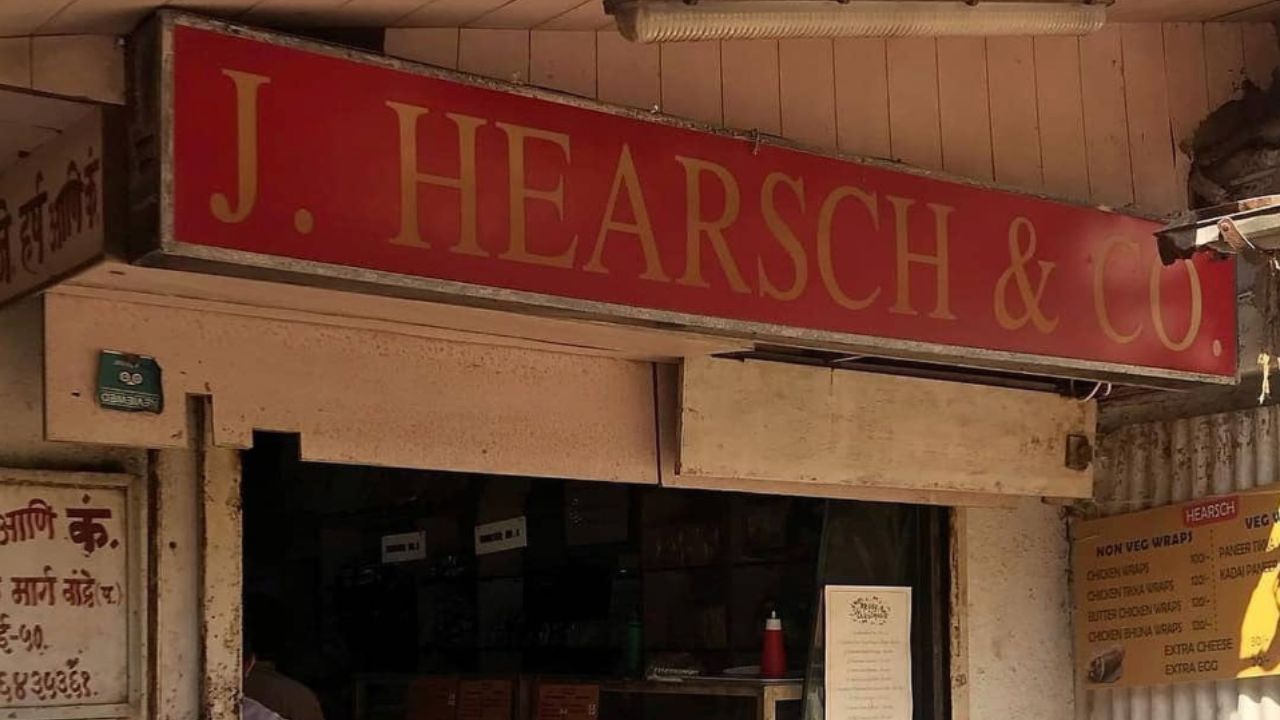
The Goan baker, however, was a short-lived character in Bombay’s early food scene. Over the years, the descendants of Goan migrants acquired an education, eschewing the pao-making business in favour of white collar jobs. The mantle was passed on to Iranis, both Zoroastrian and Muslim, who were migrating to the city in waves in the nineteenth century. Many of them apprenticed at Goan bakeries. Today, few Christian-run bakeries remain. In Vasai, which has a large East Indian community, old school bakeries and confectioneries such as Keith Bakery, Mikhail Bakers and Caterers and Martina Super Bakery continue to turn out bread, biscuits, chicken and mutton puffs and sweets such as mava and coconut cakes. Among Bandra’s handful of bakeries that also sell snacks are J. Hearsch, which operates out of a shed in a compound containing a large bungalow on Hill Road. It’s run by Melvin D’Sa, whose father, a bread distributor, took over the shop in the 1960s from Sophia Liberata Fernandes. Fernandes, who still owns the space, ran the erstwhile Connaught Bakery in Colaba. She bought the shop from J. Hearsch, a German baker, who returned to Germany in the 1920s. The First World War had just concluded, and relations between Germany and Britain were poor. Hearsch, reportedly, felt unsafe in a British colony.
Till the mid-1980s, Hearsch turned out various kinds of bread: sliced, white bread, naram pao (soft pao) and kadak pao (pao with a crusty exterior). Thereafter, D’Sa introduced snacks such as burgers and puffs.
An outlet of the most famous Goan-run bakery in the city stands across J. Hearsch. American Express Bakery has been around officially since 1908. Though Yvan Carvalho reckons that Francesco Carvalho, his great grandfather and the founder of the bakery had been baking bread in the city since the late 1800s. And before that in Goa. Francesco arrived from Carona, a village near Aldona, and set up his business on Falkland Road in Bombay. His son Joseph entered the business, which must have been doing fairly well for Joseph bought the large building on Clare Road in Byculla (now Mirza Ghalib Road), which houses American Express Bakery’s central kitchen. The façade of the pink and red building has a bust of a chef in relief; next to it is AEB’s catchy motto: “We knead your needs.”
In Francesco and Joseph’s time, sourdough was used to ferment dough; yeast was unavailable. With sourdough, making bread took six hours. Yeast quickens the process, reducing the baking time of pao to three and a half to four hours. The large vats filled with sourdough were so aromatic, that Clare Road outside was redolent with a yeasty fragrance. Carvalho told me that during the Prohibition years, the smell drew the cops, who suspected that the bakery was being used to brew liquor.
Yvan and his brother Emil—they played hide-and-seek in the bakery as kids—learned about the history of American Express through their repository of vintage advertisements, several of which have been reproduced and hung on the walls of their outlets, and through their customers. For instance, Carvalho recalled that a Parsi patron told the family about the origin of the bakery’s name. In the early twentieth century, the bakery supplied bread as well as imported meats and cheeses to American ships docked at the harbour. Their speedy delivery earned them a nickname that stuck, American Express.
The business has survived by being innovative and offering more than pao and white bread. After Joseph passed away, the bakery was run by his wife Bertha, and thereafter by their son Ross. Ross, who was Carvalho’s father, experimented with breads and introduced new varieties. Today, around three hundred kilos of flour are worked into twenty varieties of bread that the bakery sells at its outlets and supplies to other establishments.
 souk picks