

A desi queer reading list
Editor’s note: The first glimmers of queer love. Seminal nonfiction writing about and by lesbian women in India at a time when the very notion of female homosexuality was considered non-existent. The journey toward self-actualisation and acceptance in modern day Nepal. A Pakistani family in the US realising their daughter likes girls. A trans woman’s ordeals and triumphs.
Queer writing in India has grown, across decades, in fits and bursts, finding a space for itself in a society that, till today, struggles with acceptance and acknowledgement. Dive into this fantastic reading list by Mekhala Singhal as they take you through important works—both fiction and nonfiction—of queer literature from South Asia.
(For even more recommendations, check out this reading list we featured by our friends Champaca Bookstore in 2023.)
Written by: Mekhala Singhal
*****
FICTION
Cobalt Blue by Sachin Kundalkar (2013)
What are the chances that you and your sibling would find yourselves infatuated with the same man? Slim, right? Well, not if you ask the Joshis. The Joshi family takes on a paying guest, a charming yet mysterious young man, and both their kids, Tanay and Anuja, fall for him. This moving debut novel by Sachin Kundalkar (originally written in Marathi, and translated into English in 2013 by Jerry Pinto) is experienced in two parts. Through the perspectives of the siblings—the sensitive, caring Tanay and the fierce and daring Anuja—we learn about this strange man who has somehow won over their hearts.
Rarely do we see a novel truly contend with the reality of first love, and the devastation of that first love ending, in the way Cobalt Blue does. Kundalkar, a director and screenwriter, adapted the novel into a 2021 Netflix film as well, and after a long hiatus, returned with a second translated novel, Silk Route, in 2025.
Funny Boy by Shyam Selvadurai (1994)
“Funny” is one of those words you might hear South Bombay aunties throw around to describe someone who is a little ‘different’, someone they can’t fully understand. And while he’s in Colombo of the ’70s and ’80s, not South Bombay, that’s exactly what Arjie is: different. He loves to dress up as a bride around his cousins; he adores spending time with his mother as she gets ready; he hates being forced to play cricket with his brother.
But what does being different truly mean? Told through six loosely connected stories, Funny Boy shows us the world through young Arjie’s eyes as he comes to terms with his sexuality—questions of love, danger, and family crowd his life in a turbulent, conflict-ridden Sri Lanka, with tensions between the Sinhalese and Tamils in the country escalating. The self and the world collide here, as Arjie’s growing affection for a boy he meets at school, or his relationship with his aunt, Radha Aunty, are set against the violence of a civil war. Ultimately, Funny Boy is a coming of age novel about the joys and thrills of discovering one’s queerness, and the cruel, confusing ways in which the world shuts down our dreams.
Don’t Let Him Know by Sandip Roy (2015)
Welcome to a world of ex-lovers, Calcutta summers, gay bars in America, and homemade mango chutney. This sprawling debut by Sandip Roy flits between timelines and worlds, building slowly and allowing only glimpses at first, before the full picture emerges before the reader’s eyes. And at the heart of it lies the classic tradition of keeping secrets from your family. Sometimes they’re tiny white lies. Other times they’re something you’ll take to your grave.
A newly married Romola moves to the United States with her husband, Avinash, to be with him as he finishes his PhD. Lonely and still learning how to be a wife, Romola accidentally opens a letter revealing a secret her husband has been keeping from her. Decades later, their son, Amit, discovers that same letter. Through the stories of mum, dad, and son, Don’t Let Him Know interweaves cross-generational cross-continental family dynamics and the complexities of queerhood in an Indian family setup.
Murder in Mahim by Jerry Pinto (2017)
Masculinity in India—and how it collides with homosexuality—is given a forensic examination in this sparkling mystery by Jerry Pinto. When a young man is found brutally murdered in the toilet at Matunga Road, the Mumbai local station, an investigation must ensue. In the process, retired journalist Peter Fernandes and his friend, Inspector Jende, uncover more than just a murder. There is a whole world out there. And one of the occupants of this world happens to be Peter’s own queer son. Leaning into the murky underbelly of Mumbai, Pinto explores—with a piercing sensitivity—the notion of manhood in the Indian context, while interrogating class and caste inequities in urban India.
Fun fact: Murder in Mahim was adapted into a TV series by the same name.
Seven Moons of Maali Almeida by Shehan Karunatilaka (2022)
Winner of the 2022 Booker Prize, this novel is told from the perspective of Maali Almeida, who has just died. And he’s not too thrilled about it. Since he must occupy some limbo state of waiting in a post-death vortex, Maali sets out to solve the mystery of his own demise. The story slowly unravels as we learn more about the secrets of Maali’s life, his sexuality, his job as a photographer, his political leanings and affiliations, and why he may have been targeted by the authorities for his work.
Set in Sri Lanka in the 1980s, it is witty, dark, and surprising at every turn. The book is a thrilling tale of political satire, fantasy, and what one might quite literally call ‘ghosts’. “The scenarios are often absurd – dead bodies bicker with each other – but executed with a humour and pathos that ground the reader,” wrote The Guardian in a review. “Beneath the literary flourishes is a true and terrifying reality: the carnage of Sri Lanka’s civil wars. Karunatilaka has done artistic justice to a terrible period in his country’s history.”
Roses, in the Mouth of a Lion by Bushra Rehman (2022)
Try as you might, you can never become the ‘perfect kid’ to your parents. The ugly truth is that it’s unattainable. Take it from Razia. Growing up in Queens, New York in the ’80s, Razia is trying, always, to be the daughter her mother wants. She is surrounded by a community of Pakistani Muslim families who depend on each other. Though she is religious, the older she gets, the more she questions the traditions and structures she is asked to uphold.
When Razia is accepted into a prestigious high school in Manhattan, the distance between her and her family (and their expectations of her) begins to widen. Her little rebellions grow bigger. She meets Angela. They develop a deep friendship, she starts skipping school, she falls in love. When the dam breaks, and an aunty in the community finds out about her, Razia must decide what is most important to her. The coming-of-age novel follows Razia’s journey: it’s a tender and unforgettable story about female friendship, queerness, and fighting back against what the world has decided for you. “Individuals are allowed to be surprising, even to themselves,” wrote The New York Times in a review, “in this deft and empathetic novel.”
Saraswati Park by Anjali Joseph (2011)
Bombay, once more, becomes an underlying motif in this dazzling debut novel by Anjali Joseph. Mohan, the middle aged letter writer, his wife Lakshmi, and their 19-year-old nephew, Ashish, form the heart of this deeply moving story that unfolds in Saraswati Park, a quiet pocket of suburbia inside the chaos of Bombay. Ashish struggles with his sexuality; Mohan daydreams of literary success; Lakshmi contends with grief. “As she reveals her character's inner lives, Joseph captures the transient beauty of the everyday,” wrote The Guardian, calling this a “meticulously written tale of hope and regret”.
NON FICTION
Facing the Mirror: Lesbian Writing from Indiaedited by Ashwini Sukthankar (1999)
Facing the Mirror is an important anthology of queer writing that aimed to correct a historical oversight. For ages, gay women in India had no real access to material or information about the extent of lesbian communities here. Their sexuality and orientation was kept concealed, considered a necessary secret.
The writing here brings to light buried and forgotten stories of a behind-the-curtains India, dating all the way back to the ’60s, with groundbreaking stories, essays, poems, and more about lesbianism and sapphic love in the country. This is a landmark anthology, published at a time when these themes were considered dangerously taboo, with the authors choosing mostly to write under pseudonyms or with their surnames withheld. As this 2015 essay in Pune Mirror points out: “Sukthankar was fully aware of how her book could be misused. But that did not deter her from going ahead with the project.”
Truth About Me: A Hijra Life Story by A Revathi (2010)
A. Revathi is a trans woman based in Bengaluru. A writer and an activist from the Hijra community, she has long been considered a legend in queer circles. In this brave, telling autobiography—of a hijra woman who had to fight violence and opposition at every step—we learn about her past and what led her to the decisions she made, both as an activist and on a human level.
Truth About Me book traces her life and work, documenting her childhood in Tamil Nadu and her experience running away from home. She found herself begging on the streets to make money, even resorting to sex work. She moved to Bengaluru, branching out beyond the hijra family, and began to work in education. It’s an inspirational tale of hope and community, with stories of found family, the hijra way of life, and an insistent desire to be seen and recognised as whole.
In this review, Disha Mullick wrote:
We see the demands and injustices that patriarchy inflicts, and its discomfort with her transgression; but on the other hand we also see the norms of the hijra community, which must be followed to be accepted into its fold. The sense one gets is of the (marginalised) self constantly struggling with something—both the mainstream and the alternatives available.
Moving Truth(s): Queer and Transgender Desi Writings on Family by Rukie Hartman and Aparajeeta 'Sasha' Duttchoudhury (2015)
How do we contend with homophobia and transphobia in our families? How do we advocate for ourselves in these moments of despair? How can we invest in and build a community that protects each other? Moving Truth(s), an anthology of 13 stories bringing together diverse South Asian voices and narratives about family, identity, and self-discovery, tackles these essential questions.
The book was built as a community project, featuring contributors who, while based in the UK, Canada, and the US, are originally from India, Pakistan, the Pacific Islands, the Caribbean and Africa. In an interview with India.com, Duttchoudhury said:
The book is rooted in the grace and love I wish I had when I first came out to help my parents process how they needed to process rather than dumping anger with oppression and social injustice on two people who are only pieces of a bigger puzzle.
Between Queens and the Cities by Niranjan Kunwar (2022)
Between Queens and the Cities is a coming-of-age memoir about life as a gay man in Nepal. Niranjan Kunwar, a precocious young gay man aged 19, unable to find his place in Nepali society, decided to leave Kathmandu for New York, before eventually returning. The book–set in the decades from 1999-2019—is about his relationships: with work, with family, with friends and loved ones. Contending with the complexities of life as a gay Nepali man, the book is raw, honest, and vulnerable, making visible the notion of home, and what it means to be free.
Kunwar, at the end of the memoir, also includes interviews with LGBTQIA+ people that he connected with through The Blue Diamond Society (BDS)—Nepal's oldest LGBTQIA+ and human rights organization. The stories told here, both his own and those of his interviewees, are rich, nuanced, and heartfelt, establishing the importance of community in Kunwar’s life.
GRAPHIC NOVEL
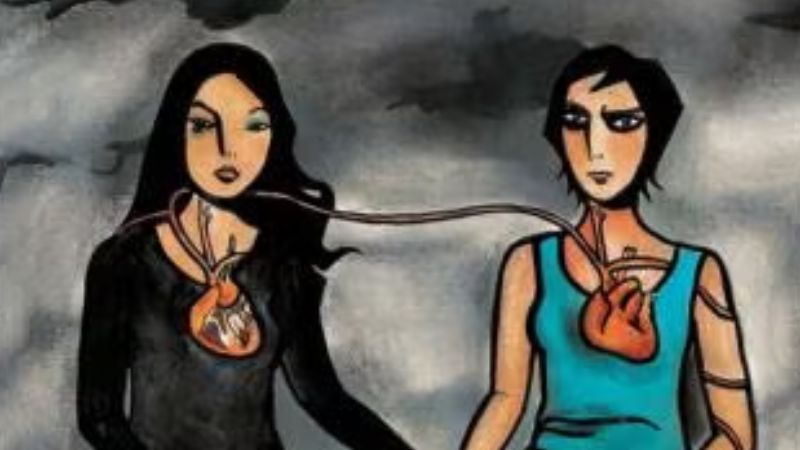
Kari by Amruta Patil
This graphic novel begins with a double suicide pact in action—which fails. Kari and her lover, Ruth, both survive the attempt. When Ruth leaves, Kari is left heartbroken, and alone.
In this thrilling tale about lost love, grief, and loneliness, Amruta Patil shows us a young queer person making her way through the bustling, loud city of Bombay. Kari, the protagonist, must deal with the heartbreak of losing her lover, navigating a strained relationship with her roommates, and being queer in a world where queerness is constantly and repeatedly misunderstood.
The book has garnered a lot of attention for the way it has referenced paintings (such as The Two Fridas by Frida Kahlo, or even Da Vinci’s Last Supper). It draws on vivid and clear visuals, and centres around the power of building genuine bonds with others, and the importance of being yourself.
*****
Mekhala Singhal is Assistant Editor at Advisory.
 souk picks