

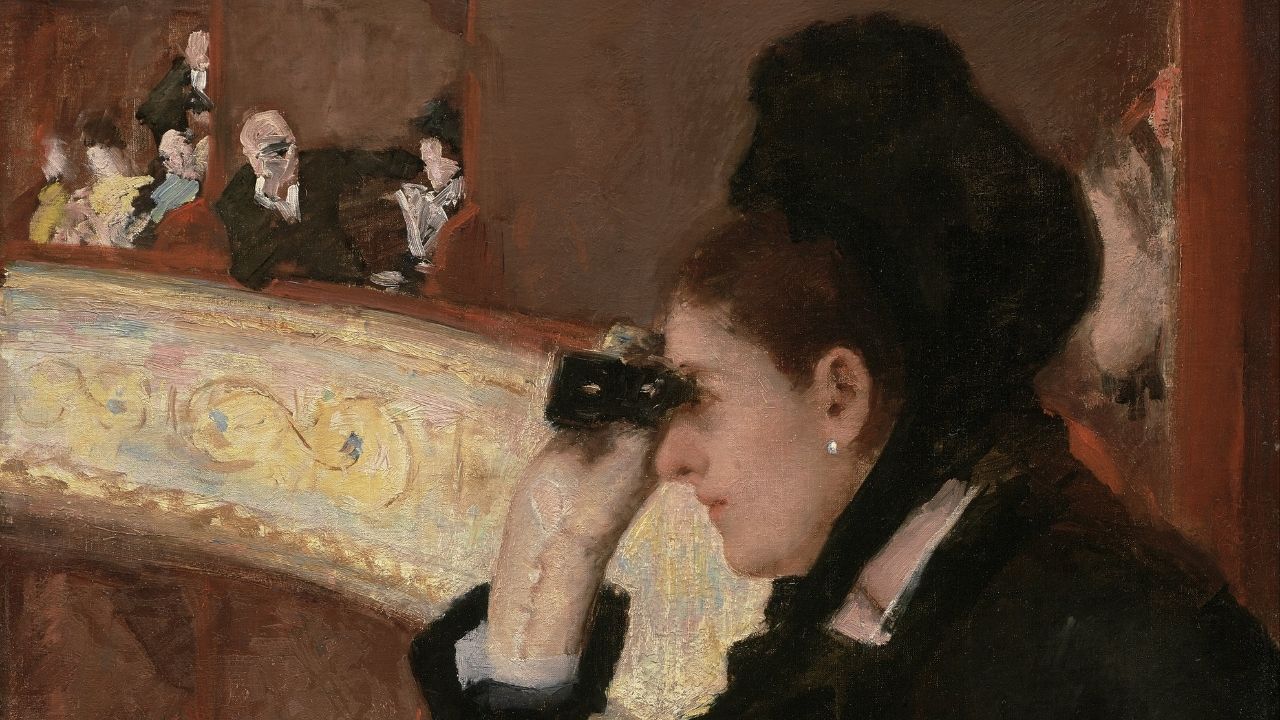
All eyes on me: Male gaze in art
Editor’s note: The ‘male gaze’, first introduced by writer Laura Mulvey half a century ago, has been an important critical lens with which to view cinema. How the woman becomes the object, on display for the audience. In this fabulous visual essay, Mekhala Singhal takes this idea of the male gaze, and analyses its role in the world of art, via famous, often timeless paintings.
Written by: Mekhala Singhal
*****
From the start
In 1972, writer John Berger created Ways of Seeing, a series of 30-minute episodes exploring the role of art in modern society. Aired by the BBC, this show was later adapted into a book by the same name. Widely regarded as one of the most influential commentaries on art and society, John Berger’s Ways of Seeing examines what we now refer to as the ‘male gaze’. He writes of the socialisation of the woman into the role of the surveyed, and how this constant surveillance of women turns them into surveyors of themselves, even when alone. In every woman’s head, there is a man, watching, determining her worth.
She has to survey everything she is and everything she does because how she appears to others, and ultimately how she appears to men, is of crucial importance for what is normally thought of as the success of her life. Her own sense of being in herself is supplanted by a sense of being appreciated as herself by another.
The ‘male gaze’, as a term, was introduced in 1975 by author and theorist Laura Mulvey. In her landmark essay, ‘Visual Pleasure and Narrative Cinema’ Mulvey explained that in most Hollywood films, the woman is an object desired by the protagonist. The viewer, asked to see themselves in the protagonist, thus ends up objectifying the woman in the film. The woman here is critical—she is passive; a character built to be desired and coveted,while the men drive the plot and action of the story. She is shot in ways that turn her body into pieces to be consumed—a close up of her legs, or of her torso, or even just her arms, isolated—she is object first and person never.
So, what does this have to do with art?
The nudes
We go back to what John Berger was saying in Ways of Seeing. Entering into the 15th century, once art trends started to move away from traditional and classical narrative descriptions, particularly post the medieval era, nudes became more popular among painters. Michelangelo’s ‘The Creation of Adam’ is a good example of this shift. Other influential artists in this era were Botticelli, Titian, and Tintoretto.
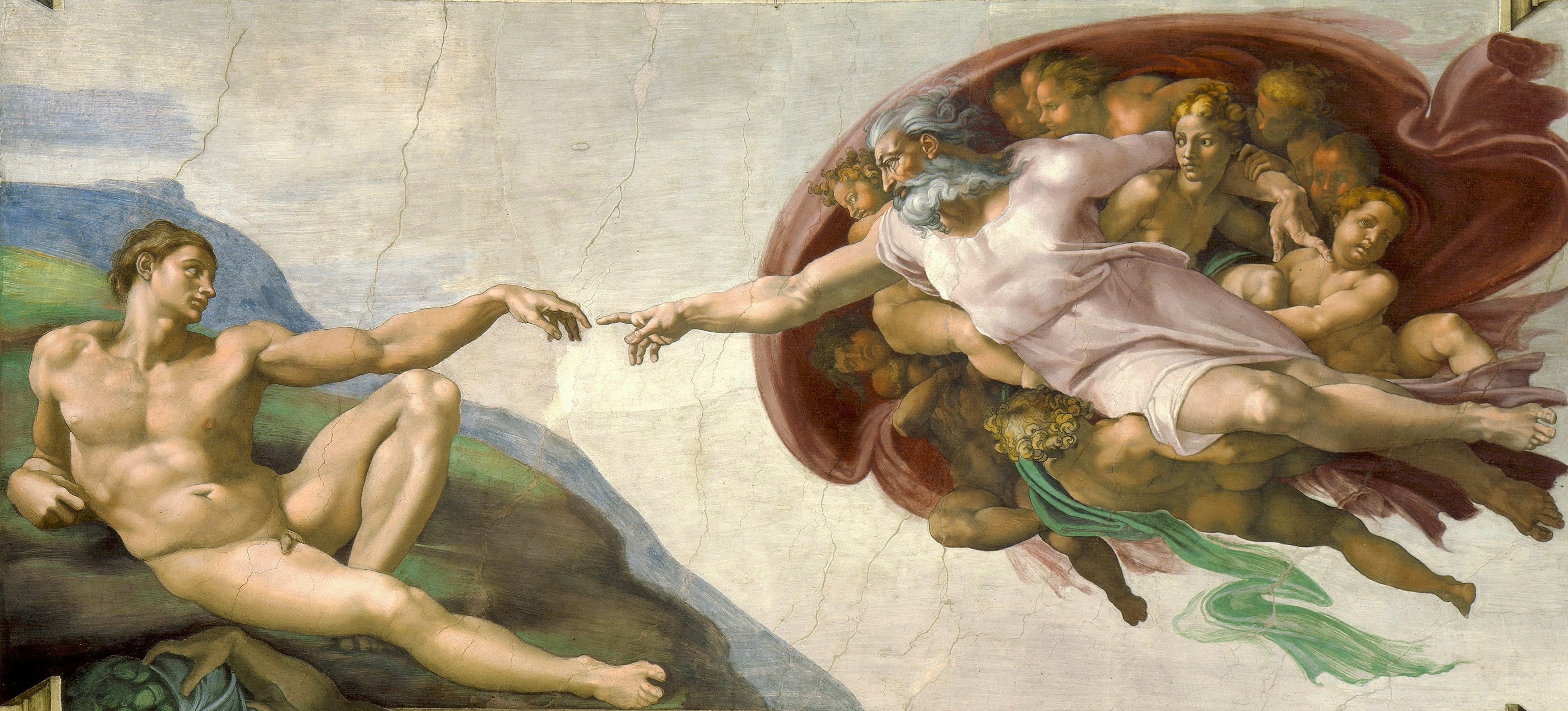
Even in painting these nudes, the painters’ subjects were made to be objects of consumption, with the viewer acting as spectator. Take, for example, this painting called ‘Susanna and the Elders’, by Tintoretto.
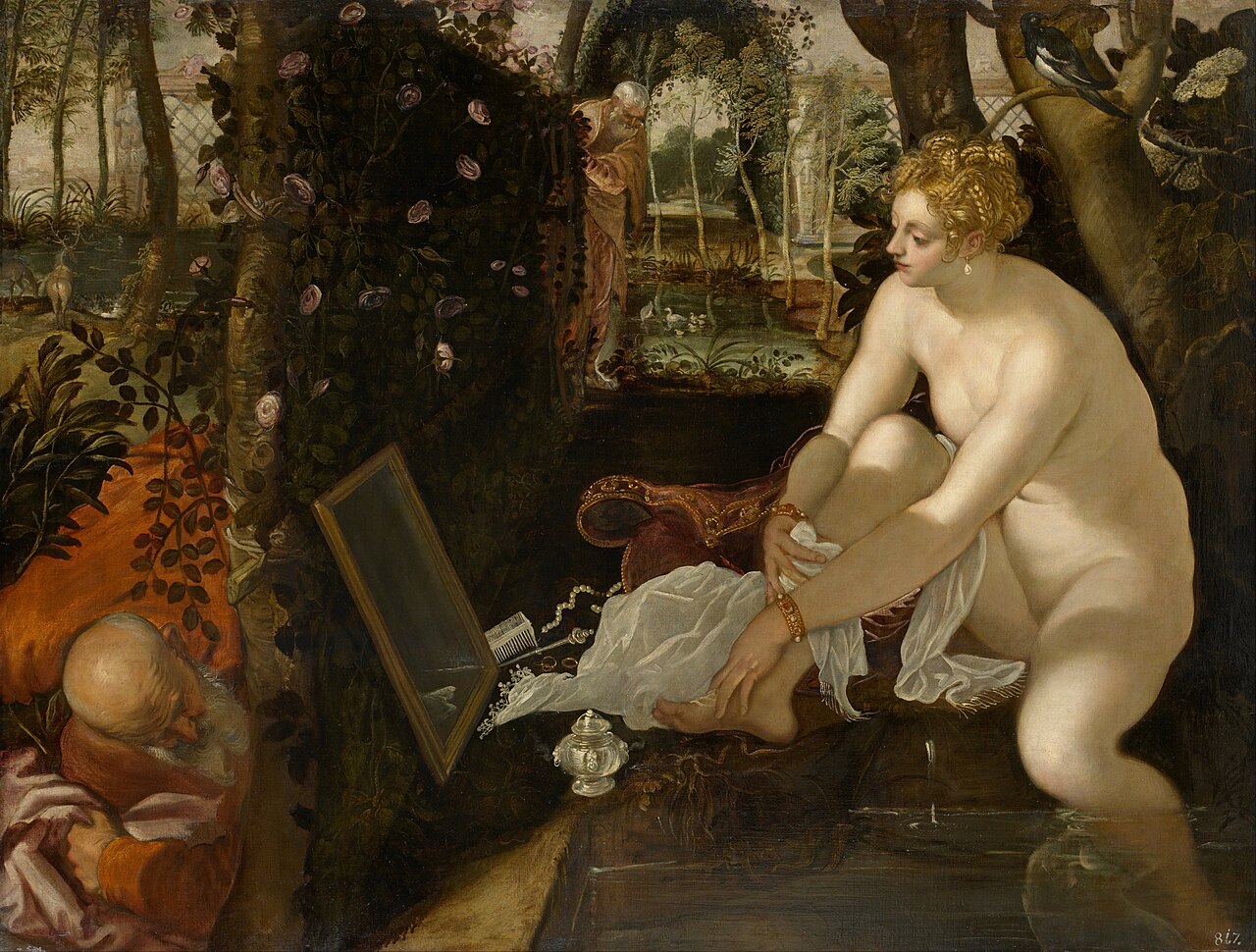
It depicts a moment from the Bible: two men find each other spying on the same woman—Susanna—as she bathes. They decide to join forces to blackmail her into giving into their advances, and threaten to accuse her of adultery if she doesn’t. Susanna refuses, and is condemned to be executed for her sins. However, as she looks to the heavens for help, a biblical prophet named Daniel catches the men in their lie. The men are to be condemned, and Susanna freed.
The painting shows the moment of Susanna being spied on as she undresses. We, the viewers, join the elders in taking pleasure in viewing Susanna; we become the spectators, turning the woman into an object to be watched. This is the male gaze.
In some paintings, Susanna is looking back at the viewer. In Tintoretto’s version, she is looking into a mirror. By painting Susanna with a mirror, the painter also creates a subject who is looking at herself while others look at her. And while this added detail may seem innocuous, it has a purpose—Susanna is now vain, and concerned with the self. Berger writes,
You painted a naked woman because you enjoyed looking at her, you put a mirror in her hand and you called the painting Vanity, thus morally condemning the woman whose nakedness you had depicted for your own pleasure.
The real function of the mirror was otherwise. It was to make the woman connive in treating herself as, first and foremost, a sight.
Many women in the nude paintings Berger talks about look the viewer directly in the eyes. At first, the women seem to be holding our gaze, asking us what we see. But when we look deeper, there’s more. These women are painted first and foremost to be looked at. By having them look back at the viewer, the artist is projecting his desires upon his subject. Thus, the woman is forced to look at her own surveyor. It is a sign of submission. You can see it in ‘Venus of Urbino’.
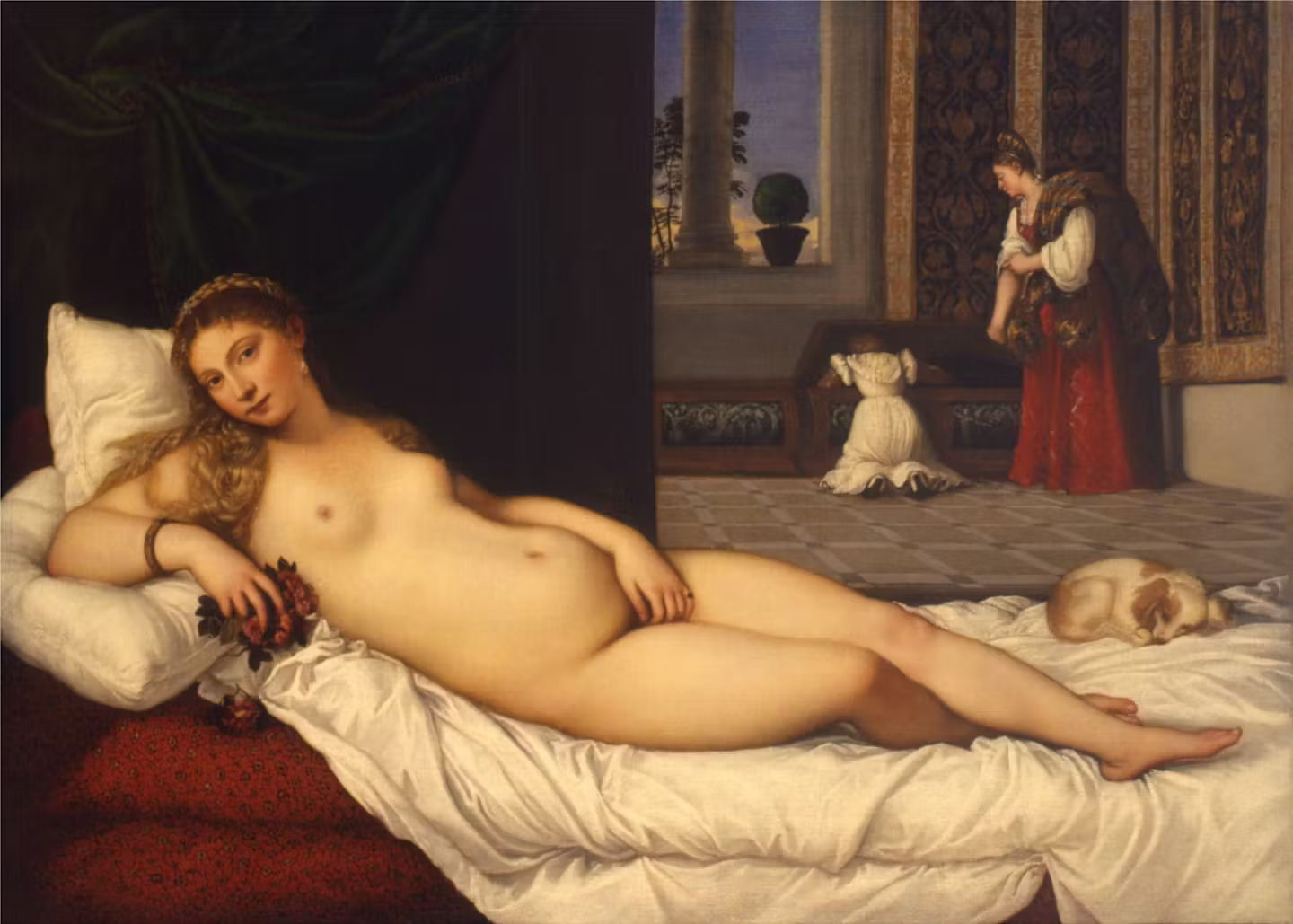
‘Venus of Urbino’, also known as the ‘Reclining Venus’, is a 1534 painting by Italian artist Titian. It is unclear whether there was a specific woman Titian was painting, but she is generally considered to be the Roman goddess of love, beauty, and desire, Venus.
Even in Botticelli’s famous ‘Birth of Venus’, we see the birth of the goddess as she emerges from the sea.
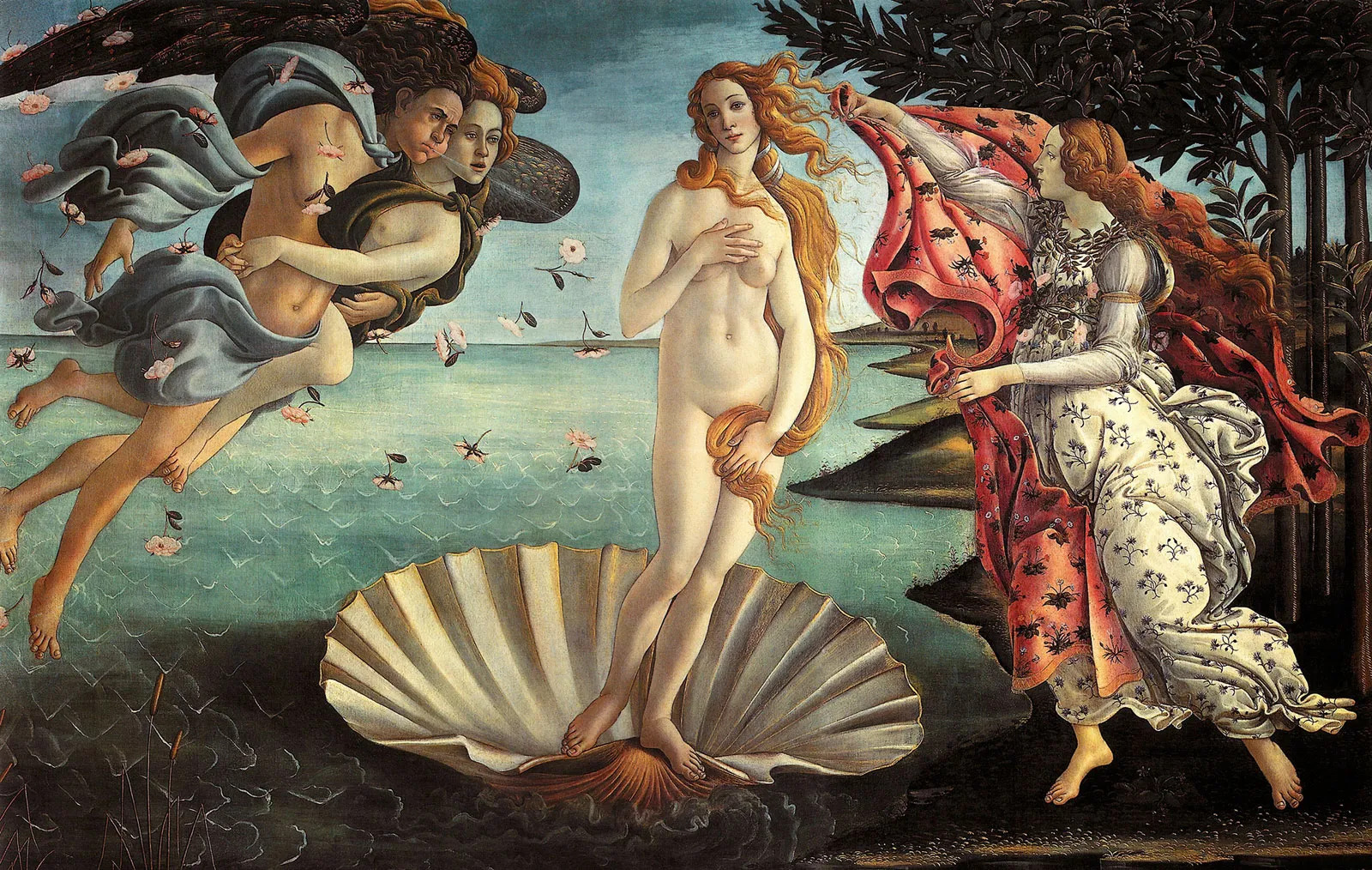
Here, Venus’s body’s proportions are strange, with her elongated neck and impossible stance. Yet she is a thing of beauty. Her nude form is central to the image, and her outline is poised and elegant, despite its irregularities and improbabilities.
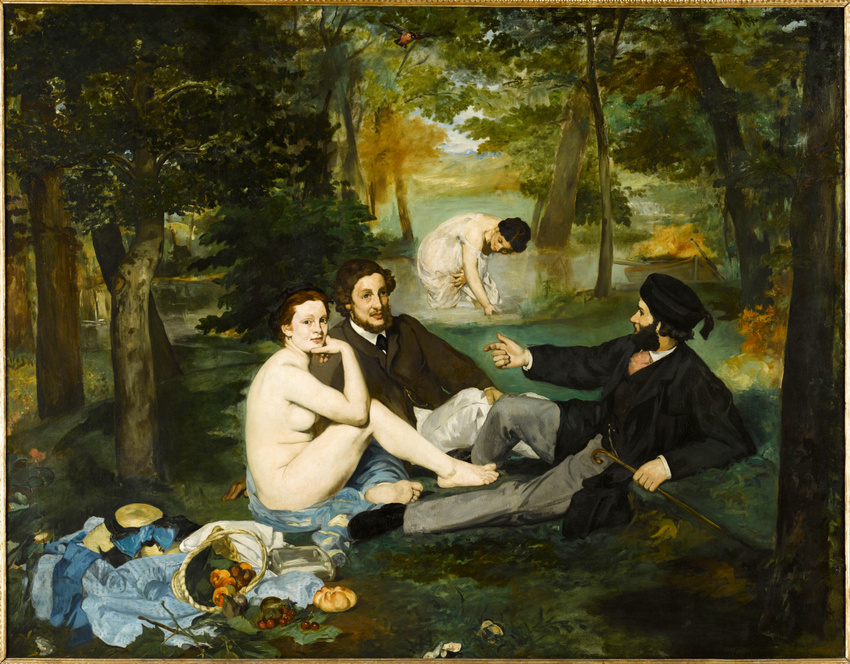
And it is not just a sign of its times. A couple centuries after Titian painted ‘Venus of Urbino’, Edouard Manet, in his painting ‘Le Déjeuner sur l’herbe’ (1863) offers us the view of a group at lunch in a park. Strangely though, the women are naked or bathing, while the men are fully dressed.
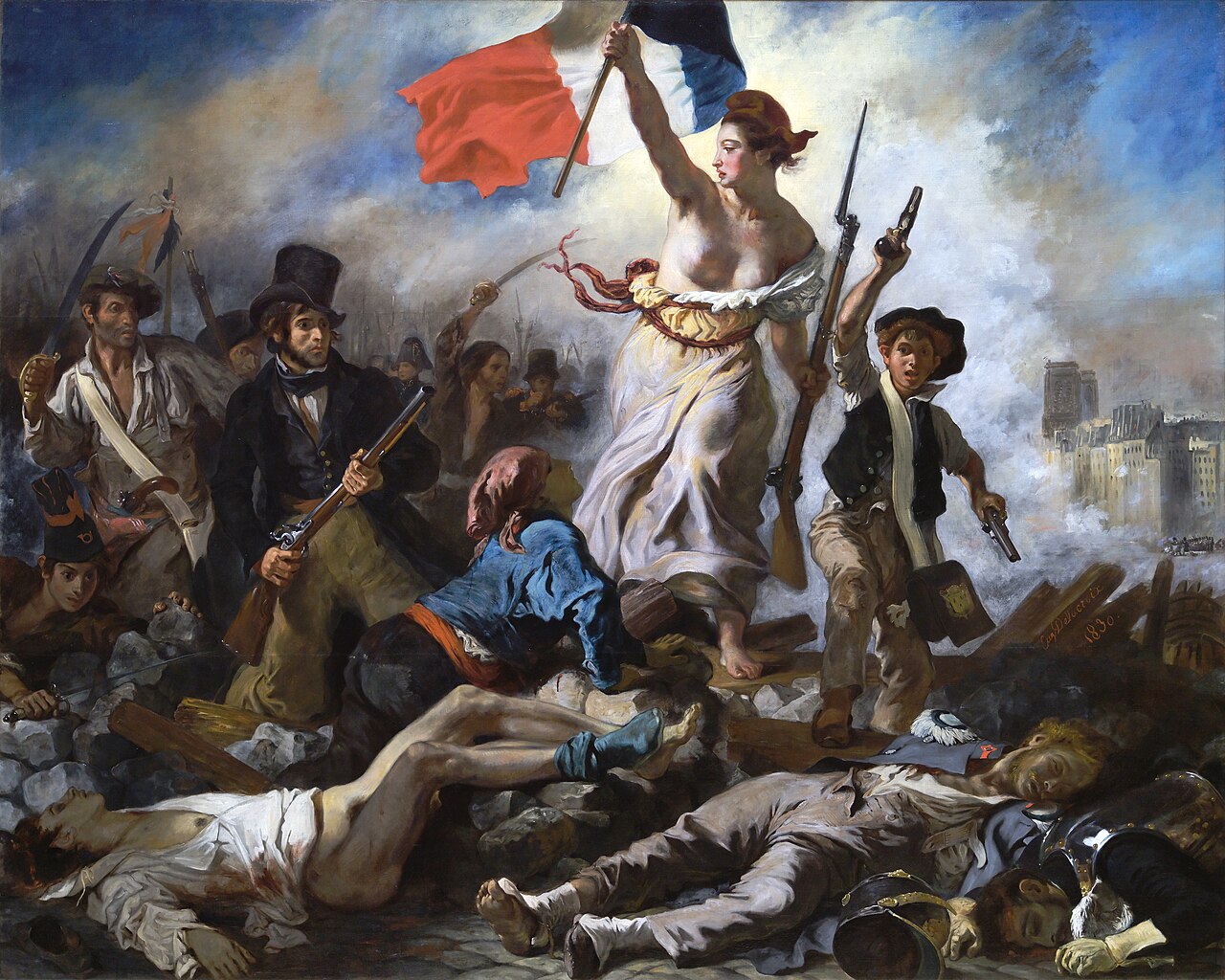
Over time, even as the male gaze in art persisted (see below the painting, ‘Liberty Leading the People‘ by Eugene Delacroix, painted in 1830), many painters who did not conform to the traditional depiction of women in painting also emerged. As styles, trends, and art movements changed, so did people’s understanding of the human body, the portrait, and of course, women.
Who is looking at whom?
Around the same time, Edgar Degas was painting his famous dancing girls and ballerinas. And at first glance, they do not seem problematic—the composition is beautiful, the girls are pretty much unidentifiable, and the focus is on them dancing. But Degas’s work still carried a voyeuristic element.
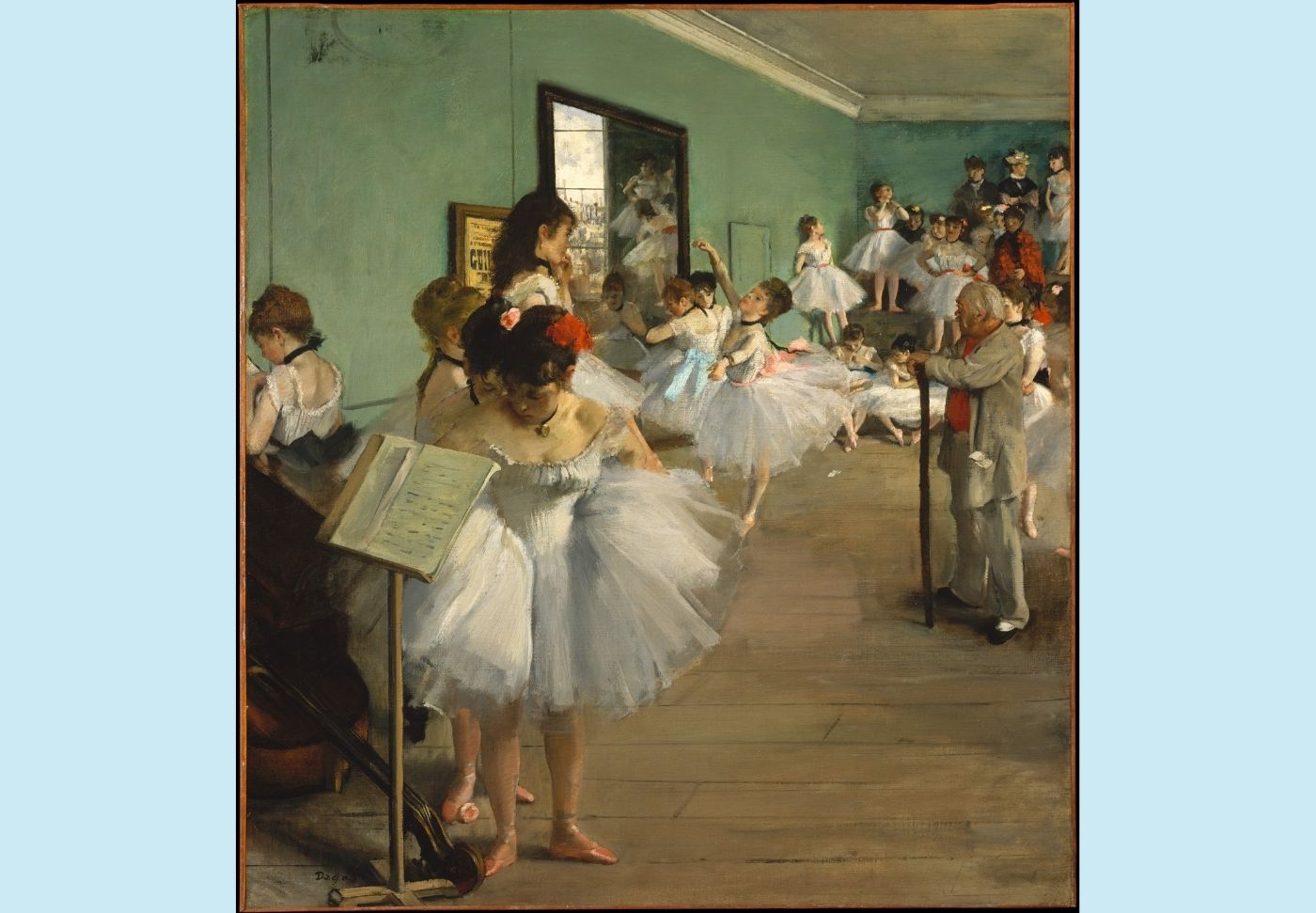
His paintings reproduce the understanding of the female body as the subject of the work, rather than the woman or the girl herself as an individual. The disdain he felt for women—depicted in these behind-the-scenes depictions of dance classes, with grown men watching the little girls dance—is evident despite the technical mastery and grace that he displayed in his work.
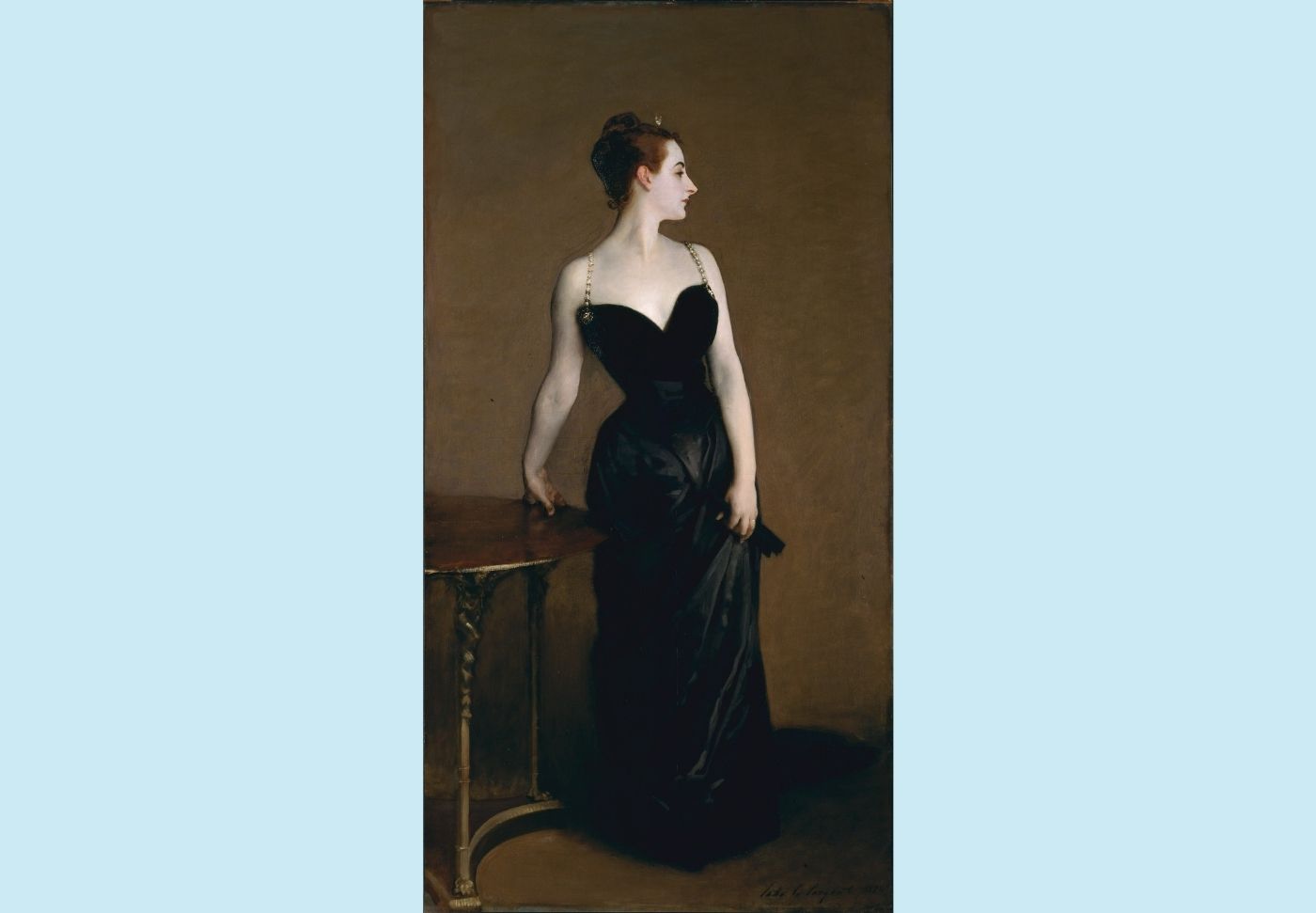
Let’s look at another painter from the 1800s to see how this could be done a little differently. John Singer Sargent was an American artist who specialised in portraiture. The grandeur of his paintings, coupled with his broad brushstrokes, made his portraits particularly interesting to the viewer. But the most interesting part was the subject itself. In his paintings of women, it is clear that there is no sexualisation of the subject.
The women in Sargent’s paintings command the gaze of the viewer, unlike the nudes we talked about earlier, where the subject’s gaze signifies submission. In Sargent’s works, the women are whole people with personalities and a humanness that emanates from the surface of the painting.
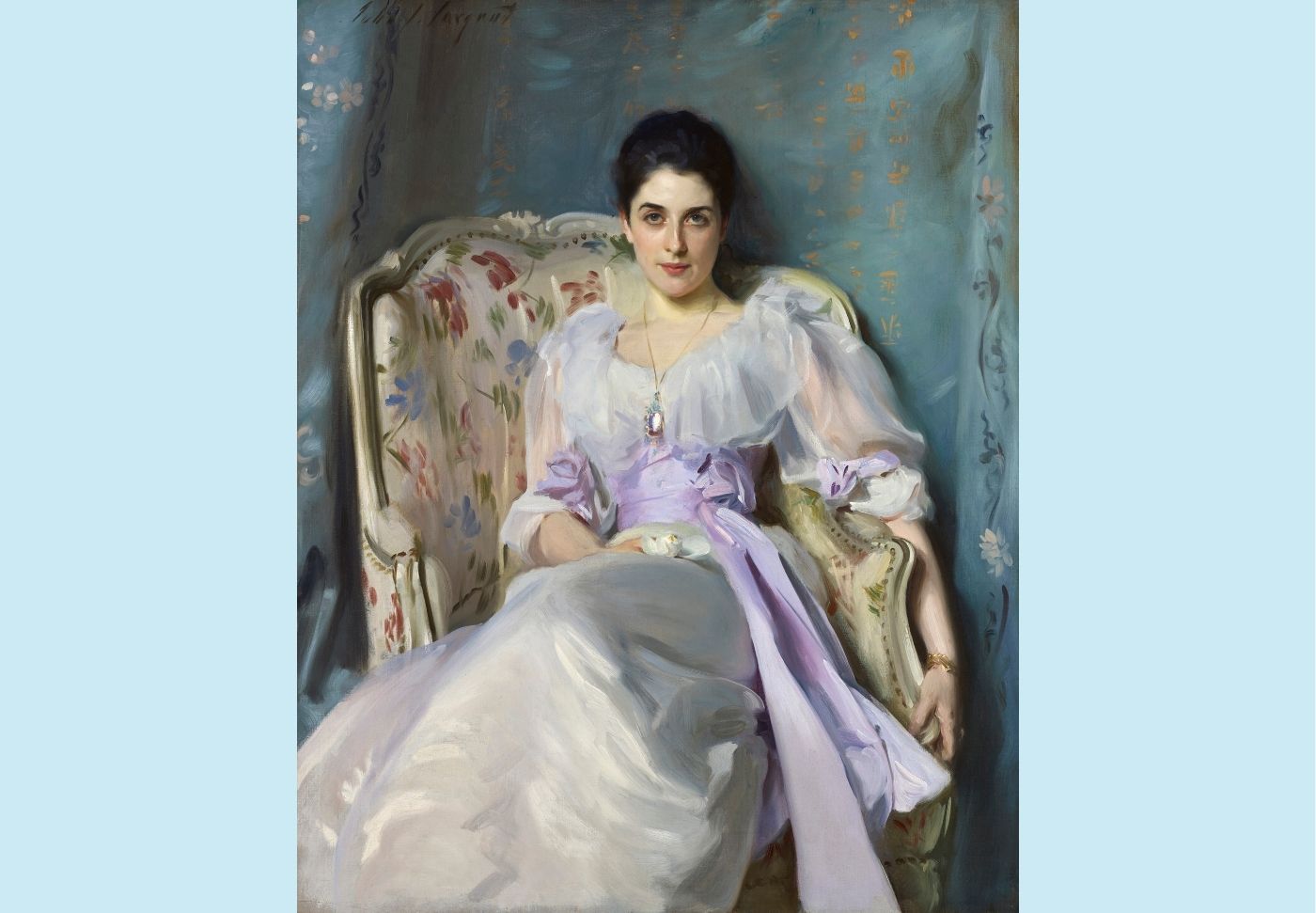
It is no wonder that Sargent was so popular for his portraits at one point that he could make enough money from just one portrait to buy a house. Eventually, however, he moved away from portraits to pursue other styles.
Some say that Sargent’s (alleged) queerness was the reason for his ability to paint women with the care and empathy that he did. In review of a book by Paul Fisher about Sargent’s life, titled The Grand Affair: John Singer Sargent in His World, the critic, Andrew Holleran, writes,
For all his talents in various mediums, his massive productivity, the simplest things of all (the male nudes), done for his own pleasure, could have been Sargent’s way of expressing something he could not in any other way.
Mary Cassatt’s unsurveilled women
For years, and even today, the idea of what a woman must be has been pretty standard—beautiful, poised, sophisticated. But there have also been challenges to this system.
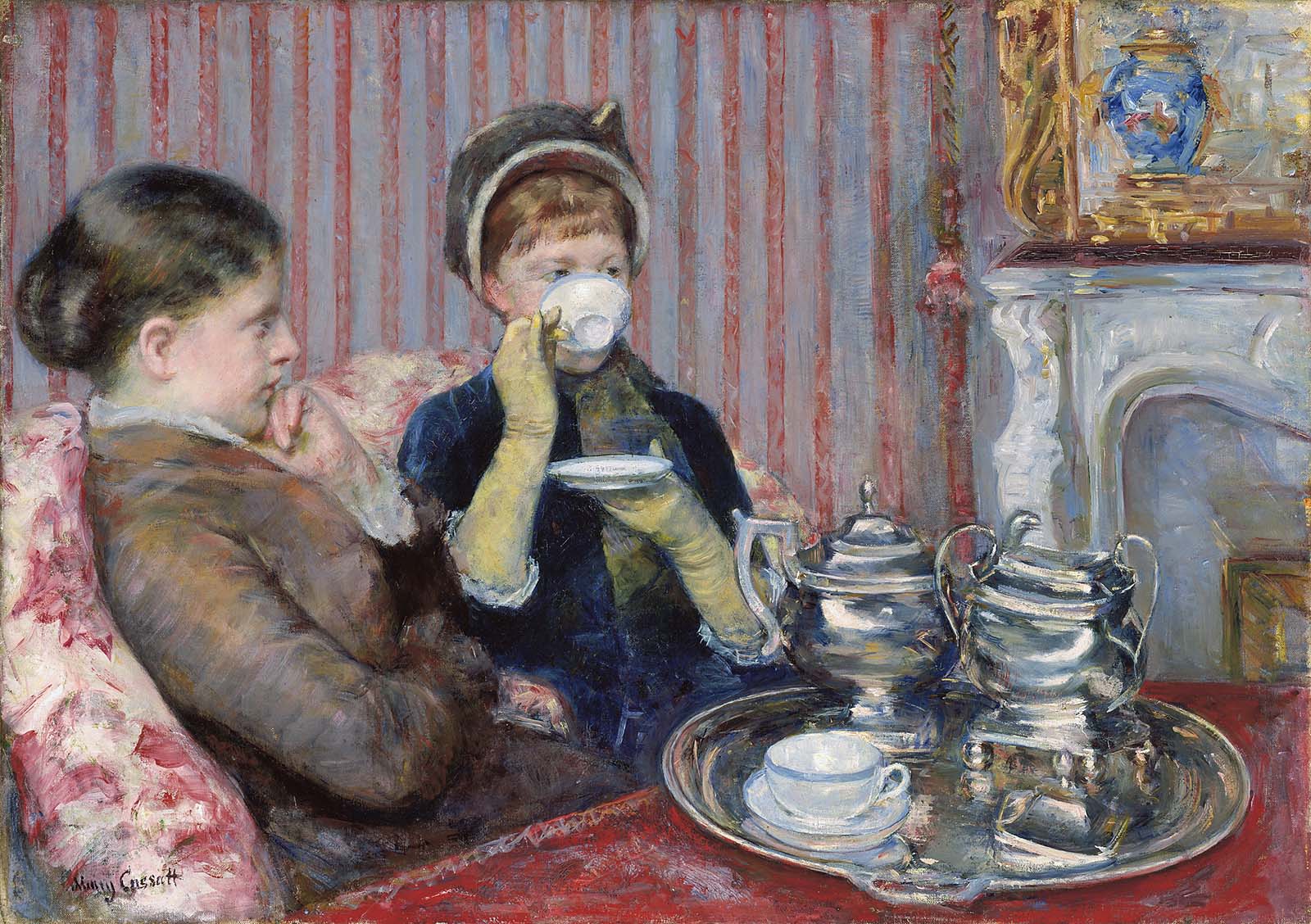
Mary Cassatt was an impressionist, and contemporary to artists like Degas. Much like him, Cassatt was also a figurist, painting people’s bodies and forms in motion and stillness, studying their movements and relationships with others.
Her paintings focused on women as well, but treated them as individuals with identities, thoughts, and ideas, with lives and relationships outside of men. She painted mothers and daughters, friends, lovers. In this painting below, titled ‘Maternal Caress’, a child holds their mother’s face. Neither mother nor child is turned towards the viewer, they are looking at each other—there is a tender everydayness in the painting.
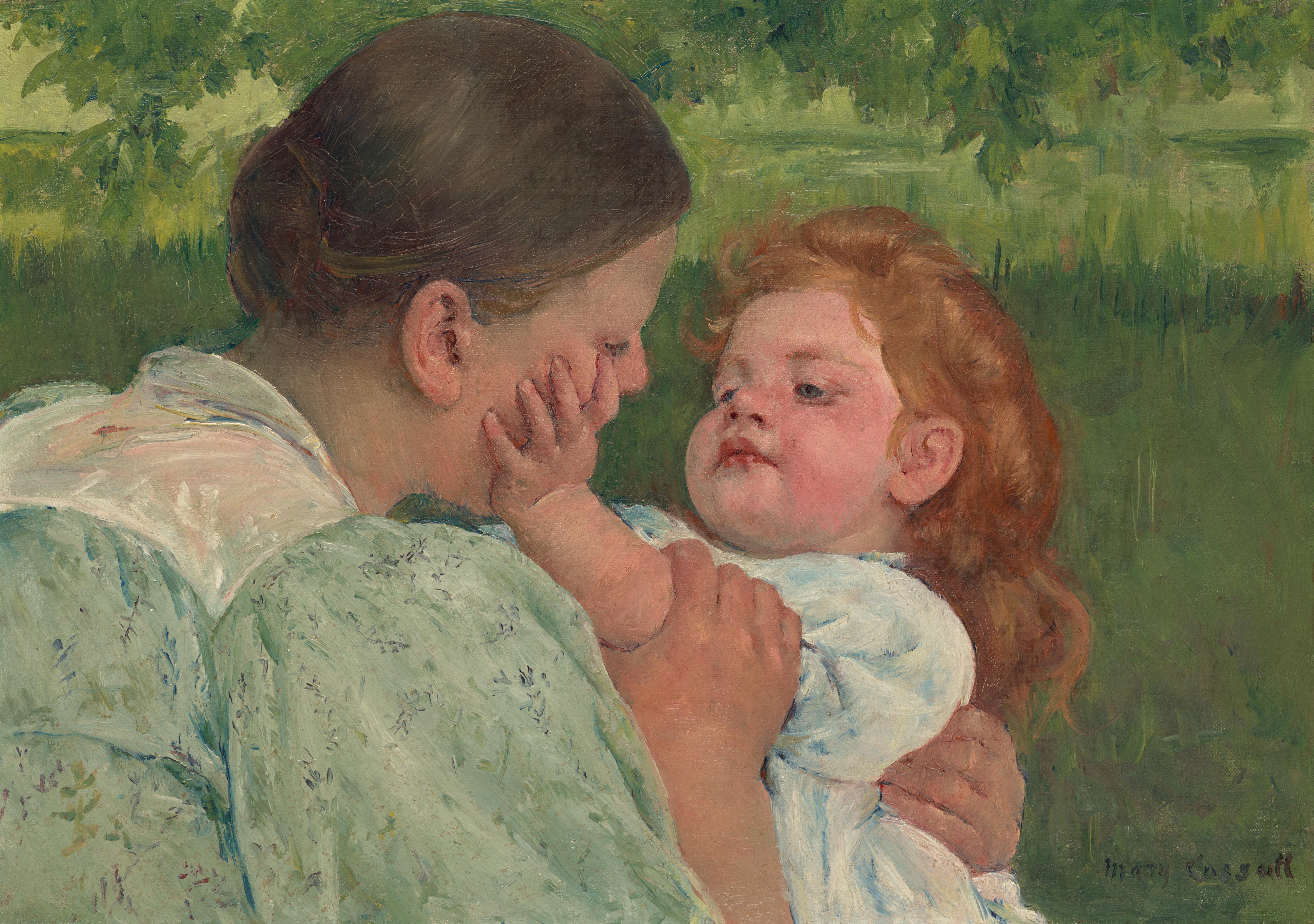
Cassatt’s women are unmonitored and unsurveilled. She is able to subvert the expectations placed upon womanhood by simply portraying them as they are, not as they should be, or how men see them to be.
Even as counterpoints to it emerged with society evolving over time, the male gaze has never truly disappeared from art. All one needs is to skim through the pages of a magazine, or take a trip to the cinema, to notice that. However, what’s interesting are the many ways in which the male gaze has been rejected, subverted, and unlearned by artists over time—in cinema, painting, or photography. And while a ‘female gaze’ may not exist in the same way that the male gaze does, there are several examples of artworks, TV shows, and movies that focus on the woman as a protagonist, and the woman as a viewer. As the art world grows and expands, and more and more women gain access to it, there is greater scope for a rejection of the traditional male gaze, and a broadening of the horizons for artists of all genders.
*****
Mekhala Singhal is Assistant Editor at Advisory.
 souk picks