
Written by: Aarthi Ramnath, Raghav Bikhchandani & Yash Budhwar
Our daily list of Souk picks
Editor’s note: As you may have noticed, we just unveiled a beta version of Souk—which has one simple goal: To help you find unique, high quality products that are worth your time and money. We’re picking our faves from their latest curation in the House & Living section—this one’s all about essentials to dress up your dining table!
One: We absolutely love this rose-pink linen table cloth from Sanctuary Living. It is printed with hand-painted florals inspired by Himalayan plants—think wild ivy, tiny blue blooms, and soft pops of green. The fabric has a nice, easy drape, and the stitched border adds structure. We like how it instantly brightens up the table, whether you’re laying out a full meal or just catching up over tea.
Two: This AVSAR dinner plate keeps things minimal but interesting. The rim is lightly hammered for texture, and the centre features a single green sprig painted by hand. It’s subtle but distinctive, and works well with other neutrals or colour-heavy tablescapes. Looks especially nice layered over soft linens and matched with glass tumblers or ceramic bowls and appetizer/salad plates from the same series.
Three: Cutlery usually swings between too stuffy or too plain, but this Taihi Champagne Gold Brass set gets it just right. The soft gold finish brings a touch of warmth, while the clean lines keep things modern. It’s polished enough to set out for guests, but sturdy enough for everyday meals. Available as a 4-piece starter or a full 24-piece upgrade if you’re ready to redo the whole drawer.

You can check out the rest of the list here. There is much, much more over at souk.splainer.in for you to discover, be it Thai cooking essentials or pet-friendly carpets!
PS: This is a beta launch and feedback—good or bad—is key. So please email the team at dearsouk@splainer.in with your thoughts. We want to get this right!
Trump kills the great Indian (American) dream
The usual path to citizenship for Indians immigrating to the US looks something like this: student visas at the top of the funnel. Followed by a work permit like H-1B and then the green card—the final step before securing a US passport, which then seems almost inevitable. Within six months, Donald Trump has stomped on every leg of that pathway to that middle class dream. The damage may permanently damage the dreams of an NRI future.
The big picture stats: India has the largest diaspora in the world. The total number of Indians living abroad is approximately 35.42 million—which includes 15.85 million non-resident Indian citizens (NRIs) and nearly 19.57 million people of Indian origin. The United States has the largest number of Indians—with more than two million NRIs and 3.3 million of Indian origin. In other words, any dramatic change in that outflow will have consequences.
Goodbye US uni? In just five months—between January and May 2025—the number of student visas issued to Indians has dropped by 31.2%. In case you think this is a tariff issue, the percentage drop for visas for Chinese students was just 11.8%. You can see the country-by-country breakdown in this Mint graph below:
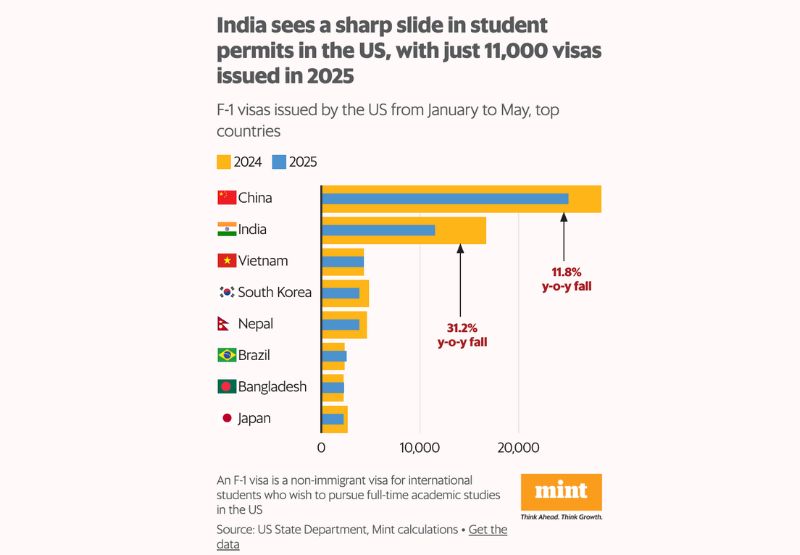
The most recent data available—of international arrivals in the US— indicates a drop of almost 50% for students from India in July.
Adding to this: In April 2025, a survey by the American Immigration Lawyers Association (AILA) revealed that Indians received 50% of the 4,000 student visa cancellation notices sent out since February. There has been no official explanation, but the popular view is that Trump is targeting international admissions at top universities—which rely on them financially. Indians are just the largest slice of that pie.
Point to note: Many Indian students were left stranded this summer—after the White House imposed a one month pause on visa interviews. A giant lemon that Ashoka University turned into lemonade—by opening a special admissions window in June.
Where’s my H-1B? The picture is less bleak for H-1B work visas… for now. In the same January-May period, 63,323 work visas were issued—a 11.1% drop from the same period last year. Not too bad right?
But, but, but: Indians account for 74.8% of all H-1B visas issued—with China at a distant second with 11.3%. Ergo, they will be most impacted by proposed plans to dismantle the current lottery system—which kicks in when the number of H-1B registrations exceeds the annual cap of 85,000.
Right now, anyone applying for the visa could luck out. The new rule, however, would shut out anyone applying for a Level 1 or entry level job—i.e. international students. Their chances of getting an H-1B will drop by a precipitous 54%.
The stinking cherry on the pie: Many Indian students in the US—especially in engineering—rely on staying in school until they score an H-1B. But that may soon be a bygone luxury:
[A] proposed rule moves from ‘duration of status’—a flexible concept that allows students to remain in the United States while making ‘normal progress’ in an academic program—to a new policy that imposes an artificial fixed end date.”
In other words, if you don’t complete your degree by that date—you will be deported for ‘overstaying’.
Where’s my green card? To be clear, the waitlist for Indians seeking permanent residency is already insanely long—80-100 years to get a green card when we last checked. The new Trump rules are aimed at family-based green card applications—the greatest number of which are Indian:
The agency is drawing a clear line between legitimate family reunification and what it calls "fraudulent, frivolous, or otherwise non-meritorious" petitions… USCIS says the goal is to boost its “capacity to vet qualifying marriages and family relationships to ensure they are genuine, verifiable, and compliant with all applicable laws.”
In other words, the process will be longer, more tedious—and the wait times will increase even further. Marrying a green card holder may not be such a good idea anymore.
Where is my passport? H-1B visa holders stuck in the neverending line for green cards had at least one consolation—their US-born kids would automatically become citizens. That may no longer be true thanks to a Trump executive order—which limits birthright citizenship to children who have at least one parent who is either a permanent resident or a US citizen.
Take my tourism dollars: When India and Maldives got into a diplomatic feud, Indians boycotted the islands en masse. But they have shown zero inclination to do the same with the US. In fact, the number of tourist visas issued between October 2024 and May have jumped 4.4%. The ironic reason: Maldives is not a stop on the Indians’ annual pilgrimage to visit NRI relatives. Btw, the tourist visa application fees are expected to jump 2.5X soon.
Reading list: Mint has the best compilation of data but is paywalled. Forbes has more on the overall decline of student visas—and new rules on overstays. Al Jazeera is best at explaining the H-1B squeeze. In June, The Guardian interviewed Indian students left in limbo over the Donald’s applicant interview pause.
A big experiment in pig lung transplants
The context: Scientists have already tried to transplant pig hearts, kidneys, and livers to humans. And they are getting better at it. A man in New Hampshire has been living with a pig kidney since January. Pigs are typically the species of choice because they are “anatomically similar to human organs and pigs come in all sizes. Furthermore, pigs have large litters and are easy to breed.” But pig organs need to be gene edited to ensure the human body does not reject it.
What happened now: Chinese scientists published results of their attempt to transplant the left lung of a genetically modified pig into a 39-year-old brain-dead man. According to their paper in Nature:
There were no signs of rejection, infection or graft failure in the first three days after surgery. However, 24 hours after the transplant, they noticed the lung was swelling, and that the tissue was also damaged from going without oxygen for a period of time during the transplant procedure. They also observed damage caused by antibodies attacking the organ on day three and six...
The organ survived for nine days before it was removed.
Why this is a really big deal: Kidneys and livers are tough to transplant—but lungs are in a league of their own:
[L]ungs are notoriously difficult to transplant, even from human to human, and mortality rates are high… Since lungs come into contact with the environment with every breath and are constantly being exposed to external threats.. the immune responses in these organs are thus more aggressive than those seen in other solid organs, like the kidney, and transplanted lungs are more likely to fail.
That said, the Chinese experiment is just that. Other scientists point out there is no proof that the lung worked: “Because the procedure left his functioning right lung in place, the experiment did not prove that the transplanted lung could sustain life on its own.” But it still is a “first critical step” toward making lung transplants more widely available. (Nature, login required, The Guardian)
Saving Fallingwater: Frank Lloyd Wright’s drippy design
About Fallingwater: It is a stunning summerhouse designed by the legendary Frank Lloyd Wright in the 1930s—and is located near Pittsburgh. Built atop a waterfall in the woods, the house is considered a masterpiece and is a UNESCO World Heritage site—visited by 140,000 tourists a year. You can see the gorgeous building below.

What happened now: The damn house may be pretty but it’s leaking like a sieve—precisely because of Wright’s design:
Particularly problematic are the flat roofs and terraces that make Fallingwater so indelible — and provide the perfect place for water to pool… Ironically, the “water” in Fallingwater’s name — the creek and waterfall below — is not the source of moisture infiltration. Instead, water has gotten into the house in other ways: seeping in around window and door frames and through voids in the stone masonry walls, which were filled with rubble during construction that has settled over the last century.
And it will take a whopping $7 million to save the building.
But the truly notable bit: The house was leaking even before its owner moved in back in the 1930s. The drippy design is a lesser known signature of Wright’s architecture:
The homes of the legendary architect, who pushed the limits of design and technology, are well-known for their drip, drip, drips, even when they aren’t perched on water features. “In the Wright community we describe our houses by how many buckets it requires to capture all the leaks,” [Fallingwater director Justin] Gunther says. “We’re hoping to get to no buckets.”
In fact, the bug may in fact be a feature: “Wright often joked his buildings were like leaving fine art out in the rain.” Maybe that will teach us to be less judgey when our airports turn into mini-pools.
Reading list: Washington Post (splainer gift link) for the entire story on this iconic building. You can also check out Wall Street Journal (splainer gift link) which has more on the renovation challenges.
MAP Academy & Nalli Fellowship is now open!!
Editor’s note: As you know, the wonderful MAP Academy is our content partner for Advisory. It is one of the few Indian institutions deeply invested in cultural research and education. They also offer rare funded opportunities for researchers, designers, archivists, journalists, writers and educators. The Nalli Fellowship is one of them.
Over to MAP Academy…
Are you working on the histories and practices of South Asian textiles and their socioeconomic, environmental or cultural implications?
The MAP Academy & Nalli Fellowships is offering four Research Fellowships of Rs 5.5 lakh each, for the study of textiles from India, Pakistan, Bangladesh, Bhutan, Tibet, Afghanistan, Myanmar, the Maldives, Nepal, and Sri Lanka. Applications are welcome from individuals—students, journalists, educators, designers, researchers—as well as from collectives and non-profit organisations. The grant must be used to support one year of research, which may be part of a longer-term project.
Applications will be assessed by an Advisory Committee, based on the responses in the submitted form, which will also double as the project proposal. Shortlisted applicants will be interviewed via an online video call, after which a final selection will be made.
Applications will remain open until October 15, 2025.
Find out more, and apply through this link. For any queries, contact us at: fellowships@map-india.org.

what caught our eye
Trump’s 50% tariffs on India
- The Hindu has a curtain raiser for Washington’s 50% tariff hike on Indian goods—$47 billion worth of exports could be hit, with no word yet from New Delhi on counter-measures.
- Exports of textiles, gems and jewellery expected to be hit hardest.
- The Telegraph follows up with a good read on how Trump’s 50% tariffs on Indian goods are making life difficult for exporters—of products like tea and spices—with companies like Vahdam now slashing or pausing shipments to the US.
business & tech
- Apple sues Oppo for the alleged poaching of a member from its Apple Watch team to steal trade secrets on the product. Reminder: The Chinese phonemaker is Apple’s biggest rival in China.
- After kissing Trump’s ass with a golden plaque, Apple has assured India that it would not slow down its production in India.
- Spotify will now add a DM feature that will allow users to share music, podcast, and audiobook recommendations without leaving the app.
- A new study piles on the bad news for entry-level coders, revealing a 13% relative employment decline in early-career workers in the most AI-exposed jobs.
sports & entertainment
- Cadillac has signed Grand Prix winners Sergio Perez and Valtteri Bottas for its first Formula 1 grid in 2026.
- Indian Express analyses the Indian Badminton champ Lakshya Sen’s exit from the BWF World Championships 2025 in Paris.
- Irish rap group Kneecap—which set off controversy at the Coachella festival in April over support for Palestine—has canceled all of its upcoming US tour dates. But they haven’t changed their Canadian dates.
- Taylor Swift and Travis Kelce are now engaged. Their Instagram post says: “‘Your English teacher and your gym teacher are getting married.”
- Francis Ford Coppola’s ‘The Godfather’ trilogy is returning to Indian cinemas in a 4K restored version.
health & environment
- The Department of Health and Human Services has reported the first US case of a flesh-eating screwworm infection in years, found in a Maryland traveler returning from El Salvador, though officials stress the public health risk is very low.
- A new study in PNAS finds that migratory flamingoes in France’s Camargue region age more slowly than those that stay put.
- The Telegraph has a good read on how McDonald’s, Amul, startups, Bollywood stars and cricketers are joining forces to turn protein into India’s next big wellness obsession.
- Mongabay has a good read on India gearing up for its second appearance at the Spogomi World Cup in Japan, a global litter-picking sport where teams race to collect and sort trash.
meanwhile, in the world
- Journalist Valerie Zink in NB Media Co-op pens a must-read essay on why she can no longer work with Reuters—citing their coverage of Israel’s killing of journalist Anas Al-Sharif and the rest of the Al Jazeera crew in Gaza City.
- The Guardian profiles the five Palestinian journalists—Moaz Abu Taha, Mariam Abu Dagga, Mohammad Salama, Ahmed Abu Aziz and Hussam al-Masri—killed in an Israeli double-tap strike on Gaza’s Nasser hospital, in what has become the deadliest conflict for reporters ever recorded.
- Israel’s defence minister has vowed to keep troops on Syrian territory near Mount Hermon to “protect” Israeli towns, even as Damascus condemns the latest military incursion outside its capital as a grave threat to regional peace amid ongoing US-mediated talks.
- Piracy and armed robbery in the Malacca and Singapore straits have nearly quadrupled this year, with 80 incidents recorded in the first six months compared to 21 last year.
- Britain’s government will pay £2.9 million to Kenyans over a 2021 wildfire caused by its soldiers, after a landmark ruling stripped the UK military of legal immunity in the country.
- Iran has warned European powers that any move to reimpose UN sanctions will have consequences, even as both sides met in Geneva to continue nuclear talks.
- Fed Governor Lisa Cook is suing the Trump administration over her firing, in a case that could decide how independent the US central bank really is from the White House.
- Trump has warned he will slap tariffs of up to 200% on China if it holds back rare-earth magnet exports.
- Nigel Farage, whose Reform UK party is leading opinion polls, has taken a leaf from Trump’s playbook by vowing mass deportations if he becomes Prime Minister.
elsewhere, in India
- The Delhi High Court has ruled Prime Minister Narendra Modi’s degree records cannot be disclosed under the RTI Act on privacy grounds, a decision that comes as the Enforcement Directorate raids AAP leader Saurabh Bharadwaj and others—moves the party says are meant to distract from the row over Modi’s educational qualifications.
- Before the deadly Air India crash in June, a decade-long travel boom had left India short of pilots—many of them stretched to the limit, filing court petitions over exhausting hours and insufficient rest.
- The News Minute has the details on how inviting Banu Mushtaq to inaugurate Karnataka’s Dasara festival has reignited debates over whether the event is secular or religious.
- In an unprecedented order, an NCLAT judge recused himself from a corporate insolvency case after revealing that a senior member of the higher judiciary had tried to influence the outcome.
- A cloudburst in Jammu’s Doda district has triggered flash floods, killing three people, submerging homes, and collapsing the Mughal Maidan bridge in neighbouring Kishtwar.
- Mint, in a poll of 22 economists, reports that India’s economic growth likely slowed to 6.7% in April–June from 7.4% in the previous quarter.
- A Delhi court has issued a non-bailable warrant against former R&AW officer Vikash Yadav—also named in the US indictment over a murder-for-hire plot targeting Sikh separatist Gurpatwant Singh Pannun—after he repeatedly skipped hearings in an abduction and attempted murder case filed by a Delhi businessman. Read our Big Story for more background into the Pannun case.
- Devdutt Pattanaik, in the Indian Express, writes on how Madhya Pradesh’s recasting of Krishna from playful lover to masculine warrior icon echoes Gujarat’s martial traditions and reflects the many ways the deity has been reimagined over 2,000 years.
Six things to see
One: Sher-e-Punjab restaurant—a popular restaurant in Manali—was swept away by the flood caused by torrential rain which has been wrecking havoc in the region since Sunday. Only the gate of the restaurant remains. You can see the damage below. (Indian Express)
Two: Social media cannot get over US political scientist Carol Christine Fair using the C-word—and we mean “ch***ya” to describe Trump and his India policy—in an interview with British-Pakistani journalist Moeed Pirzada. You have to hear it to believe it! See the clip below. (NDTV)
Three: On Monday, Nvidia launched a “robot brain”—the latest generation of chips to be used in humanoid robots built by Amazon and Meta. Also known as the Jetson AGX Thor chip, these are 7.5X faster and capable of running generative AI models like ChatGPT. To state the obvious: they look nothing like a brain. (The Independent)

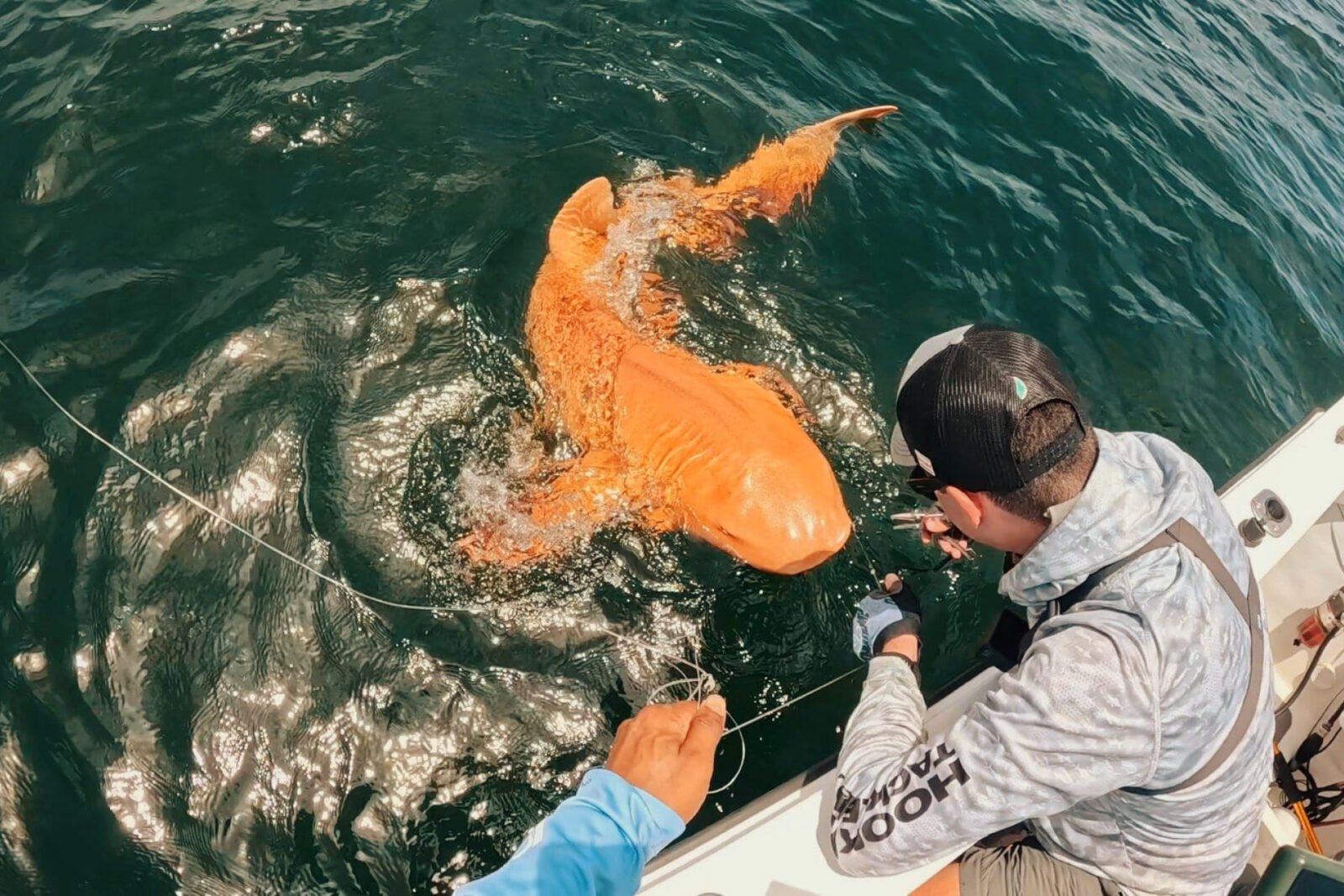
Four: Believe it or not this orange fish is actually a nurse shark. It is not brown like the others because of two extremely rare conditions—xanthism (yellow pigmentation) and albinism (lack of melanin). But, happily, despite resembling an inflated pool toy, the fish “appears to be quite healthy.” (Gizmodo)
Five: This is the trailer for ‘Inspector Zende’—which tells the story of IRL Mumbai police officer Madhukar Zende’s pursuit of serial killer Charles Sobhraj. We are delighted to see Manoj Bajpayee back in action as the title character—while Jim Sarbh plays the killer. The film will be released on September 5 on Netflix. (The Hindu)
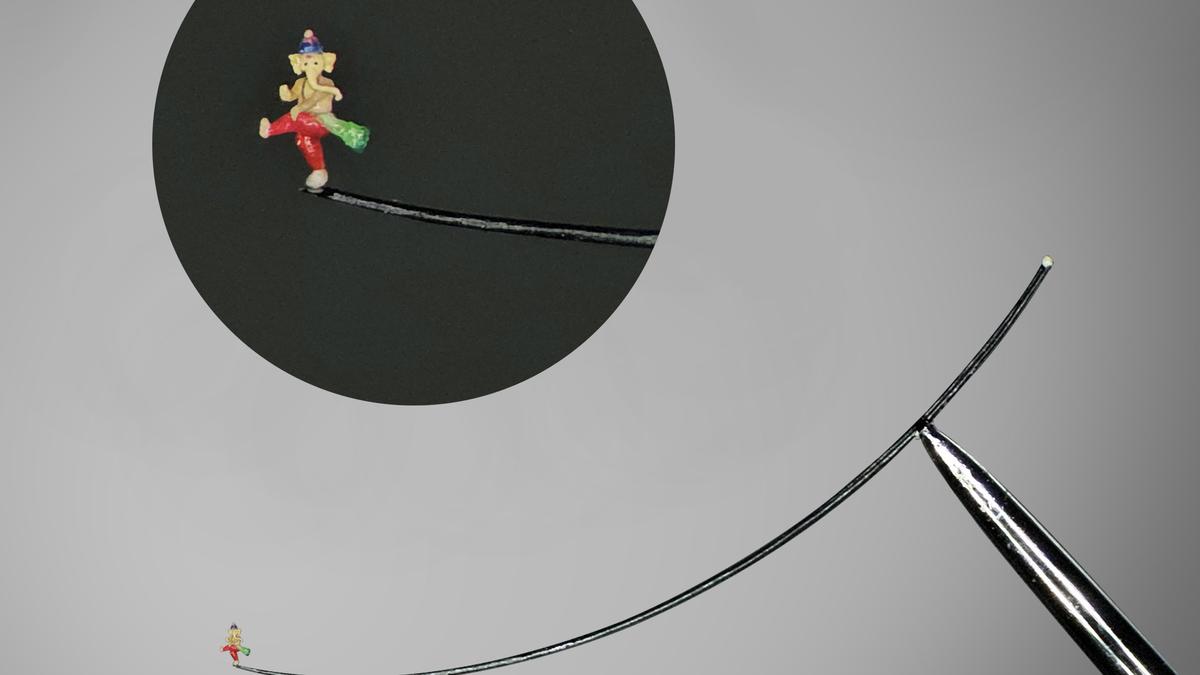
Six: Last but not least, to mark the happy occasion of Ganesh Chaturthi, here is a microscopic sculpture of a dancing Ganesha by Warangal artist Ajay Kumar Mattewada. It is only 0.37 mm in height and invisible to the naked eye. You can see how tiny it is when placed on an eyelash. You can check out more of the artist’s works on his website. (The Hindu)
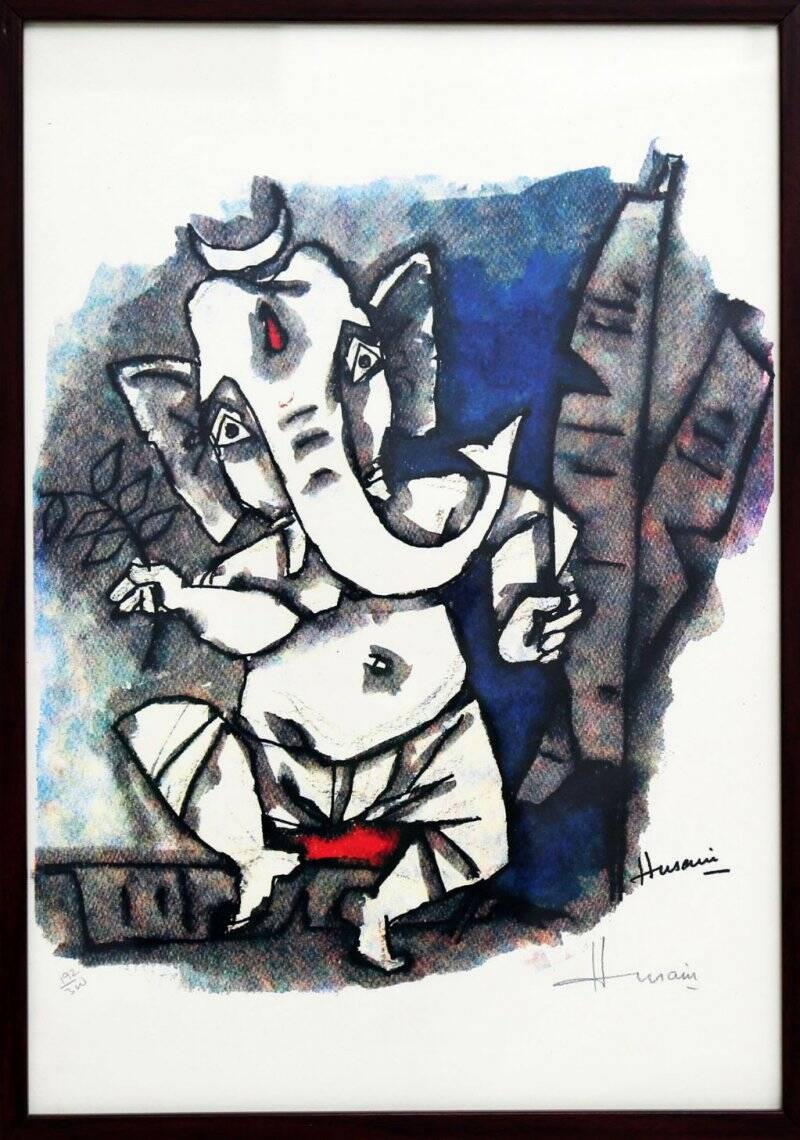
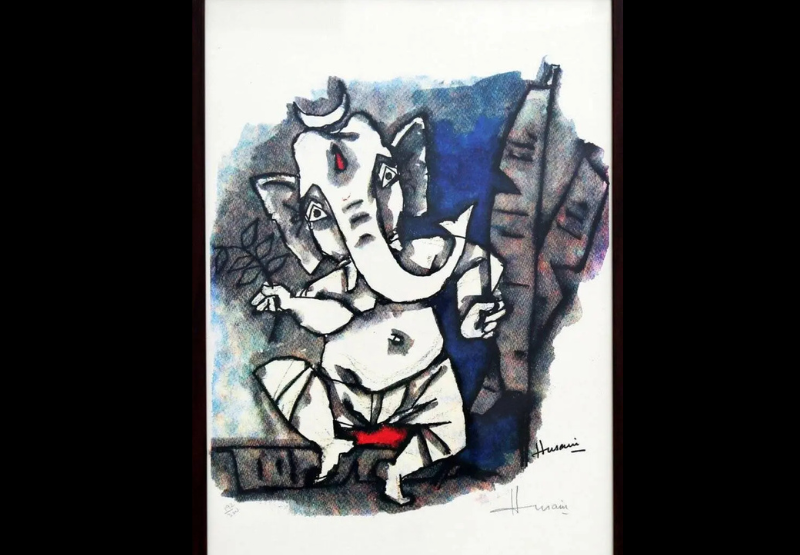
Since this is the last Ganesh Chathurthi edition, we leave you with a list of lovely paintings. Below is ‘Dancing Ganesha’ by MF Husain:
This is Shiva and Ganesha by Jamini Roy:

We also love this whimsical painting of Ganesha playing the sitar by M Singh.

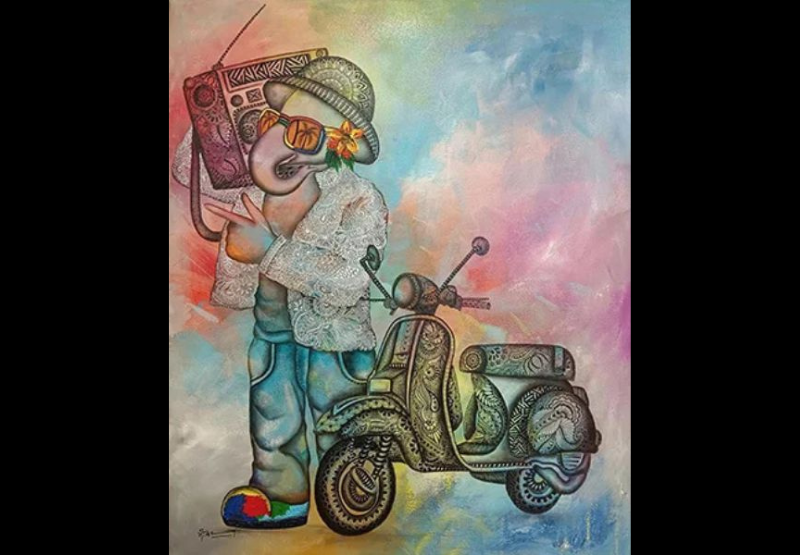
We even have two contemporary interpretations of Ganesha. This one has Ganesha on a trip to Goa by Mohit Bhardwaj:
And the very cool ‘Odyssey’ by Arvind Kumar Dubey:

feel good place
One: “This is Nora. She has been chosen as leader by a flock of ducks. Either that or they think she's a loaf of bread.” Lol!
Two: When Stefanos Tsitsipas and Carlos Alcaraz went to a lemonade stand.
Three: Home delivery is the best!
 souk picks