

‘Main Bhi Madonna’: The story of Indipop
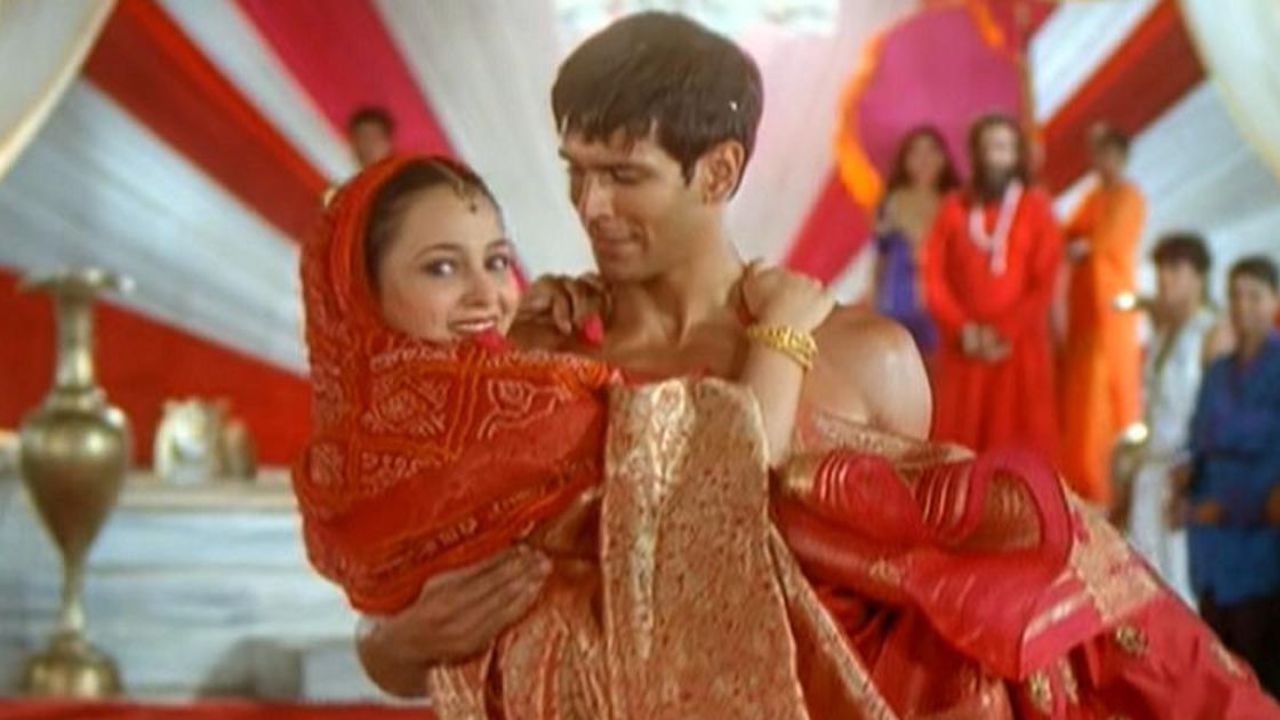
Editor’s note: Remember Alisha Chinai’s ‘Made In India’ video, where a young and undiscovered Milind Soman swept the singer off her feet? Or a brooding Lucky Ali serenading his ‘sanam’ with the Pyramids of Giza as his backdrop? For a hot moment in the mid-’90s, ‘Indipop’ broke Bollywood’s hold on pop culture. Alternative music went mainstream, as talented young singers took centrestage, getting heavy airplay on music channels with their blabbermouth VJs. Then the moment ended. In this throwback essay, Narendra Kusnur tells the electric story of Indipop, charting its glorious highs and its slow decline. And as always, we’ve made a fab retro playlist of the best ones.
Written by: Narendra Kusnur
*****
It’s time to swim in a sea of pop nostalgia. Those who watched music television in the mid-1990s would recognise this song, its singer, and the hunky model. Maybe it’s still part of their playlists.
The pop song ‘Made in India’, sung by Alisha Chinai and composed by Biddu, was one of the biggest hits of 1995, at a time when film music was still the main choice for Indian listeners. Its video, directed by Ken Ghosh and featuring Milind Soman, was a regular feature on Channel V, and the following year on MTV after it was launched as a 24-hour television channel in India. The term ‘Indipop’ had just been coined to describe Indian pop music by artists who mainly didn’t want to take the film playback route. Alisha became synonymous with this genre, and her album Made in India was a whopping success, with music label Magnasound selling an estimated 50 lakh units. Here’s another video. ‘Lover Girl’, from that record.
As a genre, Indipop was very popular from 1995 to 2000, after which there was a sudden decline for reasons we will describe below. In terms of sound, it was very different from Hindi film music. Its videos also depended on the singers or models, unlike the Bollywood tunes which were associated with actors who synched on screen. Take the example of Sonu Nigam, who had just begun his career when he sang Biddu’s song ‘Tu’ in 1998, appearing with Bipasha Basu. Compare it with his song in the film Kal Ho Naa Ho five years later, and see who gets the attention.
Let’s now look at how the genre developed and evolved. Though the name ‘Indipop’ was new when Made in India was released, it was not the first time the industry had attempted Hindi pop music. Biddu had earlier done that in the early 1980s with Pakistani siblings Nazia and Zoheb Hassan in the albums Disco Deewane and Young Tarang, and then with Shweta Shetty’s 1993 album Johnny Joker. Alisha had released a few albums before her 1995 super-hit. Suneeta Rao’s 1990 song ‘Paree Hoon Main’, with music by Leslee Lewis, became an evergreen hit, and was given a new twist by Falguni Pathak in Navratri festival shows. Let’s watch Shweta’s ‘Johnny Joker’ and Suneeta’s ‘Paree Hoon Main’.
The biggest hit from the first half of the 1990s came from Baba Sehgal, whose Magnasound album Thanda Thanda Pani sold 20 lakh units. Again, people started using the term desi rap a decade ago, but Baba did all that 34 years ago. His showmanship was on par with western stars, and yet very Indian. Let’s check his ‘Thanda Thanda Pani’ title track, with music by Charles Vaz, and also American rapper Vanilla Ice’s English song ‘Ice Ice Baby’, which ‘inspired’ it.
By now, you must have started humming your old favourites. Thank Magnasound, led by Shashi Gopal. It was the first label whose main focus was Indian pop music. After Baba, Shweta, and Alisha, it launched Daler Mehndi’s album Bolo Ta Ra Ra, adding a Punjabi bhangra twist to pop music. With their sheer energy, Daler’s live shows were a rage. Jawahar Wattal composed and produced the album’s songs. The following year, Magnasound took pop to another direction by introducing vocal fusion with Colonial Cousins, comprising Hariharan and Leslie Lewis. Both Daler and Colonial Cousins sounded very different from Alisha and Baba, but were accepted under the larger umbrella of Indipop. Also on the label’s roster were the young sibling duo of Shaan and Sagarika, introduced by Biddu. Let’s see Daler’s ‘Bolo Ta Ra Ra’ and Colonial Cousins’ ‘Sa Ni Dha Pa’.
Suresh Thomas set up Crescendo Music to focus on pop music—after its tie-up with German giant BMG, it became known as BMG Crescendo. The artists included Punjabi singer Sukhbir, Mehnaz, Anaida, and the unknown Lucky Ali, whose 1996 album Sunoh became a super-hit. The video of ‘O Sanam’, shot in Egypt and directed by Mahesh Mathai, became a benchmark. Lucky, son of film comedian Mehmood, became the new star, and his soulful songs bagged a heap of awards.
There were some freak successes too. Altaf Raja shocked the industry when his 1997 album Tum To Thehre Pardesi sold 70 lakh units, and its title song was heard widely on public transport across the country. The song had a qawwali style, and the label Venus Records (later renamed Ishtar) released a 15-minute video, which rarely made it to music channels because of its length. For old time’s sake, take a look. You can stop after the first ‘pardesi’.
The rise of Indipop coincided with other factors. One was the popularity of music channels. Channel V was already going strong, and introduced its music awards between 1996 and 1998. MTV, which had earlier occupied a two-and-a-half-hour slot on Doordarshan, came back as an independent 24-hour channel in January 1996. Other music channels ETC, B4U, and Zee Music focused on film music, but aired the new pop releases.
To talk about these songs and about youth culture in general, video jockeys—or veejays or VJs—were hired. Danny McGill, Ruby Bhatia, Luke Kenny, Kamal Sidhu, Sophiya Haque, Laila Rouass, and funny man Cyrus Broacha became role models. Things reached a point when many trendy college-goers wanted to dress like them (maybe not like Cyrus, though) and looked at VJing as a career option. Here’s a clip of Laila, a teenage girl’s idol.
More attention was now paid to producing classy music videos, which would be played on music channels to promote albums. Between 1996 and 1998, some of the best videos included the Colonial Cousins’ ‘Krishna’, Aslam-Shibani’s ‘Ho Gayee Hai Mohabbat’, Euphoria’s ‘Dhoom Pichak Dhoom’, Shankar Mahadevan’s ‘Breathless’, and Silk Route’s ‘Dooba Dooba’. All these songs had different styles of sound, using fusion, folk or rock. Shankar’s ‘Breathless’ was a one-of-a-kind number, with its video directed by Farhan and Zoya Akhtar. He didn’t get breathless singing it, but his listeners probably did hearing it. Let’s watch the video.
Sensing the rise in the popularity of Indipop, especially among the younger generation, some Hindi film playback singers recorded private albums. Instead of using the term Indipop, the labels preferred to call it ‘popular Hindi music’. Whatever the difference. Asha Bhosle released Jaanam Samjha Karo with music director Leslee Lewis, and Alka Yagnik did Tum Yaad Aaye with Raju Singh providing music and Javed Akhtar writing the lyrics. Let’s listen to Asha’s ‘Raat Shabnami’ and Alka’s ‘Saare Sapne Kahin Kho Gaye’.
Till the beginning of 1999, Indipop was in its glory phase. Related genres like folk-fusion (Indian Ocean), bhangra-pop (Daler’s subsequent albums), and Sufi-rock (Pakistani band Junoon, best known for the song ‘Sayonee’; video below) catered to different audience tastes.
The year 1999 had KK’s hit album Pal, produced by Leslee Lewis. Songs like ‘Aap Ki Dua’ and ‘Yaaron’ became big hits, and became a rage among college-goers. They continued to be regularly played by KK till his untimely death in 2022. Let’s listen to ‘Yaaron’, sung to symbolise friendship.
Slowly, the sparkle began to diminish. ‘Pop’ went the weasel. One of the reasons was the increasing clutter. Everybody wanted to enter the Indipop galaxy, and this included mediocre singers too. They made videos if they found some good-looking models and learnt how to hold a guitar on camera. With film music getting more exposure and being safer financially, singers like Shankar Mahadevan, Sonu Nigam, and Mohit Chauhan began looking for opportunities there. Channels started adding more youth lifestyle programming, reducing music content. And there was the remix craze, when pop musicians massacred old film hits with fresh takes, saturating the market.
After the year 2000, only a handful of Indipop albums did well. These include Adnan Sami and Asha Bhosle’s Kabhi To Nazar Milao in 2000 and Shaan’s Tanha Dil, composed by Ram Sampath and released the same year. Let’s watch the title tracks of both.
Throughout the 1990s, Indipop gave us many gems, and those who listened to them still bask in their memory. Of course, non-film music exists today under the banner of ‘indie’, though the rules and audience tastes have changed, with more musicians producing their own songs. Some old-time pop stars are still releasing songs. Adnan Sami has tied up with Zee Music, and one looks forward to his new fare. Lucky Ali regularly releases songs to this day. Let’s end this column with his latest single ‘Tu Jaane Hai Kahaan’. Maybe that’s a line we could ask to Indipop and its simplicity, in an era where the concept of VJ seems to be, well, Very Jaded.
Those memories would surely have taken some music lovers back in time. To recap, here’s a list of songs we mentioned.
- Alisha Chinai – Made in India
- Alisha Chinai – Lover Girl
- Sonu Nigam – Tu
- Shweta Shetty – Johnny Joker
- Suneeta Rao – Paree Hoon Main
- Baba Sehgal – Thanda Thanda Pani
- Vanilla Ice – Ice Ice Baby
- Daler Mehndi – Bolo Ta Ra Ra
- Colonial Cousins – Sa Ni Dha Pa
- Lucky Ali – O Sanam
- Altaf Raja – Tum To Thehre Pardesi
- Colonial Cousins – Krishna
- Aslam-Shibani – Ho Gayee Hai Mohabbat
- Euphoria – Dhoom Pichak Dhoom
- Shankar Mahadevan – Breathless
- Silk Route – Dooba Dooba
- Asha Bhosle – Jaanam Samjha Karo
- Alka Yagnik – Saare Sapne Kahin Kho Gaye
- Junoon – Sayonee
- KK – Aap Ki Dua
- KK - Yaaron
- Adnan Sami & Asha Bhosle – Kabhi To Nazar Milao
- Shaan – Tanha Dil
- Lucky Ali – Tu Jaane Hai Kahaan
*****
Narendra Kusnur has been a music journalist for over 40 years—including a decade-long stint covering the beat at the Mid-Day newspaper. He currently writes for The Hindu, Free Press Journal, Hindustan Times, and Rolling Stone India—besides the in-house magazines of prestigious institutions—such as NCPA and Shanmukhananda Hall.
 souk picks