
Equine beauty: The art history of horses
Editor’s note: From prehistoric rock art dating back 68,000 years to MF Husain’s dancing horses or Picasso’s seminal anti-war statement, horses have always enjoyed a starring role in human art. In this outstanding essay, our art expert Mekhala Singhal takes us through the history of horses in art and human society since time immemorial, and how this majestic four-legged creature became the eternal muse.
Written by: Mekhala Singhal
*****
2026 is the Year of the Fire Horse according to the Chinese zodiac, symbolising forward movement, independence, and endurance. Fittingly, for as long as humans have known horses, they’ve been a regular fixture in our art and mythology—in cave paintings, war paintings, landscape paintings…the list goes on. The animal has been embedded into the fabric of human life, playing an important role in human civilisation and the development of society: used to traverse miles of land, transport people, pull carriages. Bring soldiers into war, and bred to die on battlefields. Their size, strength, and ferocity, in tandem with their beauty, grace, and vulnerability, made horses special.
Naturally, humans developed a reverence for and affection toward them. Today, as society and technology has progressed, their primacy in art (and, indeed, society) has reduced somewhat. But history is littered with examples of this majestic animal being a beloved muse for artists across eras.
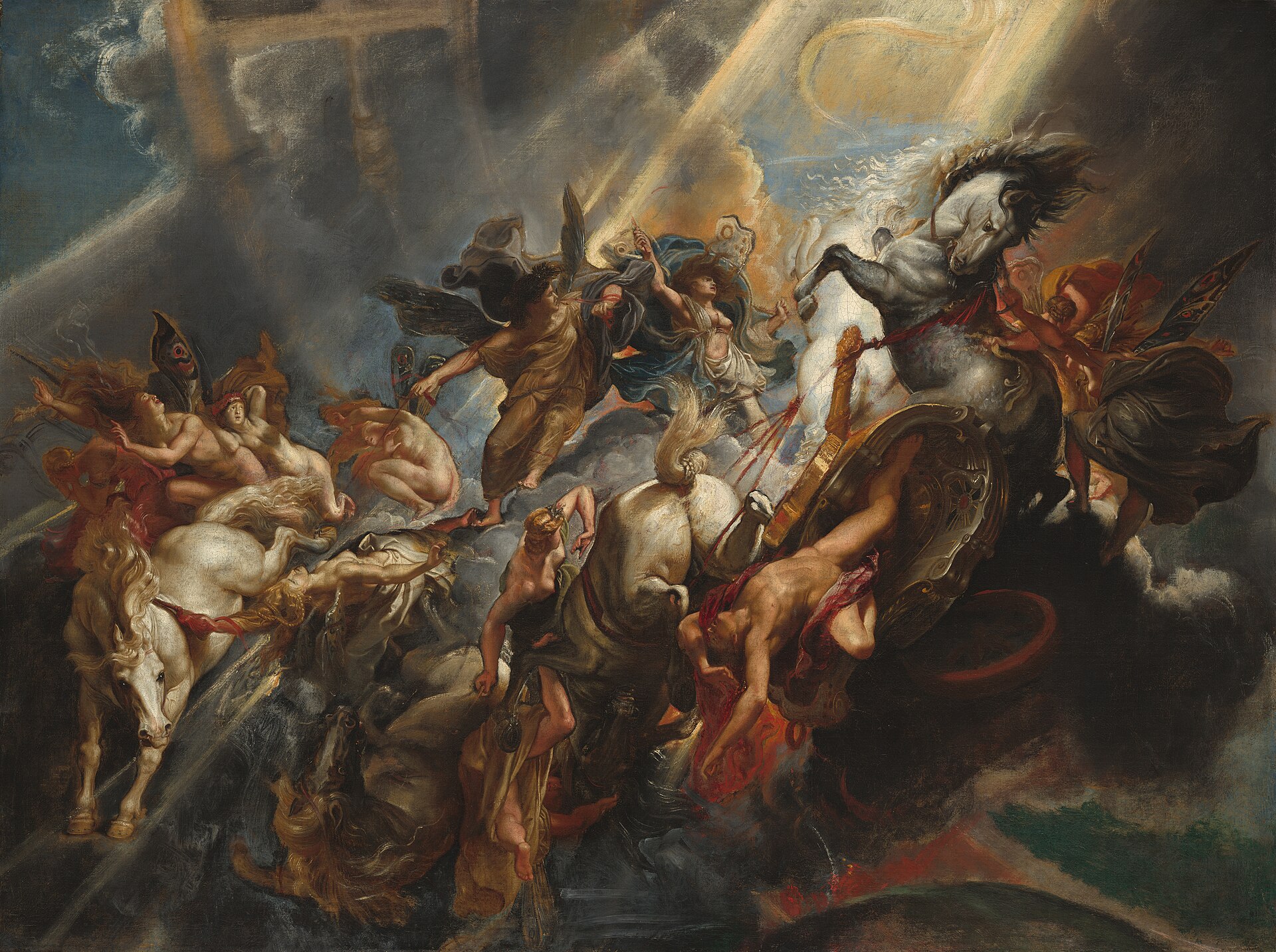
The Fall of Phaeton by Peter Paul Rubens
While it’s not clear when horses came to be domesticated, research suggests that “modern domestic horses can be traced to equines living [in a region in south Russia] between 4,700 and 4,200 years ago.” People were domesticating them during the Bronze Age in Asia and Europe, but depictions in art date back to well before this era, showing up even in prehistoric drawings and cave paintings. The reasons remain unclear, but horses have been everpresent; as this article states, artists during the Stone Age were drawn to horses for inexplicable reasons.
Using several statistical analyses, Sauvet [an expert in prehistoric art] shows that horses are portrayed in a noticeably special way in ancient European art. Nearly 30 percent of all the animals in his collection are horses, and more than three quarters of the sites included at least one image of the animal.
Horses, majestic and swift as they are, lend themselves to mythologisation, entering our collective fantastical imagination as magical creatures, or symbols of things bigger than ourselves, such as freedom, strength, elegance.
In fact, in Christianity, according to the Book of Revelation, even the apocalypse was led by four men on horseback. According to the Fitzwilliam Museum, “These riders have been interpreted as Christ himself conquering the earth. But they are more usually seen as personifications of War, Famine, Plague and Death.”
Galloping through the caves
Earlier this year, prehistoric caves in Indonesia with rock paintings adorning the walls were discovered. Among these were hand paintings, dated to be from around 68,000 years ago (these might be the oldest cave paintings we have ever found!). Alongside these hand paintings are also some paintings of animals, much like all other cave paintings—of bison, deer, and, of course, horses.
Fun fact: Finding these cave paintings in Sulawesi, Indonesia, makes the otherwise doubtful theory of Homo Sapiens finding their way to Australia approximately 65,000 years ago more likely to be true.
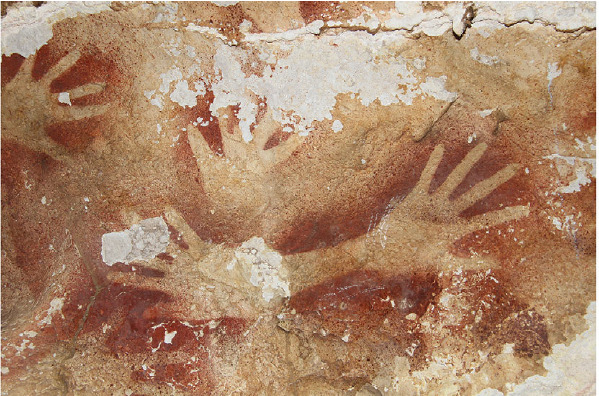 Handprints found in the caves of Sulawesi
It also debunked the idea that representational art in the prehistoric times was limited and exclusive to European settlements and societies.
Most of the cave paintings previously regarded as the oldest signs of human art were limited to Europe. Pech Merle, a French hillside cave, has cave paintings discovered as recently as 1922 (by a group of teenagers, no less). One such painting is the ‘Dappled Horses of Pech Merle’, believed to be around 25,000 years old—placing it in the prehistoric Upper Paleolithic era.
It may look funny now to see these spotted horses, almost leopard-like in appearance. But there is a likelihood that horses with spots did exist during the ice age, as research cited in this piece in The Guardian indicates. If they didn’t exist though—which would be a shame; it’s fun to imagine spotty horses—their dappled coats perhaps served a more symbolic or aesthetic purpose, rather than being an accurate representation of reality. As the article goes on to say, these paintings could be an act of “observation and imaginative vision” alike:
Cave art is the birth of the human mind as we know it: the first known evidence of human beings thinking, feeling and creating in ways similar to modern people. It is where science begins, in the close observation of nature. It is also where art, religion and mythology begin. Real or unreal, the horses of the ice age show us our origins.
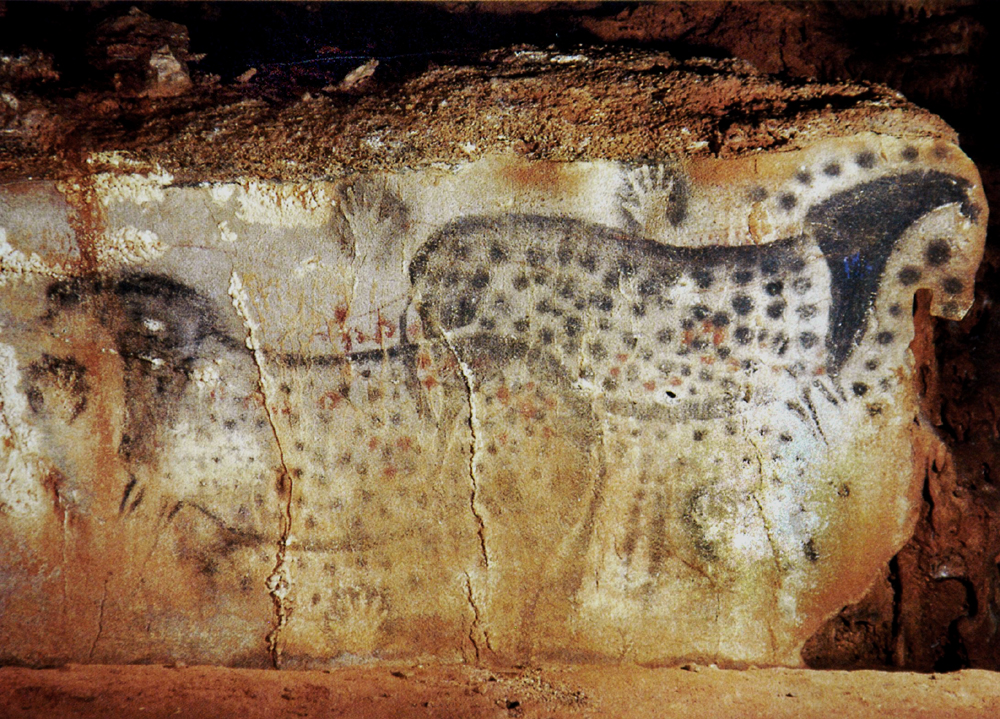 Dappled Horses of Pech Merle
Be careful not to miss the handprints, which have long been regarded as a symbol for humanity, or the “original ‘seflie’”. A way to say, “I was here.” And right alongside them, emphasising their significance in human history and art, are our beloved horses.
Even older than the Peche Merle horses are the horses in the Chauvet Pont d’Arc Cave, also from the Upper Paleolithic era, believed to be 36,000 years old. Featured alongside several paintings, the horses here appear different from different angles—a compliment to the artist(s), who made use of the natural cave formations to make the paintings dynamic.
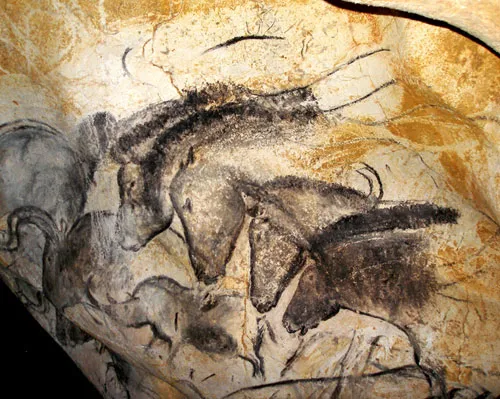 Drawings in the Chauvet–Pont d'Arc
Riding through history
If you’re looking for horses in myth, Greek mythology is a great example. Centaurs, who were half man half horse, represented chaos and lawlessness, combining animal instincts with human intelligence. Satyrs, on the other hand, while commonly depicted as being part goat and part human in contemporary retellings of Greek myths, were depicted as having the ears and tail of a horse in older art. Similar to the centaurs, satyrs too were considered wild, but not as dangerous. While centaurs are half man half horse, satyrs only really have the ears and tail of a horse (or goat).
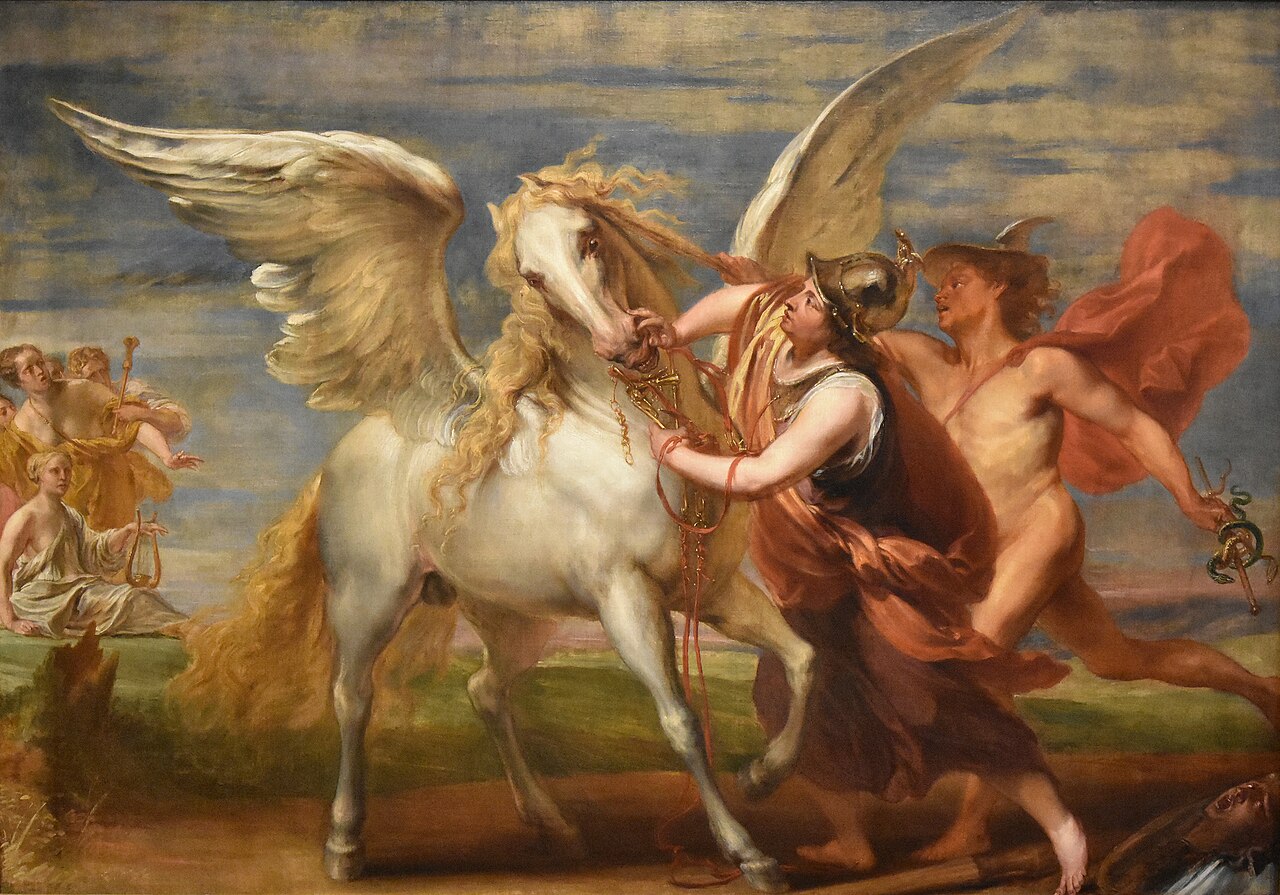 Minerva restrains Pegasus with the help of Mercury by Jan Boeckhorst
Pegasus, on the other hand, is an immortal, winged horse. Sired by Poseidon, the god of the sea, Pegasus is usually depicted as a mystical, magical being, and is featured in ancient and modern art alike.
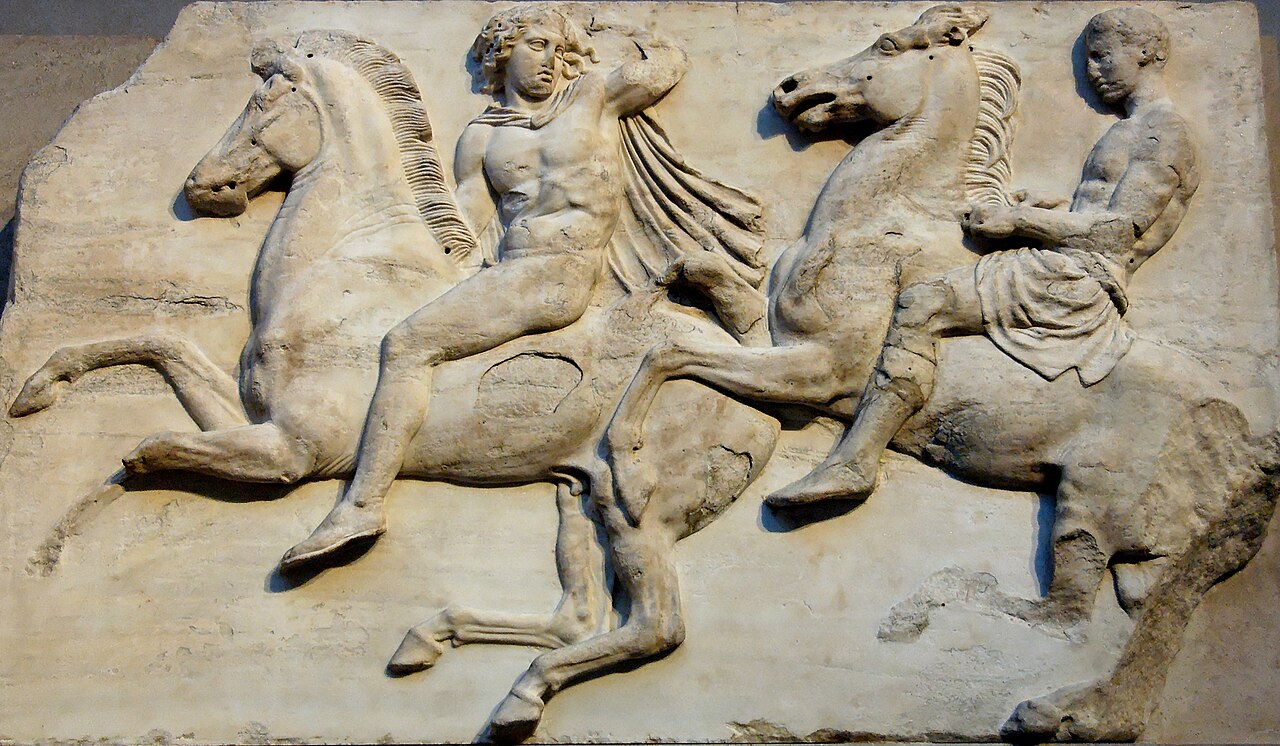 Cavalcade, from the Parthenon
The Greeks and the French weren’t the only ones immortalising horses in art and stories. The Tang dynasty saw many a horse during the period 618-907 CE. The Tang dynasty was considered to be the golden age of artistic creativity in Chinese history. For them, horses were symbols of wealth, power, and success. This is why horse iconography can also be seen in funerary objects of the time.
Fun fact: The second ruler who unified China, Emperor Taizong, apparently had six war horses that helped him with this endeavour. He even credited his horse for saving his life in a major battle (the battle that solidified the Tang control over China).
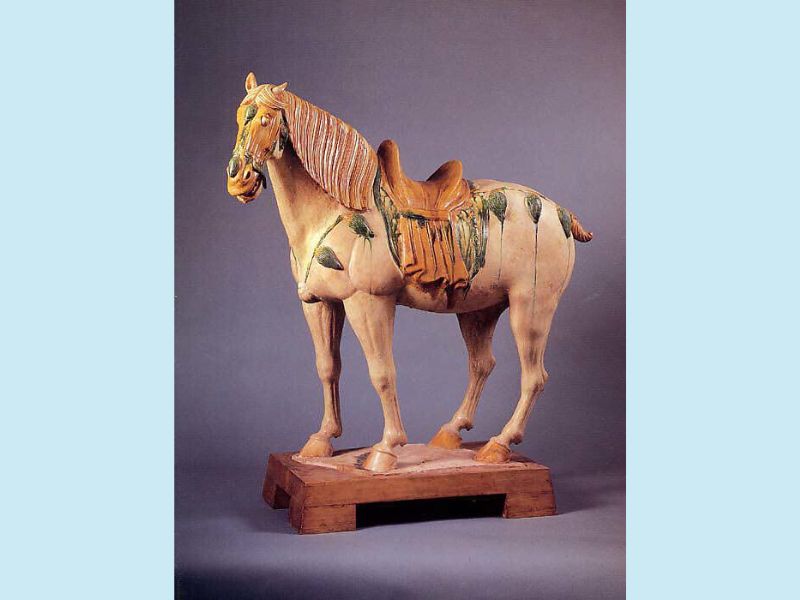
Earthenware horse, Tang dynasty
Night Shining White by Han Gan is perhaps one of the most famous horse paintings in Chinese history. According to The Met,
With its burning eye, flaring nostrils, and dancing hoofs, the fiery-tempered horse epitomizes Chinese myths about Central Asian "celestial steeds" that "sweated blood" and were actually dragons in disguise.
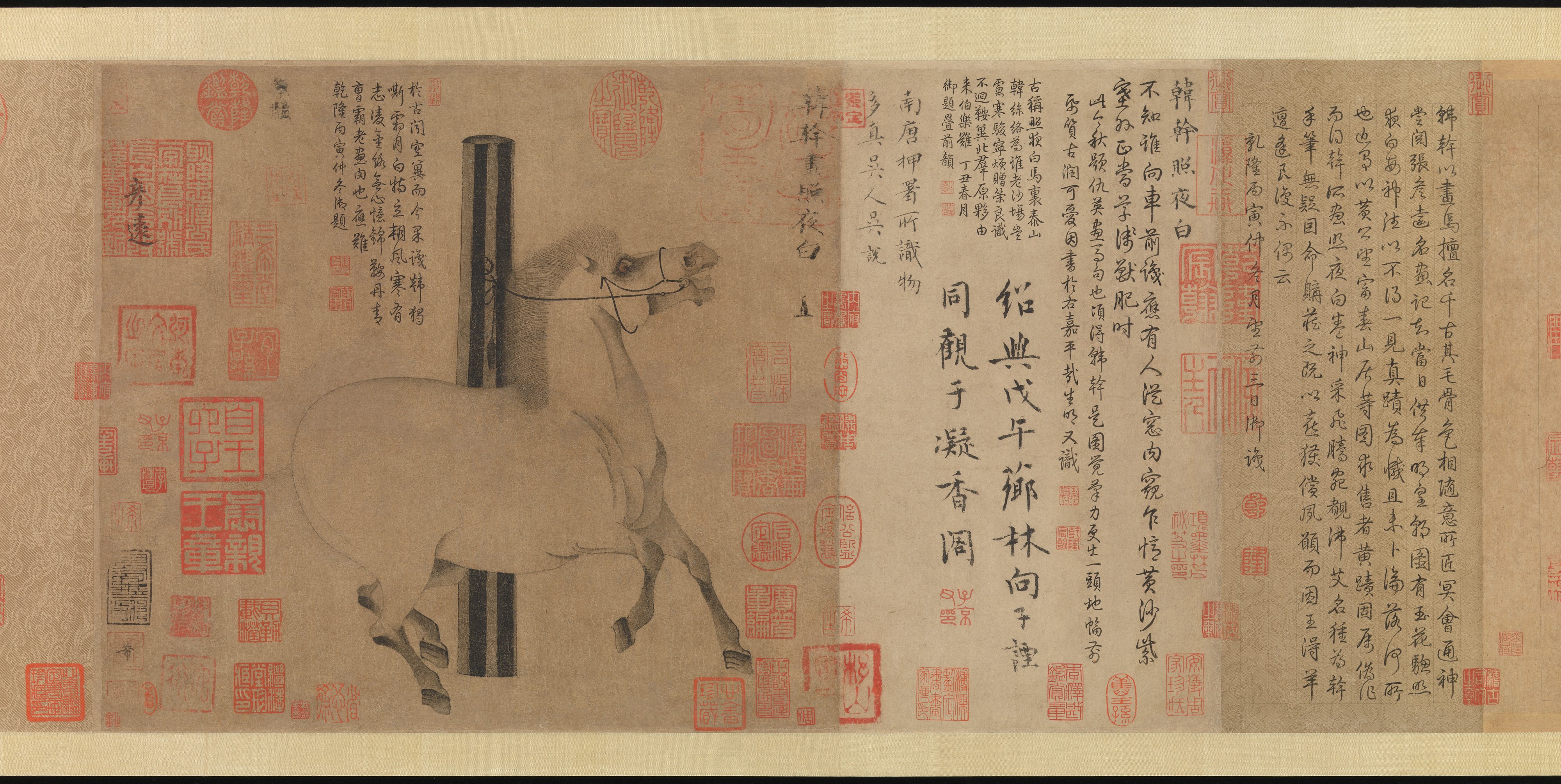 Night Shining White by Han Gan
Hall of fame, horses edition
Horses are sturdy animals, and loyal to their keepers. They are also easily frightened, which makes it quite funny that they were the animals we rode into war century after century.
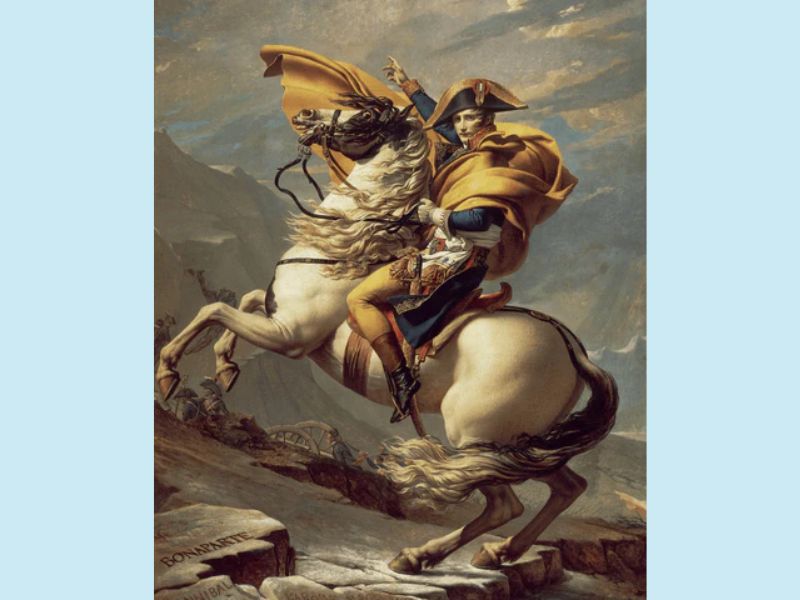 Napoleon Crossing the Alps by Jacques-Louis David
One of the most reproduced paintings of Napoleon, ‘Napoleon Crossing the Alps’ (1801) is by Jacques-Louis David, a neoclassical painter who was a supporter of Napoleon and the French Revolution. This painting is a stark visual representation of war, and the bravery and strength Napoleon must have displayed (allegedly). In truth though, the day Napoleon did cross the Alps was not stormy and dark as we can see in the painting, but clear and blue. Additionally, it was not on a horse that he rode, but a mule!
One of Picasso’s best-known works, ‘Guernica’ (1937), also features horses. A massive oil painting, Guernica has since become a symbol of anti-war movements, as it depicts the suffering and devastation in the wake of the bombing of the Basque town of Guernica by Nazi Germany and fascist Italy.
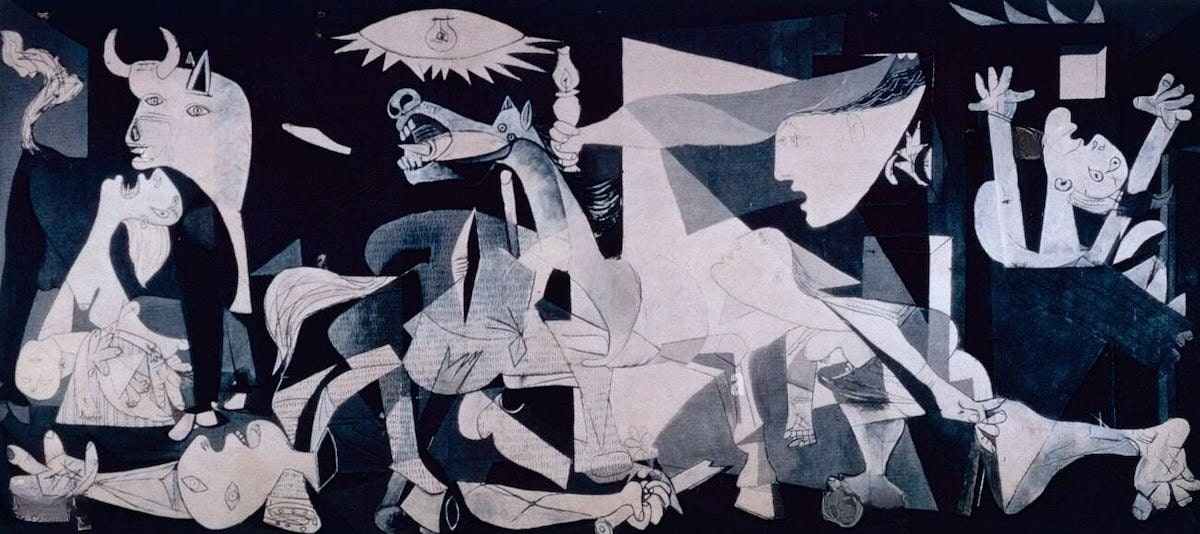 Guernica by Pablo Picasso
A combination of expressionistic messaging (i.e. humanistic, anti-war sentiment) and the cubist method, Guernica is one of his most influential works, even becoming a symbol for Basque nationalism and the end of the Franco regime in the 1970s.
Over 300 years before Picasso’s Guernica, one of Italy’s—and the world’s—most famous painters, Caravaggio, was also painting horses. Wonderful, isn’t it?
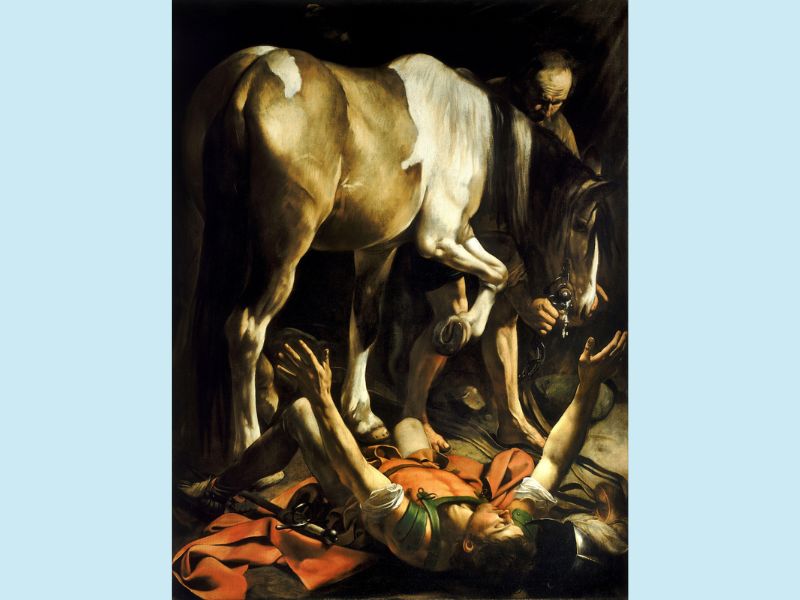 Conversion on the Way to Damascus by Michelangelo Merisi da Caravaggio
Caravaggio’s oil painting, ‘Conversion on the Way to Damascus’, was commissioned by the church of Santa Maria del Popolo, in Rome. The painting follows the story of Saul of Tarsus, who, on his way to arrest the followers of Jesus, is stopped by a light shining upon him, throwing him to the ground. When he asks who it is, it is revealed that this light is being shone upon him by Jesus, asking Saul, “Saul, Saul, why do you persecute Me?".
(While the painting shows Saul falling off a horse, the actual story doesn’t mention a horse at all.)
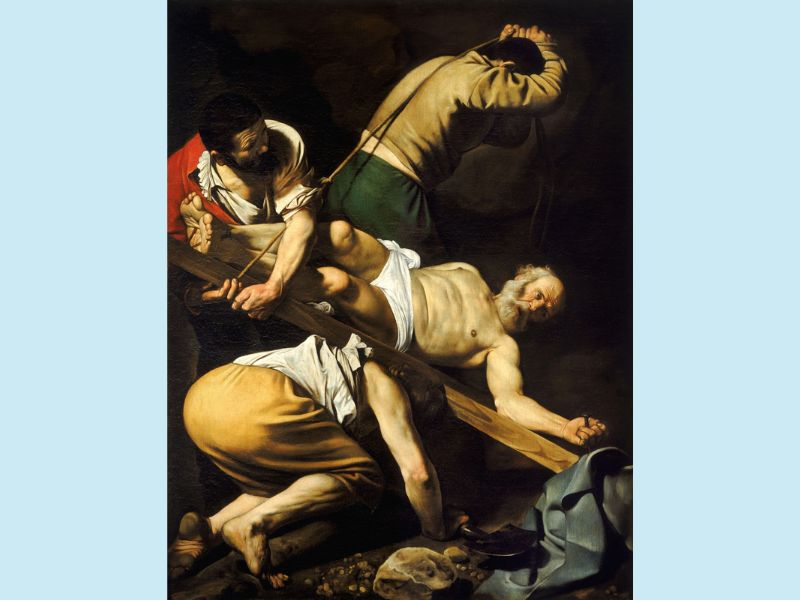 Crucifixion of Saint Peter by Michelangelo Merisi da Caravaggio
Fun fact: Caravaggio’s paintings are a great example of tenebrism, the use of extreme contrasts of light and dark to display intensity. The technique was introduced by Caravaggio, and has since been a widely used method of highlighting or spotlighting a subject in a painting.
Another particularly famous Western painting of a horse is ‘Whistlejacket’ (1762) by George Stubbs, an English painter who was known for painting horses. This is perhaps his most famous work.
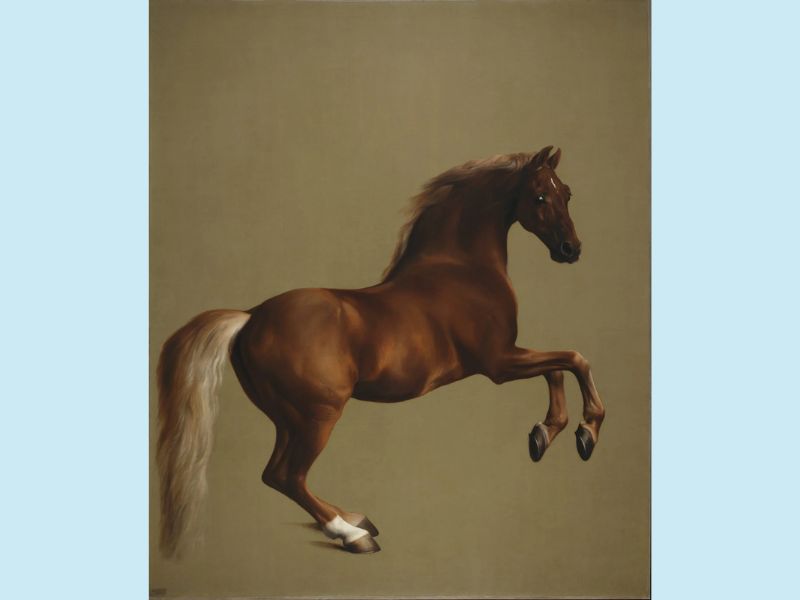 Whistlejacket by George Stubbs
This painting—nay, portrait—of Whistlejacket was commissioned by the horse’s owner, Charles Watson Wentworth, after the horse had retired from racing. While not entirely out of the realm of possibility that the horse itself would have an appreciation for art, we can safely assume that this portrait was intended for Wentworth (and not the horse!) to immortalise the horse’s racing success and, indeed, the love he had for him.
Horsin’ around in India
In an Indian context, there is and has always been an abundance of horses in art. Perhaps one of the most famous examples is in MF Husain’s work, which features horses often. Husain’s horses are almost always in motion, wind flying through their manes.
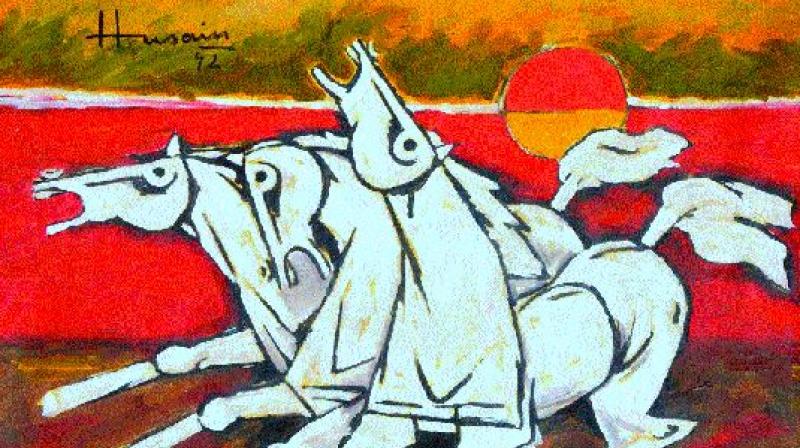 MF Husain’s horses
His work uses large brushstrokes and a limited but vivid color palette. With this combination, along with the sharp edges and angular bodies of the creatures, Husain creates a sense of dynamism, setting the horses, static as they may be, in motion.
Looking back to the Gupta dynasty (335-375 CE), gold coins issued during the time carried images and etchings of warriors, archers, and, of course, horses. These were specifically sacrificial horses, part of the ritual of ‘Ashvamedha’.
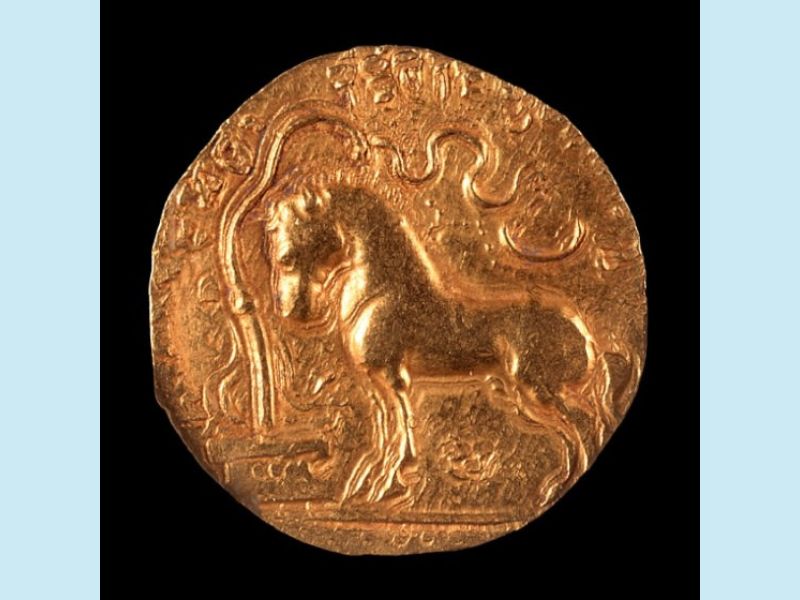 Gold coin issued by Samudragupta
The sacrifice was meant to fortify the imperial standing and sovereignty of the king’s rule. The coin, then, and the horse on it, symbolised the long-lasting reign of the ruler and his sustained rule over the land.
Another famous horse in the Indian context is Maharana Pratap’s Chetak.
Fun fact: While there is no historical record noting that Chetak is the horse which Maharana Pratap rode into battle, the horse he is seen on in the statues depicting him is traditionally referred to as Chetak.
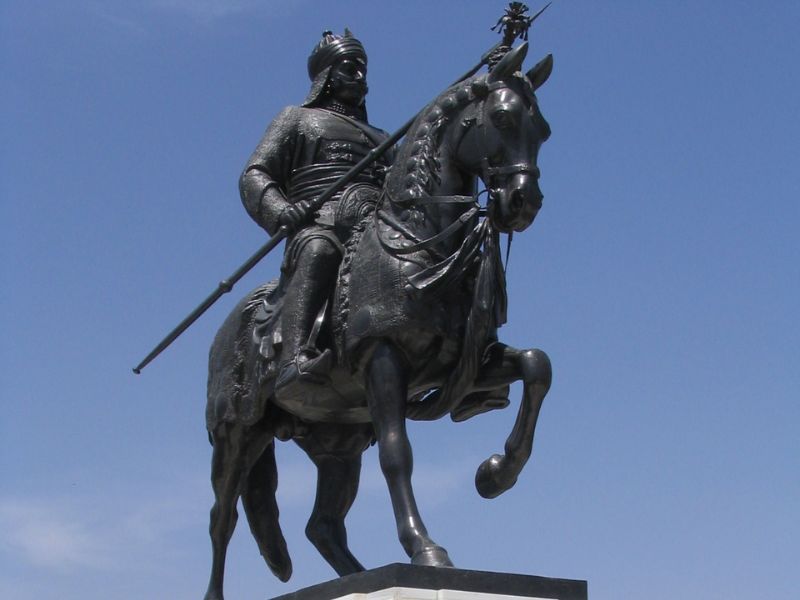 Statue of Maharana Pratap on Chetak, Udaipur
Speaking of horses in statues, let us not forget Chhatrapati Shivaji Maharaj, seen on a horse in statues across Maharashtra. He was known to have several horses—around seven, to be exact, with Krishna being his most famous and apparently most beloved.
A symbol of strength and tenacity, the horse becomes part of the rider in this iconography, inseparable from the legacy Maharana Pratap or Chhatrapati Shivaji may have left behind in their wake.
A more contemporary and rather amusing example of horses in Indian media can be found in this painting below.
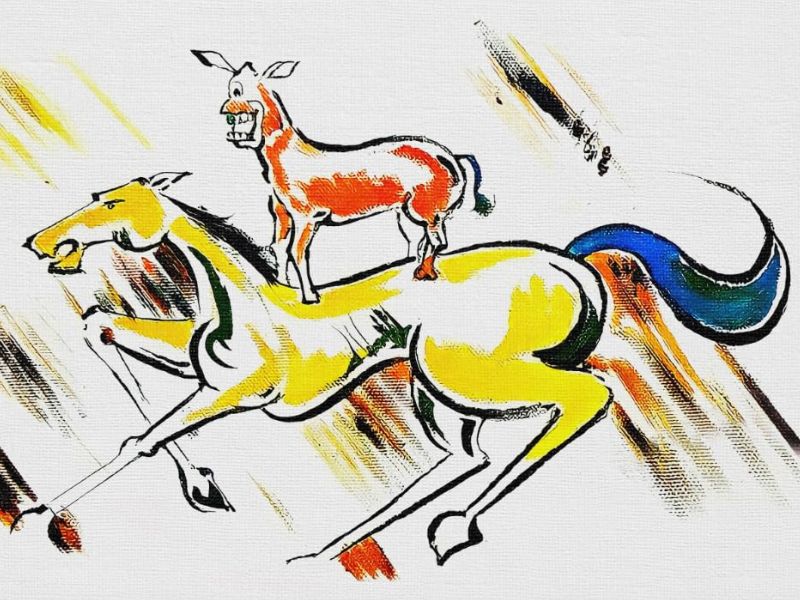 Rocking Horse by ‘Majnu Bhai’ from Welcome (2007)
While not a famous painting per se, nor made by a particularly famed or notable artist, the painting itself—of a donkey riding a horse—is well known because it was featured in Welcome (2007), the Bollywood film featuring Anil Kapoor. The painting appears in the film in a scene featuring an auction, the irony and humour lying in the fact that this character (a gangster), Majnu Bhai, has an artistic bent.
Slightly absurd, slightly abstract, this painting has since become a bit of a meme. For example, someone photoshopped the painting into a photo of the Queen of England with the Indian cricketing team, joking that the art has travelled far and wide.
What does it mean?
Horses have never symbolised just one thing, and the vast variety of work on horses proves to us that there will never really be just one singular interpretation of the horse as a symbol. Due to the deep relationship horses have shared with humans for centuries, they will probably continue to be studied as subjects in art by scholars and artists alike.
Today though, while still as loved, horses are neither easy nor affordable to own or keep as pets, and they’re no longer part of daily life (unless, of course, you’re incredibly wealthy and own stables, in which case, OK, we’re jealous).
So, while their significance as both muse and propeller of human society is etched into history, the future of horse art is uncertain. All we can do, though, is bank on this mysterious emotional affection humans retain for horses, and hope it continues to produce more timeless art.
*****
Mekhala Singhal is the Assistant Editor at Advisory.
 souk picks