

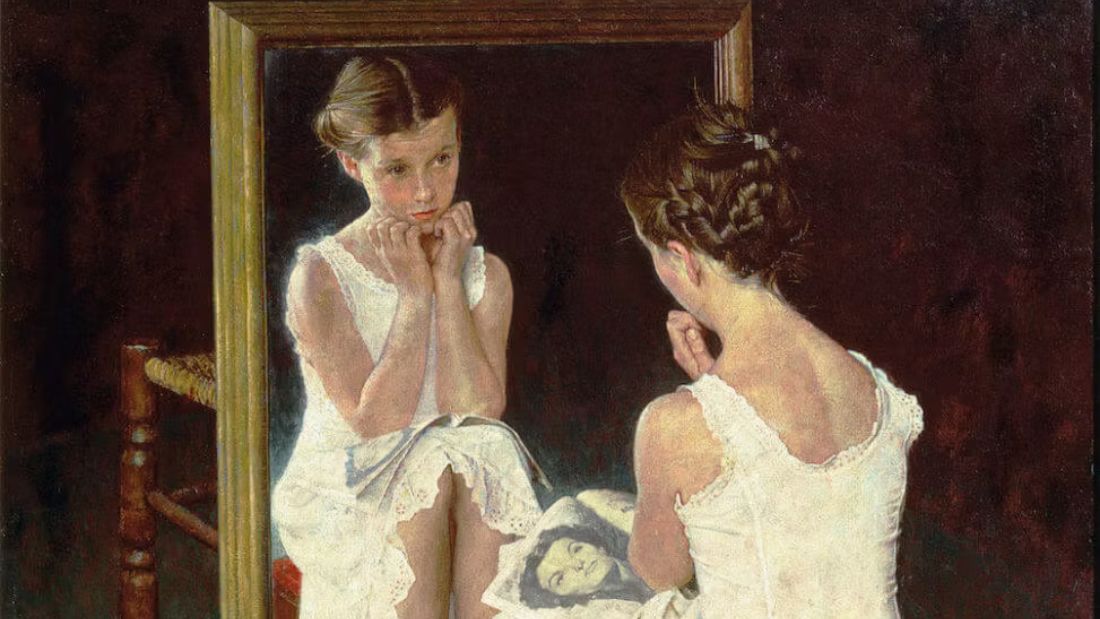
Growing up, getting older: Girls edition
Editor’s note: Three sisters thrust into adversity during Bengal’s Partition. Sylvia Plath’s poignant meditation on mortality and mental health, The Bell Jar. A young girl in Hungary with an unusual guardian angel during the Second World War. The story of girls who stray, an unapologetic modern Indian novel. Writer Sneha Pathak draws up this fabulous list of nine coming-of-age novels starring memorable female protagonists.
Written by: Sneha Pathak
*****
Think coming-of-age novels, and the first titles that come to mind include books like David Copperfield, Tom Sawyer, The Catcher in the Rye, To Kill a Mockingbird, and The Kite Runner. With the notable exception of To Kill a Mockingbird, the genre has been traditionally associated with boys or young men growing into adulthood and finding their way in the world. However, across the 20th century and beyond, more and more titles have placed young women at the centre of this bildungsroman narrative. Here’s a list of nine novels that tell the story of young women as they come of age in a world that doesn’t often work in their favour.
Oranges Are Not the Only Fruit by Jeanette Winterson (1985)
Winterson’s first novel, and also her most well-known, Oranges Are Not the Only Fruit is the story of the rebellion of a young adopted girl against her adoptive mother. Semi-autobiographical in nature, the novel records the coming-of-age story of Jeanette, the book’s protagonist, who wants to break free of her devout evangelist mother and all that she represents. At 16, and in love with another woman, she breaks ties from her family and the church in Northern England she’s associated with in a bid to find her own identity. The novel won Winterson the Whitbread Award for a First Novel in 1985. It was also adapted for television by the BBC in 1990, which won a BAFTA.
Abigail by Magda Szabó (1970)
Gina’s life takes a turn when she’s abruptly packed off to a boarding school in a remote village by her father. The year is 1943, during the Second World War; he’s a general in the Hungarian Army. She’s offered no real explanation, and told to keep her move a secret from her friends in Budapest. Thus begins the journey of this 14-year-old into early adulthood.
Angry and upset at what she considers to be an exile, Gina finds it difficult to accept her new life. Slowly, with no other choice really, she begins to make peace with it. And as the shadow of the war begins to fall inside the walls of her school, Gina finds safety through “Abigail”, a statue of a woman with an urn at her school, there to protect those in genuine need. And things change for her.
Abigail is considered Szabó’s most beloved book in her native Hungary, with its portrait of the school and its people drawing comparisons to Jane Austen and JK Rowling. In a review of its English translation, published in 2000, The New York Times wrote:
"Abigail" is at once harrowing and mesmerizing, all the more so because we glimpse its dramas through the uncomprehending lens of Gina’s youthful simplicity.
A Tree Grows in Brooklyn by Betty Smith (1943)
Eleven-year-old Francie lives in the Williamsburg neighbourhood of Brooklyn. She’s a bright girl, the daughter of an immigrant, working-class family, and hopes to attend college one day. The family struggles to make ends meet and her dad, whom she adores, drinks too much and doesn’t bring in anything. Life is hard, as Francie grows up in a difficult neighbourhood, surrounded by all sorts of danger. This semi-autobiographical novel, much loved for its portrayal of immigrant life in New York, tracks Francie’s life into adulthood, as she becomes a self-aware young woman who has experienced pain and loss since childhood. Yet she retains the drive to move forward in life, with a bright sense of hope. And she’s willing to leave her old life behind. The novel, selected as one of the “Books That Shaped America” by the Library of Congress, is so much more than a mere feel-good coming-of-age; The New Yorker wrote:
The balance of gritty reality and sentimentality, the very real sense of hovering threat and sexual danger filtered through the sensibility of an artistic word-hungry child, gives the book its special character.
Girls Who Stray by Anisha Lalvani (2024)
Anisha Lalvani’s debut novel Girls Who Stray is a coming-of-age story with the trappings of a taut thriller. The protagonist, known to readers only as ‘A’, has just returned from a British university to Noida. Following the breakdown of her parents’ marriage, as well as a combination of ennui, anxiety, and low self-worth, she finds herself sinking headlong into a world far removed from her own. Somehow, she gets embroiled in a double murder. Faced with the consequences of her choices and her actions, we witness A’s descent into despair and overthinking.
Praising the novel, Frontline magazine wrote:
What sets this novel apart is its unapologetic amorality, raw candour, and the protagonist’s brutal self-awareness—qualities rarely found in contemporary Indian women’s fiction. Lalvani writes with a restless urgency and a disarming randomness, mirroring the chaotic impulses we often conceal behind morality, rationality, and our carefully curated public selves.
The Bell Jar by Sylvia Plath (1963)
Sylvia’s Plath’s only novel (which she originally published under the pseudonym "Victoria Lucas”, The Bell Jar—a book about “how she tried to die, and how they stuck her together with glue”—is one of her most widely read and admired works. It chronicles the story of Esther Greenwood through a period of intense personal upheaval, as she suffers from a crisis of identity after returning home from an internship in New York, and has to be hospitalised after a mental breakdown.
At the same time, the novel is a biting portrait of society’s expectations and the burdens it places on young women. Published only a few weeks before her death, the book has found readership in every generation since, becoming a part of popular culture today.
Are You There God? It’s Me, Margaret by Judy Blume (1970)
Perhaps the first name that comes to mind when one thinks of a female coming-of-age story set in modern times. While originally written for middle-grade readers, the novel has actually managed to find an audience far beyond its intended age. It’s the story of 11-year-old Margarent Simon, who moves to a new town and begins sixth grade. It resonated with young readers for its candid and frank interrogation of issues such as such as menstruation, adolescent changes, and puberty, as well as ideas around religious identity in the ’70s. As articles have noted:
To us, Margaret Simon wasn’t a character, she was a proxy — for the girl who stuffed socks in her bra, who felt uncomfortable in her own skin; for the girl who was homesick for a friend who had matured overnight or moved away or turned mean; for the girl who struggled to make sense of the diagrams on the origami-folded instructions inside the tampon box.
Independence by Chitra Banerjee Divakaruni (2022)
Sisterhood and tragedy lie at the heart of Independence, a moving novel set against India’s freedom struggle. Three sisters—Priya, Jamini, and Deepa—are thrust into adversity when, in 1946, their father is killed in communal violence in Calcutta. India’s independence is just around the corner, and change is in the air. But also around the corner, sadly, is the Partition, forcing the sisters to accept that they might have to part ways forever and pay the price for their choices and their independence.
In an interview with First Post, the author spoke about how women are often at the centre of her stories, and how she finds inspiration in those who struggled and picked themselves up. “...especially during the Freedom movement, women came out of the home onto the streets to fight. (several are mentioned in my novel). So it was a transformative time. It made women feel they could do new things, reach new heights. But they still had to face hurdles.”
The House on Mango Street by Sandra Cisneros (1984)
The coming-of-age story of a young Latina girl in Chicago, Esperanza Cordero, growing up in a poor neighbourhood of the city. Instead of following a traditional plot-based narrative, Esperanza’s story unfolds through a series of snapshot-like scenes as she begins to understand and navigate the ideas of class, gender, violence, and community. Braided with these is her desire to create a life beyond the circumference of her present world. The book has been translated in many languages and won Cisneros the American Book Award. It continues to be widely taught in many American schools till date.
Tipping the Velvet by Sarah Waters (1998)
Tipping the Velvet balances all its labels smoothly: a coming-of-age novel that’s also historical and queer fiction with a touch of the picaresque. This is the story of Nan King who falls in love with Kitty Butler, a male impersonator, and follows her to London. Partly set in the world of Victorian music-hall theatre, Tipping the Velvet follows Nan as she moves across various spaces in London, trying to find her way through love, loss, sexuality, political awakening, and a clearer sense of who she is. The Guardian, featuring this on a 2024 list of five books about queer relationships, called it “funny, raunchy and extremely camp, but […] also a whistle-stop tour through different corners of British lesbian history, building fiction around real-life subcultures.”
*****
Sneha Pathak is a freelance writer and translator. Her works have appeared in The Telegraph, Deccan Herald, Strange Horizons, and The Chakkar. You can follow her on Instagram.
 souk picks