

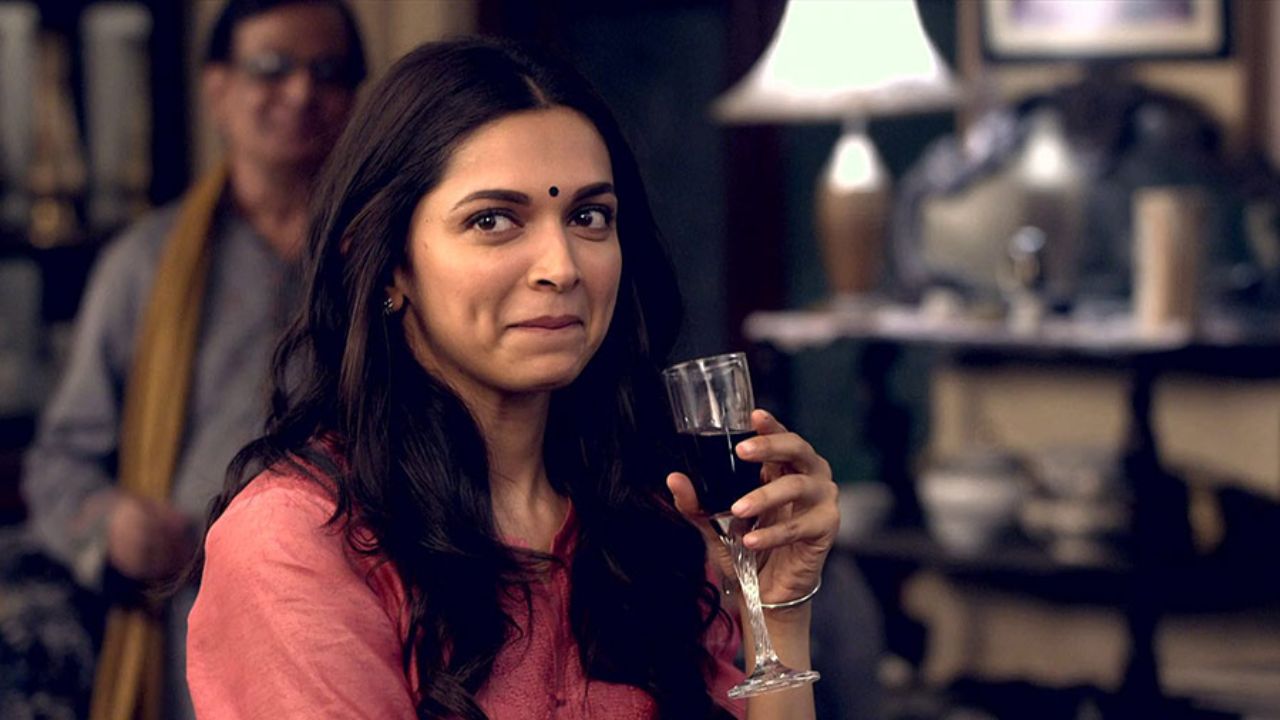
Where has Bollywood’s modern woman gone?
Editor’s note: For a brief moment, Bollywood portrayed women who navigated the messiness of desires and ambitions, decamping to their honeymoon alone. Aspirational women on screen making choices for themselves and not being punished for it. In our lead essay this week, film critic and Consulting Editor Ishita Sengupta writes about the active erasure of such portrayals, prompting the question: where is the modern Indian woman in Hindi cinema today?
Written by: Ishita Sengupta
*****
In 2017, I moved to Delhi, bags and baggage in tow. The city was muggy as it tends to be in April. I stood outside a generic looking DDA flat, assisting a man to take my belongings inside. He was efficient and I, restless. The impatience was a symptom of youth—I was 24. I had relocated for my first job and this, a humble room in a crowded neighbourhood in a new city, was my first semblance of belonging. Once he was done, I stepped in gingerly, measured my steps with care, and with complete disregard for everything else, sat on the sole chair in the unfurnished room. Then I lit a cigarette—just like they show in the movies.
Four years before moving cities, I watched Maneesh Sharma’s Shuddh Desi Romance at a multiplex in Kolkata. It is a delightful film where Gayatri (Parineeti Chopra), a young girl from Guwahati, lives alone in Jaipur. She meets Raghu Ram (Sushant Singh Rajput), a tourist guide, and after flirting over a meal, she tells him to drop her home. They spend the night together and, in the morning, Raghu hints at wanting to come back to her place. They agree, he leaves, and then she sits before the camera, breaks the fourth wall and, with unmatched ease, smokes while at it.
I remember gaping at the scene, convinced that I hadn’t seen something like this before. The subversion was plain: the girl has a house, the boy seeks permission to stay with her, and then, as if to reiterate her autonomy over herself and the space, she smokes inside the house. Not covertly, not in hiding, but in the ease of her own place. Years later, when I rented my first flat, this gesture became the easiest to replicate, if only to tell myself that I am everything Gayatri was: independent, self-reliant, and modern.
Modern women hadn’t always been protagonists in Hindi films. They were not allowed to. If anything, modernity in women was amped up to devious heights—skimpy clothes, immoral actions, amoral intent—and shaded with colours of villany. The Hindi film heroine almost always had a morality problem, where the allure lay in her compliance, and often the presence of another woman with contrasting values amplified the former’s virtuousness. In the ’50s, Nadira became the prototype of this mould. In films like Shree 420 (1955), Ek Nazar (1972), Dil Apna Aur Preet Parai (1960), and others, she was the vamp, often wearing body-hugging clothes, with sinister aspirations and almost always holding on to a cigarette. It took half a century, but things did begin to change by the 2010s.
Art imitates life imitates art
Cinema might borrow from life but also reflects it. As an introvert, I have imitated characters on the screen for longer than I can remember. The mimicking is not as much deliberate as it is a way of seeking refuge. Band Baaja Baaraat (also directed by Maneesh Sharma) released in 2010. I was in class 11, watching Shruti (Anushka Sharma), the female protagonist, chasing unruly boys at a wedding. Minutes later, she reveals that she wants to be a wedding planner. My friend and I, standing at the threshold of a wider world awaiting beyond the boundaries of our school, were amazed at her easy audacity. By the time I was in my 20s, earning money and rationing ambition and desires, the women on screen were growing up with me.
In Queen (2014), Rani Mehra (Kangana Ranaut), abandoned days before her wedding, decamps to her honeymoon alone in an act of defiance. Or take Piku (2015), where the titular protagonist looks after her aging father while navigating professional duties. Working in Delhi and making frequent trips to Kolkata, I was doing the same. Kaira, Alia Bhatt’s character in Dear Zindagi (2016), leaves the man she is with, but she hurts like she’s the one being left behind. She fights with her landlord, argues with her friends, and seeks out a therapist. In Gully Boy (2019), Safeena (Bhatt again), studying to be a doctor, sneaks out of her house to meet the boy she loves. I was doing the same, I had done the same. My independence was hardly absolute. It was imbued with wrestling restrictions at and outside home.
As I transitioned into my 30s and confronted the messiness of age with renewed intensity, the women I looked at, and up to, had changed again. But instead of matching strides, they grew more distant. In the last few years, there has been a sort of regression in Hindi cinema. This is as true literally as it is subliminally. Almost every week a historical or two releases, and in each stands a grown man with an overgrown beard promising to safeguard his people. His wife, by his side, offers silent support. Tanhaji (2020), Chhaava (2025), Raja Shivaji (2026) are some instances. But the confounding bit is even when the story is based in the current set-up, the women in them appear as powerless.
In a perverse way, this feels like a full circle moment.
The forgotten era
The ’60s and ’70s were rife with women being flattened into moralistic binaries. Nadira, the classic ‘vamp’ of her era, recollected in interviews how she was woefully typecast. “After Shree 420, I starved for a year and a half because everybody wanted me to wear the same black fitting dress and hold the cigarette the same way.”
The ‘modern’ woman, in this era, was often depicted as a cabaret dancer. Actors like Helen, Aruna Irani, Bindu wore westernised clothes, their legs showing and their cleavage propped up. They danced with abandon and served as distractions for the male lead. By the ’80s, although the aesthetics were revamped, little had changed beneath the surface. Actresses like Zeenat Aman and Parveen Babi entered the fold, and although they donned jumpsuits and western silhouettes, they were still prone to be domesticated. In a scene from Kaalia (1981) that lives through Instagram reels today, Babi can be seen struggling to make eggs while Amitabh Bachchan is on the side instructing her. The scene, played for comedic effect, ends with her misreading the signs and breaking the egg on the forehead.
Granted this is an extreme instance, played for laughs, but the implication is impossible to miss. For a long time, modernity in women was treated as something external and tactile, which could be distilled to obvious markers and streamlined for effect: westernised silhouettes, a cigarette in hand, and maybe a bottle of alcohol. The nuances of it, the agency that lay embedded in it, were hardly addressed. By the ’90s, the visual of the Hindi film heroine had significantly altered. In Rangeela (1995), Urmila Matondkar walked down the streets of Mumbai in a short, flowy dress and transfixed passerby and dogs alike. But the freedom to make a choice either eluded them or they were treated as antagonistic. They were often women who were outcast, penalised for prioritising themselves over others.
Like in Rajiv Rai’s Gupt: The Hidden Truth (1997), where Kajol plays the villain. She kills and plots and hides, all for the man she loves. Her obsession is not dunked in rejection—in a film with two heroines, the man chooses her—but shaped by a sense of protectiveness. In the perverse world of Hindi cinema, it wouldn’t be too outlandish to assume that a man would be celebrated for it, and perhaps get away.
Yet, for a woman, it was depicted as unhinged, liable for punishment. In Aitraaz (2004) Priyanka Chopra Jonas plays an ambitious woman who undergoes abortion for the sake of her career. This exercise of choice, agency if you will, becomes the origin story of her villainy and the excuse for the film to shame her into submission. She regrets it later, she wants the man back, and she frames him for sexual harassment. Homi Adajania’s Cocktail (2012) rendered the binary with naked directness. Gautam (Saif Ali Khan), a reckless flirt, is in love with a spirited girl, Veronica (Deepika Padukone). They live together and then, her docile friend, Meera (Diana Penty) enters the scene and he falls in love with her. In Cocktail 2 (2026), a reprisal of Veronica’s character is written as a woman willing to forsake a life of her own (in Spain, nevertheless) for a man who, still, refuses to choose her.
Old wine in a new bottle
In the past few years, we’re come to where we always were, albeit with newer aesthetics. Take Kabir Singh (2019) for instance, where Preeti (Kiara Advani) is slapped by her partner, and yet she waits for him till the end. In Animal (2023), the male protagonist is so blinded by the need to be loved by his father that he treats all the women in his life (including his wife) like dirt. And still the women defend him for as long as they can. In Teri Baaton Mein Aisa Uljha Jiya (2024), a sci-fi love story, the female character is a robot, acting upon the instructions of a man. The most confusing bit is that, on the surface, these women bore semblance to the likes of me—well, barring the abs and the pointed jawline. They are often portrayed as living far away from working, working at an office, catching up with friends over a glass of wine. Their names sound like the many friends I have: Naina, Shanaya, Alia, yet their agency seems to be restricted to yoga pants and matcha lattes. The gratifying messiness of being a modern woman, who could be wearing a kurti and jeans, eating bread pakodas and discussing business ideas is all too neatly obliterated. Instead, she can be found awaiting approval from others—men—to exist.
The tragedy is that, for a while, things had changed. For a brief moment, Veronica and the likes were allowed to exist with a centrality in Hindi films. Their chaos was celebrated with impunity; their verve to live life were not put to test by, and for, a man. I watched these women, imbibed their actions and, in the absence of them today, feel strangely rudderless. I hear my friends talking about dates gone wrong, I sit with them as they swipe on apps while I narrate an incident for the nth time to dissect something we might have missed. Some of us are married, some are not. Often, the married one, with a child in her arm, listens to dating miseries, while the rest, with zero experience, offer solutions to marital disputes. All of us holding hands, none of us knowing any better.
All of this might sound like a privileged rant. No art is entitled to represent me. Yet, making an ask to make me feel seen is also, not an invalid grudge to nurse. Once, there was a roadmap; once we watched women—indecisive, tentative, boldly cautious—and shook hands with them in the dark, feeling confronted, comforted, and reassured. Their disappearance without notice has now left the rest to maneuver the turmoil of womanhood, alone.
*****
Ishita Sengupta is a film critic and culture writer. She is Consulting Editor at Advisory. Her work is informed by gender and pop culture.
 souk picks