
Wah Ustad! The jugalbandi of East & West
Editor’s note: The world of East-West fusion is vast, diverse, rewarding. Sample: Zakir Hussain; Nusrat Fateh Ali Khan; the fascinating experiments on Coke Studio; Indian Ocean; Junoon and Fuzon; Anoushka Shankar; ‘Pasoori’; Trilok Gurtu. In this expansive essay about the form, music journalist Narendra Kusnur introduces us to the many different kinds of fusion sounds that have originated from India and beyond.
As always, we have also compiled a special playlist for you!
Written by: Narendra Kusnur
*****
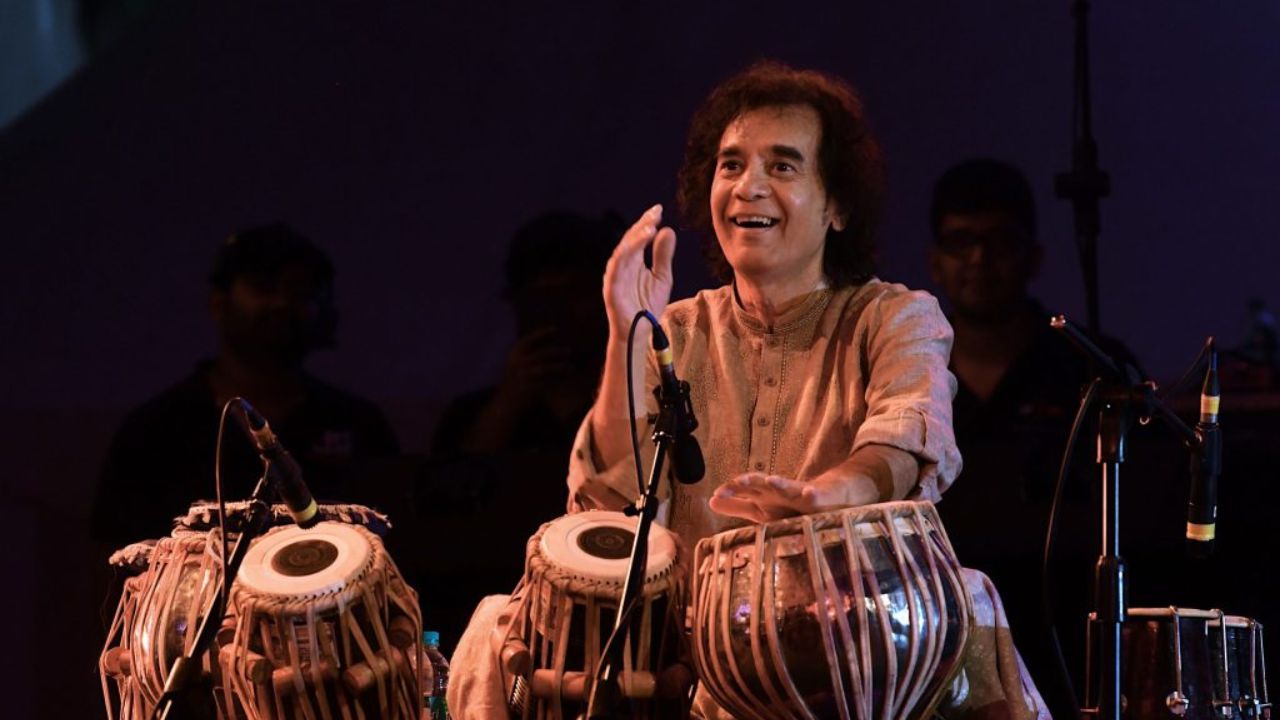
His untimely death on December 15, 2024 created a huge void in the Indian music galaxy. Let’s begin by paying tribute to the legendary tabla maestro Ustad Zakir Hussain, who was also one of the pioneers of Indian fusion.
Zakir met British guitarist John McLaughlin in New York in 1969, and four years later, they formed the Indo-fusion band Shakti, along with violinist L Shankar and ghatam maestro Vikku Vinayakram. The rest is history. Shakti conquered hearts for a decade, then split, only to return as Remember Shakti with some line-up changes. Zakir and John remained with the group till the end, calling themselves Shakti again. Let’s listen to one of their later tracks ‘Shrini’s Dream’, composed in memory of mandolin wizard U Srinivas, whose 12th death anniversary is on September 19.
Shakti has had the longest and deepest impact on Indian fusion. But it wasn’t the first in this genre. In 1966, sitar maestro Pt Ravi Shankar had collaborated with western classical violinist Yehudi Menuhin on the album West Meets East. Then, tabla great Ustad Allarakha joined jazz drummer Buddy Rich on Rich A La Rakha. In 1970, sitar player Ananda Shankar used western arrangements and even did covers of rock songs. Saxophonist Braz Gonsalves released Raga Rock with keyboardist Louiz Banks and vocalist Pam Crain. Indian sounds also fascinated American saxophonists John Handy and Charlie Mariano, American trumpeter Don Cherry and Anglo-Indian/Tamil composer John Mayer (not to be confused with the contemporary star). Let’s hear Ananda Shankar’s take on ‘Light My Fire’, originally by rock band Doors.
Over five decades later, the genre has taken different forms. From what was most often a blend of Indian classical music and jazz, we today have styles like Sufi-rock, Sufi-jazz, folk fusion, classical fusion, Carnatic rock, Carnatic jazz, and global fusion. The television show Coke Studio, which started in Pakistan but also found a home in India, uses interesting blends of genres. So does Salim and Sulaiman Merchant’s Bhoomi series. The Paddy Fields festival showcased some marvellous folk-fusion, and Serendipity Arts Festival in Goa, Kala Ghoda Arts Festival in Mumbai, and Ziro Music Festival in Arunachal Pradesh have had some wonderful fusion shows. Last year, the famed Jodhpur RIFF featured the Cool Desert Project, a collaboration between Rajasthani trio SAZ and Mumbai saxophonist Rhys Sebastian. Though the festival focuses on traditional folk music from India and abroad, one looks forward to an interesting folk-fusion project in this year’s edition at the Mehrangarh Fort from October 22 to 26. As an example of folk-fusion, let’s take a look at a song from Bhoomi 2026. ‘Dhumuhaar Gaan’, composed by Anurag Saikia, is a tribute to late Assamese star Zubeen Garg.
In whatever form, the main idea was to blend Indian music with western styles. For that reason, musicologists have said that even Indian film music is a form of fusion. Here, we shall talk of the non-film experiments. In some instances, though it was accepted by younger audiences, this new hybrid was scoffed at by purists, who said it was more ‘confusion’ than ‘fusion’. According to them, fusion proponents were only diluting the purity of the traditional form. But the genre attracted a following of its own, and artists like violinist L Subramaniam and drummer Trilok Gurtu collaborated with western musicians to create some exciting work. Subramaniam’s 1984 album Conversations with French jazz violinist Stephane Grappelli was a trend-setter, and the title track impressed the young crowd. Here’s the original studio version.
Fusion received a huge fillip with Louiz Banks’s Sangam and the album City Life, featuring vocalist Rama Mani. Then, at the 1994 Grammys, the album A Meeting By The River won the Best World Music Award. It was a collaboration between Jaipur-based Vishwa Mohan Bhatt, who played a modified slide guitar named Mohan Veena, and American guitarist Ry Cooder. Here’s ‘Dawn’ by Louis Banks’s Sangam, followed by the Bhatt-Cooder track ‘Ganges Delta Blues’.
The 1990s saw fusion moving in different directions. Delhi band Indian Ocean mixed traditional Indian and folk tunes with rock music, giving rise to the term fusion rock. When Indipop became big in the mid-1990s, the Colonial Cousins Hariharan and Lesle Lewis came up with fusion pop, a blend of Hindi and English vocals. Let’s listen to ‘Ma Rewa’, from the 2000 Indian Ocean album Kandisa, and the MTV Unplugged recording of ‘Indian Rain’ by Colonial Cousins.
In the UK, the Asian Underground movement fused traditional south Asian sounds with electronic music and the popular club style drum n’ bass. Indian diaspora musicians Talvin Singh, Nitin Sawhney and Amar, Bangladesh’s State of Bengal and Joi, and the bands Asian Dub Foundation and Fun-Da-Mental were among the main promoters. A few years later, drummer Karsh Kale popularised the sound in the US, under the ‘Asian Massive’ genre. To understand that sound, let’s listen to ‘Nadia’ by Nitin Sawhney, and State of Bengal’s ‘Flight IC408 to Calcutta’.
The late 1990s also gave birth to Sufi fusion. Thanks mainly to Pakistani artist Nusrat Fateh Ali Khan, qawwalis became popular among western audiences. Night Song, his 1996 collaboration with Canadian producer Michael Brook, was a game-changer. Pakistani bands Junoon and Fuzon blended Sufiana elements with rock, and Mekaal Hasan Band had a jazz twist, catering to the younger audience. Let’s listen to ‘Sweet Pain’ by Nusrat and ‘Sayonee’ by Junoon.
A lot of Sufi-rock and folk-rock was played on Coke Studio Pakistan when it was launched in 2008. The series came to India in 2011, and used music from different states. Today, the Indian version is available on YouTube under the name Coke Studio Bharat, drawing mixed reviews. Both the Pakistani and Indian versions have had some huge successes. To take one example each, there is ‘Pasoori’ by Ali Sethi and Shae Gill, and ‘Madari’ by Clinton Cerejo with Vishal Dadlani and Sonu Kakkar.
Lahore-based Mekaal Hasan Band even teamed up with Indian artists Sharmistha Chatterjee on vocals, Sheldon D’Silva on bass and Gino Banks on drums. Here’s ‘Sayon’, which appeared on Coke Studio.
 souk picks