

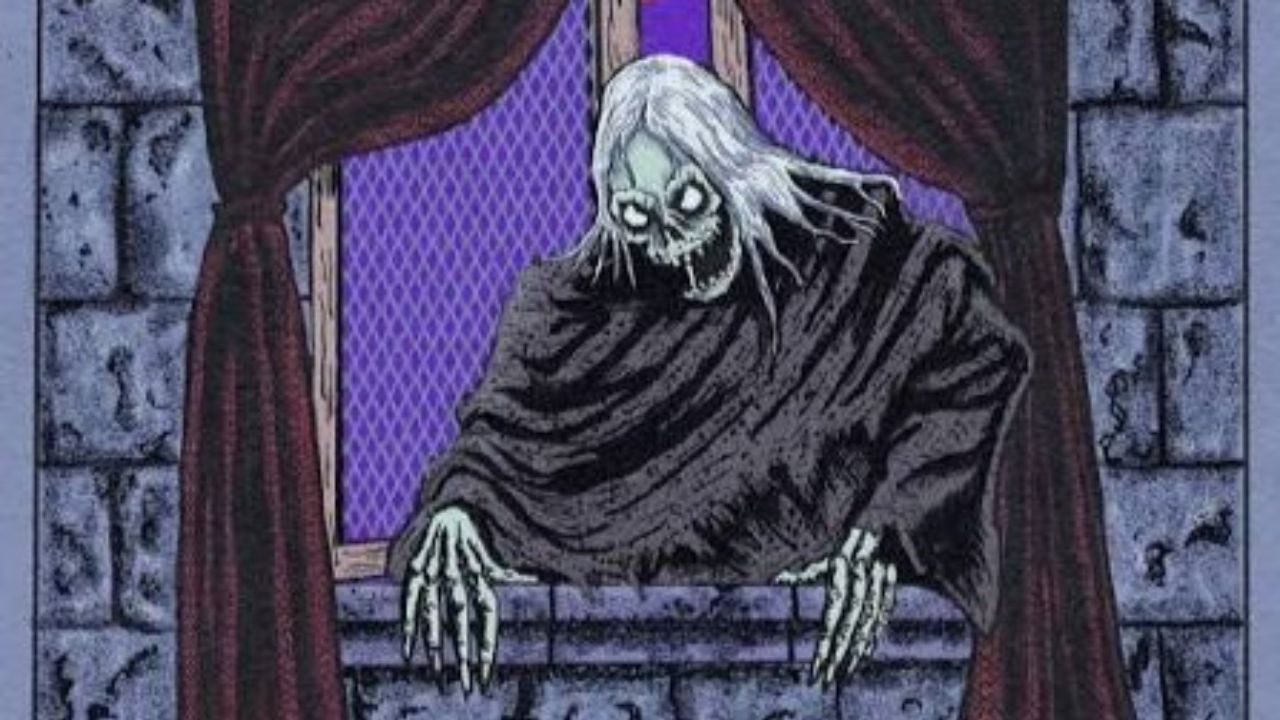
Handpicked Halloween: A reading list
Editor’s note: In times of psychological horror, social horror, and now the mainstream popularity of liminal horror, the old fashioned ghost has taken a backseat. Fear not ye, ghosts are still around if you have your eyes peeled this Halloween. In this spine-tingling list of 11 short stories by journalist Devarsi Ghosh—featuring Stephen King, Rabindranath Tagore, Edith Wharton, and more—we delve into the ghoulies and the beasties hiding under the bed or right behind the door once the lights go out.
Written by: Devarsi Ghosh
*****
‘The Story of O-Tei’ by Lafcadio Hearn
A small appetiser to kickstart this affair, ‘The Story of O-Tei’ is more fable than short story. It belongs to the 1904 collection ‘Kwaidan: Stories and Studies of Strange Things’, compiled by American journalist-turned-Japanophile Lafcadio Hearn. Hearn turned Japanese folk tales into atmospheric ghost stories blending Japanese and Western traditions. ‘Kwaidan’—three of its stories were adapted into a popular 1964 film—heavily influenced what slowly grew to be known as the J-horror genre (think films like ‘Ringu’ and ‘Dark Water’).
‘The Story of O-Tei’ is a relatively sombre affair; a young girl betrothed to a man dies at 15 but promises that she will return in the flesh in his lifetime, and they shall be together again. Happy reunion?
Find the story as part of the collection here.
‘The Mezzotint’ by MR James
The haunted house is ground zero for ghosts and few did ghost stories better than 19th century scholar and author MR James. He had a style: a scholarly protagonist, not unlike himself, coming across an object, say an old manuscript or a tablet or an engraving, that promised horrifying secrets and delivered on them—a nice ol’ school British spook.
‘The Mezzotint’ is particularly sinister because here the visual contents of the print of a nondescript manor house keep changing each night. First, there’s a figure hidden somewhere in the image. Next, the figure is crawling on all fours towards the house. Some time later, the figure is seen inside the house (!) with a child (!). Let’s not spoil all the revelations here.
Read the short story here.
‘The Hungry Stones’ by Rabindranath Tagore
Rabindranath Tagore was always ace the few times he tried his hand at genre fiction. His short story ‘Detective’ is a fantastic meta-take on the detective fiction genre. ‘The Hungry Stones’ is one of his classic horror stories.
A tax collector takes residence in a deserted Mughal-era palace. After nightfall, his senses pick up a host of women laughing and prancing about, when not encountering the wails of a slave chained underground. Among the hallucinations, a particular Persian woman stands out—or rather, gives the impression of existing.
With each passing day, the collector’s sanity begins to slip as he wonders if it’s the echoes of ancient debauchery and devastation preying on him from the walls, or if it’s his own imagination. Prominent film adaptations include a 1960 Bengali one starring Soumitra Chatterjee and a 1991 Gulzar version with Vinod Khanna and Dimple Kapadia.
Watch the Bengali film adaptation ‘Ksudita Pashan’ with English subtitles here.
‘The Inn’ by Mariana Enriquez
Two young girls set out to prank the owner of an inn who fired one of their fathers for discussing the inn’s history—a police academy where inmates were tortured during the 1976-1983 Argentinian dictatorship. This period, which saw widespread human rights violations, was chillingly explored in the 2021 film Azor.
The girls are not completely aware of the country’s history—neither were the visitors to the inn who were accidentally introduced to tales of the past by the tour guide—and in their nighttime sojourn to the inn, armed with a plan to scare the owner, they themselves get scared by ghosts of erstwhile dictators who return through bright lights, shouts of men, and muffled screams. There’s also a subtle queer story hidden inside the larger ghost story.
Find the story as part of the collection here.
‘1408’ by Stephen King
This is a nightmarish story, one that combines the horrors of all four preceding stories: visions of the undead, unreliable photographs, sounds with no origin. King is a populist, after all.
A 70-minute nightmare, to be exact, as picked up by the micro-recorder left behind by true-horror nonfiction writer Mike Enslin, who determinedly stays in the cursed room 1408 of Dolphin hotel despite the warnings and protests of the manager Mr Olin. The room is bad news for Mike from the moment he tries to put the key into the lock to open the door; it appears tilted one minute, straight the next.
Reality gets unstable quickly. Mike, who is initially cocky about his chances inside the room (“I’m already wearing my lucky Hawaiian shirt… it’s the one with the ghost repellant”), soon discovers that real haunting feels like “being stoned on bad, cheap dope”. The hit 2007 film adaptation starred John Cusack as Mike and Samuel L Jackson as Olin.
Find the story as part of the collection here.
‘Ice Cold Lemonade 25¢ Haunted House Tour: 1 Per Person’ by Paul Tremblay
Paul Tremblay is the biggest Stephen King fan and the contemporary horror writer closest to him, outside of King’s own son Joe Hill. He writes the scariest stuff in the most aw-shucks tone and I was surprised to find him sincerely writing “epically cringeworthy” in a line and making it work smoothly.
About the title: an adult writer reminisces about his memories of a tour of a makeshift haunted house that belonged to an older middle-school crush; she had first put up a lemonade stand in front of the porch but later decided that calling her house haunted would bring her more dollars. So, the narrator remembers the details right from the signboard.
This is possibly the most emotionally powerful story in the list, maybe because of being narrated from the perspective of a child. The other reason is the author’s attempt to define what is indeed a ghost: the parts of us we do not acknowledge, grow over, or accrue bit by bit over time until they overwhelm us in the end.
Find the story as part of the collection here.
‘Ringing the Changes’ by Robert Aickman
A resounding warning bell against the entire concept of age-gap relationships, this story will appeal to a new generation for not just its core theme but also its morbid humour. A significantly older man, Gerald, dates Phrynne, a woman 24 years younger, for just six weeks before marrying her. He then brings her to a mysterious rural town for their honeymoon because she insisted that she did not want to go any place he already had been before.
This place is practically deserted and the only sign of life is non-stop church bells ringing throughout the evening. Interestingly, Phrynne doesn’t seem to mind it, thinking it’s a quirk of this particular place. But Gerald is losing his marbles—more so, when he is informed the bells are meant to wake the dead, and that he should walk out of the town with his wife if they want to live. Do they leave? What happens after midnight? Does Phrynne abandon her husband for the dead?
Above all, the story starkly highlights the differences between the man and the woman, which, along with the simultaneously dreadful and comic atmosphere, makes this an all-timer.
Listen to a BBC narration of the short story here.
‘The Eyes’ by Edith Wharton
The longest story in the list also has the wittiest prose. Andrew Culwin is an old, refined, somewhat dry man, who prefers to surround himself with a group of far younger, intellectually promising men whose talents he can burnish and/or keep himself entertained with. It is suggested through the prose that Culwin is a homosexual, who “liked ‘em juicy” and preferred the “lyric qualities in youth”.
Through Culwin, Wharton gets to be an occasional scathing commentator on aspiring intellectuals and writers. Here’s Culwin, while narrating his ghost story, holding forth on a young man Noyes, sent to him as an apprentice to be tutored in literary skill.
At any rate, poor Noyes wasn't a predestined genius. But he was beautiful to see, and charming as a comrade. It was only when he began to talk literature that my heart failed me. I knew all the symptoms so well the things he had "in him", and the things outside him that impinged!
There's the real test, after all. It was always punctually, inevitably, with the inexorableness of a mechanical law, it was always the wrong thing that struck him. I grew to find a certain fascination in deciding in advance exactly which wrong thing he'd select; and I acquired an astonishing skill at the game . . .
Culwin’s ghost is a pair of really depressing, judgemental, disembodied eyes that appear to peer into and scathe his soul whenever he is at the juncture of betraying moral fortitude: such as getting engaged to a woman he does not love, or leading a young man on out of a mix of politeness and cowardice.
The eyes follow him all his life and appear at critical situations—a stand-in for the social anxieties of the American upper class Wharton explored in so many of her novels, including The Age of Innocence (1920), which became a 1993 Martin Scorsese picture.
Read ‘The Eyes’ here.
‘Bhuto’ by Satyajit Ray
The rivalry between a younger and an older ventriloquist reaches ghastly proportions in this typically brisk and tight Ray short story. A young magic enthusiast, Nabin, is bowled over by seeing the enigmatic Akrur’s ventriloquy act in a live show. Nabin persuades Akrur to teach him his tricks; when Akrur refuses, Nabin learns it on his own but adds a petty twist to his act to get back at Akrur. Soon, the matter of sleight of hand in professional magic trickery slips into the dangerous and the supernatural.
Find the story as part of the collection here.
‘Leaking Out’ by Brian Evenson
An unnerving story about a homeless drifter and petty thief running across a desolate land before hiding himself inside what appears to be a dark mansion, where the walls and windows seem to never stay still in one place. Or it might just be dark, it’s hard to tell. He then comes across someone resembling a man inside the place—the man tells the protagonist a story of a creature who would “leak out” occasionally despite living among humans. Where is this story going? Who is this mysterious storyteller? Does his skin seem a bit loose?
Find the story as part of the collection here.
‘Notes on the writing of Horror: A Story’ by Thomas Ligotti
If Stephen King is a writer of horror fiction, Thomas Ligotti writes as if he is horror incarnate. Here, he applies his twisted sense of humour into writing what, for the longest time, seems like, and perhaps even is, a manual on writing horror fiction. Ligotti picks up a bare-bones plot about a young man on his way to meet and impress a date until a pair of haunted trousers belonging to a dead man gets the better of him.
Ligotti shows how this harebrained plot could be made believable in the entirely realistic style—where in the system of relatively normal and stable humans and relationships, an oddity in the form of supernatural pants is slipped in as an aberration.
Ligotti next gives the example of rewriting the story in the Gothic style, where emotions are heightened, small events take on impossible meanings, and there are destinies attached to the desires and actions of the protagonists.
Ligotti even suggests an experimental style. But in the Final Style, he attempts a U-turn from the entire affair that completely fractures the meaning of this entire essay-story and truly makes you believe that writing is a magic trick.
Find the story as part of the collection here.
*****
Devarsi Ghosh writes on films, books, music and art from Kolkata.
 souk picks