
Written by: Aarthi Ramnath, Raghav Bikhchandani & Yash Budhwar
Our daily list of Souk picks
Editor’s note: As you may have noticed, we just unveiled a beta version of Souk—which has one simple goal: To help you find unique, high quality products that are worth your time and money.
One: Made by blacksmiths in Reha, Kutch, Khamir’s Chef's Knife is the kind of knife that feels good in your hand: not too heavy, not too flimsy, just solid and well-balanced. The stainless steel blade stays sharp, the babul wood handle gives it grip, and you can tell it’s been made by people who’ve done this for generations. It’s not trying to be a flashy pro chef’s knife—but it quietly does the job, day after day.
Two: Janpath was the place for colour and the thrill of finding something just right. We’d go as kids with our moms or cousins, digging through stacks of bangles until we found the one. Now, they’re online—and this Indradhanush Glass Bangles Stack is exactly the kind of find we’d have made back then. A set of 6 crystal-cut glass bangles in vivid rainbow hues, they catch the light beautifully and feel festive without going over the top.
Three: These Freeze-dried Pink Guava Cubes are what happens when fruit decides to get fun. They don’t look like much—tiny, pale squares that barely register as a “snack.” But bite into one and you’ll get it. They’re light, crunchy, and taste like actual guava—tangy, sweet, and way fresher than the chewy dried stuff. No fake aftertaste, no gummy slog, just crisp little wafers of fruit that are weirdly addictive. Perfect for stashing in your desk drawer or killing that 4 pm sugar itch.

PS: This is a beta launch and feedback—good or bad—is key. So please email the team at dearsouk@splainer.in with your thoughts. We want to get this right!
Why India’s push for indigenous GPS is grounded
WTF is NavIC: Short for Navigation with Indian Constellation, it was developed by the Indian Space Research Organisation (ISRO) as a home-grown alternative to the US-created Global Positioning System (GPS). The desire for independence from foreign tech dates back to the Kargil War in 1999—when the US rejected India’s request for GPS data to locate enemy locations in the region. This ‘Indian GPS’, of course, needs Indian satellites to feed it location data.
A string of failures: The Indian government approved the NavIC project in 2006—and has launched 11 satellites since then—the last of which was in January 2025. Of these, one has been decommissioned and two did not reach their intended orbit. Worse, only four of these satellites are able to provide position, navigation and timing services. The remaining four can only be used for one-way communication.
The atomic clock problem: Satellite navigation relies on atomic clocks made of rubidium for location accuracy—unlike normal clocks that are never perfectly in sync:
They drift. One tick of time is slightly different from the next, and the next, and so on. Human-made clocks are inherently unstable. Atoms, by contrast, can create almost “perfect” beats. Atoms don’t have any manufactured parts, and they don’t wear out or slow down over time. And all atoms of a given type are identical.
Our NavIC satellites use Swiss atomic clocks—many of which have failed due to technical snags. ISRO has finally admitted that only two satellites now have functional clocks. The most recent satellite launch—earlier this year—failed entirely. It could not be placed in orbit.
Point to note: As of now, five countries have their own fully operational navigation systems—US, Russia, European Union, China and Japan.
The big picture: The government has been pushing phone companies to make their devices compatible with NavIC—even though it is barely functional. We still haven’t developed our own atomic clocks—which are supposed to be loaded onto the next batch of satellites. The reason: They need imported parts.
Reading list: The Hindu and The Print have the best summaries on the history of India’s failed tryst with NavIC, and the current developments. The US’ National Institute of Standards and Technology (NIST) has more nerdy details on how atomic clocks work.
The Dharmasthala dhamaka: Show me the bodies!
The context: The 800-year-old Dharmasthala temple in Karnataka recently became the hotbed of political controversy—when a 48-year-old Dalit man filed a police complaint against its authorities. He claimed that he had been forced to bury ‘hundreds’ of bodies—as a sanitation worker at the temple. The alleged victims included teenage girls and women who had been sexually assaulted. More details here.
What happened next: Last month, the Siddaramaiah-led government formed the Special Investigation Team (SIT) to probe the allegations. Plot twist: Despite all the noise and publicity, there was little evidence of mass burials:
Of the 17 sites dug up by the SIT, partial human skeletal remains — 14 bones — were found at only one place — site number 6. Unless forensic experts conclude that the person whose remains were found at site number 6 was indeed murdered, which is reportedly tough given that the entire skeleton has not been found, that case will also hit a dead end, sources said.
What happened now: The SIT has arrested the whistleblower “under the charge of creating false evidence and perjury.” The arrest came an hour after the most famous Dharmasthala allegation fell apart. The woman who claimed that her daughter Ananya Bhat had gone missing back in 2003 now confessed she’s not even the alleged victim’s mother—and had been coerced into making the claim.
The political blowback: The temple is controlled by the Heggade family whose patriarch Veerendra Heggade is a BJP Rajya Sabha member. The party is now accusing the Congress-led government of ‘hurting religious sentiments of the Hindus’. Meanwhile, Deputy Chief Minister and Congress party chief DK Shivakumar is now outraged at “a systematic conspiracy to ‘tarnish’ the image of Dharmasthala, and said the government would stand by the holy site’s administrators.”
Reading list: The News Minute and The Print have the latest developments—while The Hindu reports on the ‘political temperature’.
YouTube is AI-editing your videos!
YouTube has been surreptitiously using AI to make changes to creator videos—without asking permission:
Wrinkles in shirts seem more defined. Skin is sharper in some places and smoother in others. Pay close attention to ears, and you may notice them warp. These changes are small, barely visible without a side-by-side comparison.
The company claims it has been running an AI “experiment” on Shorts to “unblur, denoise and improve clarity” in videos—much as your phone camera may do. But users are up in arms—saying “it gives their content a subtle and unwelcome AI-generated feeling.” Besides, users can control the effects used on their smartphone photos. The bigger worry:
There's a larger trend at play. A growing share of reality is pre-processed by AI before it reaches us. Eventually, the question won't be whether you can tell the difference, but whether it's eroding our ties to the world around us.
BBC News has lots more reporting on the creepy YouTube move.
MAP Academy & Nalli Fellowship is now open!!
Editor’s note: As you know, the wonderful MAP Academy is our content partner for Advisory. It is one of the few Indian institutions deeply invested in cultural research and education. They also offer rare funded opportunities for researchers, designers, archivists, journalists, writers and educators. The Nalli Fellowship is one of them.
Over to MAP Academy…
Are you working on the histories and practices of South Asian textiles and their socioeconomic, environmental or cultural implications?
The MAP Academy & Nalli Fellowships is offering four Research Fellowships of Rs 5.5 lakh each, for the study of textiles from India, Pakistan, Bangladesh, Bhutan, Tibet, Afghanistan, Myanmar, the Maldives, Nepal, and Sri Lanka. Applications are welcome from individuals—students, journalists, educators, designers, researchers—as well as from collectives and non-profit organisations. The grant must be used to support one year of research, which may be part of a longer-term project.
Applications will be assessed by an Advisory Committee, based on the responses in the submitted form, which will also double as the project proposal. Shortlisted applicants will be interviewed via an online video call, after which a final selection will be made.
Applications will remain open until October 15, 2025.
Find out more, and apply through this link. For any queries, contact us at: fellowships@map-india.org.

what caught our eye
business & tech
- Mint has the deets on TikTok briefly showing up as accessible in India after five years, but ByteDance says the app hasn’t been restored and is still following the government’s ban.
- Meta has signed a $10 billion cloud deal with Google and teamed up with Midjourney in a major bet on AI.
- A new report shows that despite 30% hiring growth in India’s fast-moving consumer durables sector over the past two years, women make up only 9% of its workforce.
- Donald Trump says Intel’s CEO has agreed to give the US government a 10% stake in the struggling chipmaker—an unusually direct federal intervention in a private company.
- Nvidia has paused production of its H20 AI chip for China, just days after news emerged that it’s building a more powerful replacement for the market.
sports & entertainment
- The ICC has named Navi Mumbai’s DY Patil Stadium as the fourth Indian venue for the women’s ODI World Cup, replacing Bangalore, with Guwahati now set to host the September 30 opener between India and Sri Lanka.
- Dream11 has ended its sponsorship deal, leaving the BCCI without a team sponsor just ahead of the Asia Cup, after Parliament banned real-money online games.
- The Telegraph pays a tribute to Cheteshwar Pujara by recalling five defining moments that earned him the title of India’s Mr Reliable.
- USA Cricket has ended its deal with Major League Cricket’s parent company ACE over alleged contract breaches, but ACE has hit back calling the termination “unlawful” and insisting it met all obligations.
- American tennis player Sachia Vickery turned to OnlyFans during a shoulder injury layoff, saying the platform now helps her fund her career and gives her financial freedom.
health & environment
- Government approval for multiple ethanol plants in Chhattisgarh, India’s “rice bowl,” has sparked protests and warnings from experts over pollution risks and threats to long-term food security.
- Researchers at the University of Colorado Boulder are turning moon jellyfish into “cyborgs” by fitting them with microelectronics to collect deep-ocean data.
- A 44-year-old man with severe, treatment-resistant depression has felt joy for the first time in decades after undergoing brain stimulation therapy.
- Scientists in California say they may have developed a non-invasive alternative to LASIK that reshapes the cornea without lasers.
- Rising temperatures have sparked a surge in demand for air-conditioning among wealthy Londoners, but rules and regulatory hurdles mean even money can’t always buy relief from the heat.
- New York Times (login required) has a good read on rare footage of spectral bats—also called great false vampire bats—showing that these creatures aren’t just fearsome hunters but also cuddle, hug, and play with each other.
meanwhile, in the world
- The Wall Street Journal reports that the Pentagon has been blocking Ukraine from using long-range missiles to hit targets inside Russia.
- Danish authorities have sparked protests after taking a newborn from a Greenlandic mother just an hour after birth, despite a law banning the use of “parenting competence” tests on people with Inuit backgrounds.
- Hindustan Times has the deets on why Donald Trump picked 38-year-old Sergio Gor as US ambassador to India—and what experts are saying about the move.
- The Intercept has a good read on how Trump’s visa crackdown could keep 150,000 international students—already accepted at US universities—from entering the country this fall.
- The Intercept also has more on how airdropped aid in Gaza is killing people on the ground.
- Illinois governor JB Pritzker has accused Donald Trump of abusing power by planning to deploy troops to Chicago, calling it an attempt to “manufacture a crisis.”
- Kilmar Abrego Garcia, wrongfully deported to El Salvador and now back in the US, was welcomed home with flowers and tears—but faces the threat of being deported again, this time to Uganda.
- A hidden “invalidation pattern”—often mistaken for harmless disagreement—is quietly eroding trust and damaging relationships at home and at work.
meanwhile, in India
- The Delhi High Court has ordered Sci-Hub, Libgen, and other shadow libraries to be blocked in India within 72 hours.
- Karnataka’s draft education policy rejects NCERT textbooks, opts for a two-language formula, and scraps NEP’s four-year undergraduate model with multiple entry-exit options.
- Parliament’s Monsoon Session ended on August 21 with record-low productivity, as disruptions left the Lok Sabha working just 29% of its scheduled hours and the Rajya Sabha 34%.
- Congress leader Jairam Ramesh has slammed the Centre’s Rs 72,000 crore Great Nicobar infrastructure project as a “maha ecological disaster,” citing a Tribal Council complaint that officials falsely claimed tribes’ forest rights had been settled
- NewsLaundry has a good read on how the Himanta family controls headlines through Northeast India’s biggest media empire, Pride East.
Four things to see
One: Say hello to Mona Mallu Lisa. As part of its Onam campaign, Kerala’s Tourism social media account posted this AI generated Malayali make-over of the famous painting. She is wearing a traditional off-white ‘kasavu’ saree and jasmine flowers in her hair. FYI, Onam begins tomorrow and ends on September 5. (The Hindu)

Two: As part of the Bridgestone World Solar Challenge in Australia, 34 solar-powered cars from 17 countries raced each other across the desert from Darwin to Adelaide. The racing event began in 1987 and is held once in two years—attracting an online audience of millions of people. Below is a clip of this year’s race. (The Guardian)
Three: On Saturday, former world #1 Maria Sharapova was inducted into the International Tennis Hall of Fame. The most surprising bit was the very emotional speech made by her former rival Serena Williams—watch it below. (The Guardian)
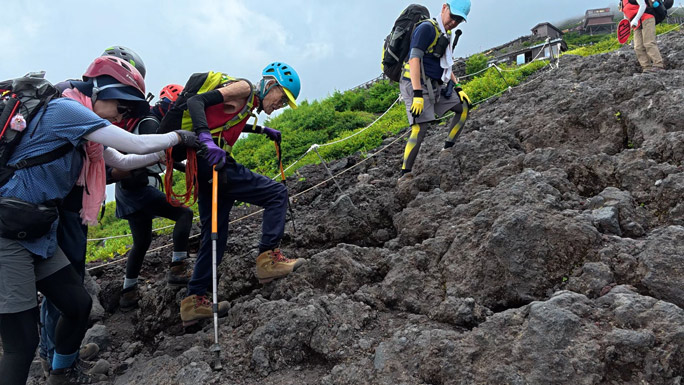
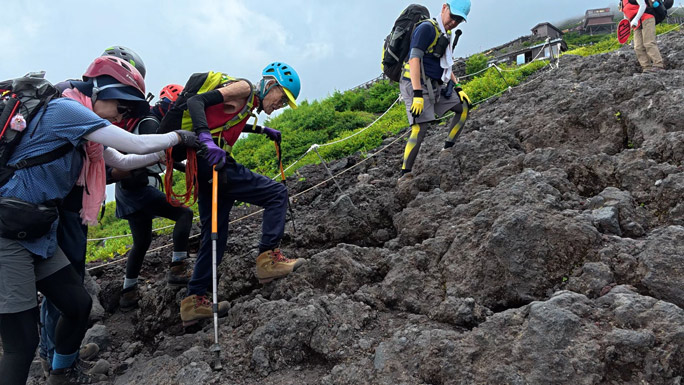
Four: According to the Guinness World Record, a 102-year-old Japanese man named Kokichi Akuzawa has become the oldest person ever to climb Mount Fuji. It usually takes around six hours to get to the top, but Kokichi stretched his climb over three days, spending two nights in wayside huts. The test of resilience:
Akuzawa had already scaled Mount Fuji a few years earlier, when he was 96. Since then, he’s suffered a fall, heart failure and a case of the shingles. Still, Akuzawa decided to climb Fuji one last time.
And he prevailed! You can see the images of him in action below. (Smithsonian Magazine)
feel good place
One: Now this is how you do the Macarena! Sheer awesomeness.
Two: Cat-dog cooperation at its finest.
Three: It all comes out right in the end:)
 souk picks